“We aren’t competing with Pogacar... We’re building a team for when Tadej steps away” - Bahrain Victorious’ long-term plan takes shape with Jakob Omrzel’s Vuelta breakthrough
Cycling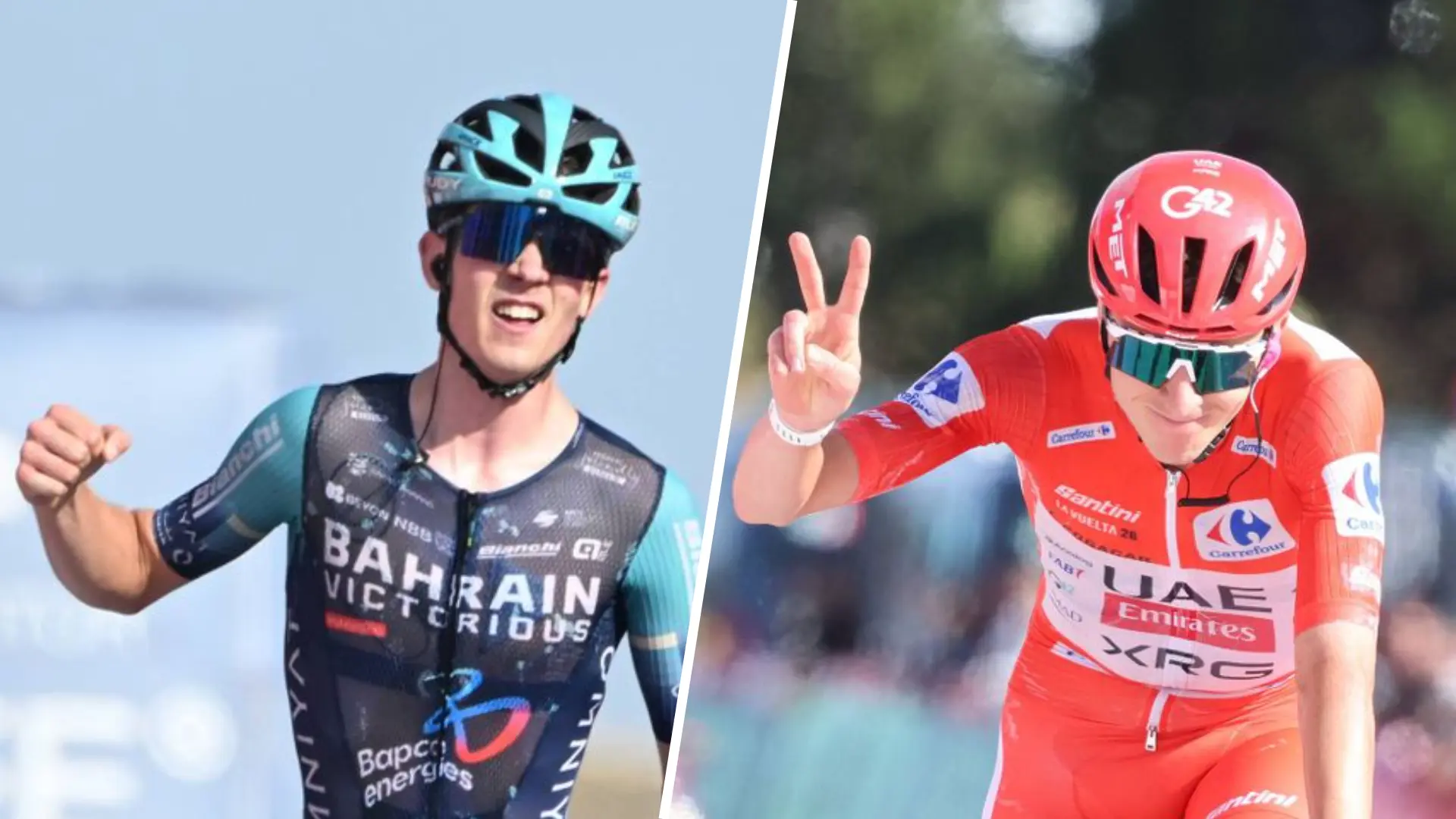
Bahrain - Victorious are looking beyond the current Tadej Pogacar era as they develop a generation they hope can mature into one of the strongest teams in the WorldTour.
General manager Milan Erzen says the team are not trying to construct a squad specifically to challenge Pogacar at his current level, with their focus instead fixed several years down the road. At the Vuelta a Espana, 20-year-old Jakob Omrzel has provided the latest glimpse of that project with a breakthrough stage victory at Calar Alto.
“At this moment Tadej is unbelievably dominant. You have to adapt,” Erzen told Siol’s Sportal in an extensive interview. “We aren’t competing directly with Pogacar... We’re building a team for when Tadej steps away.”
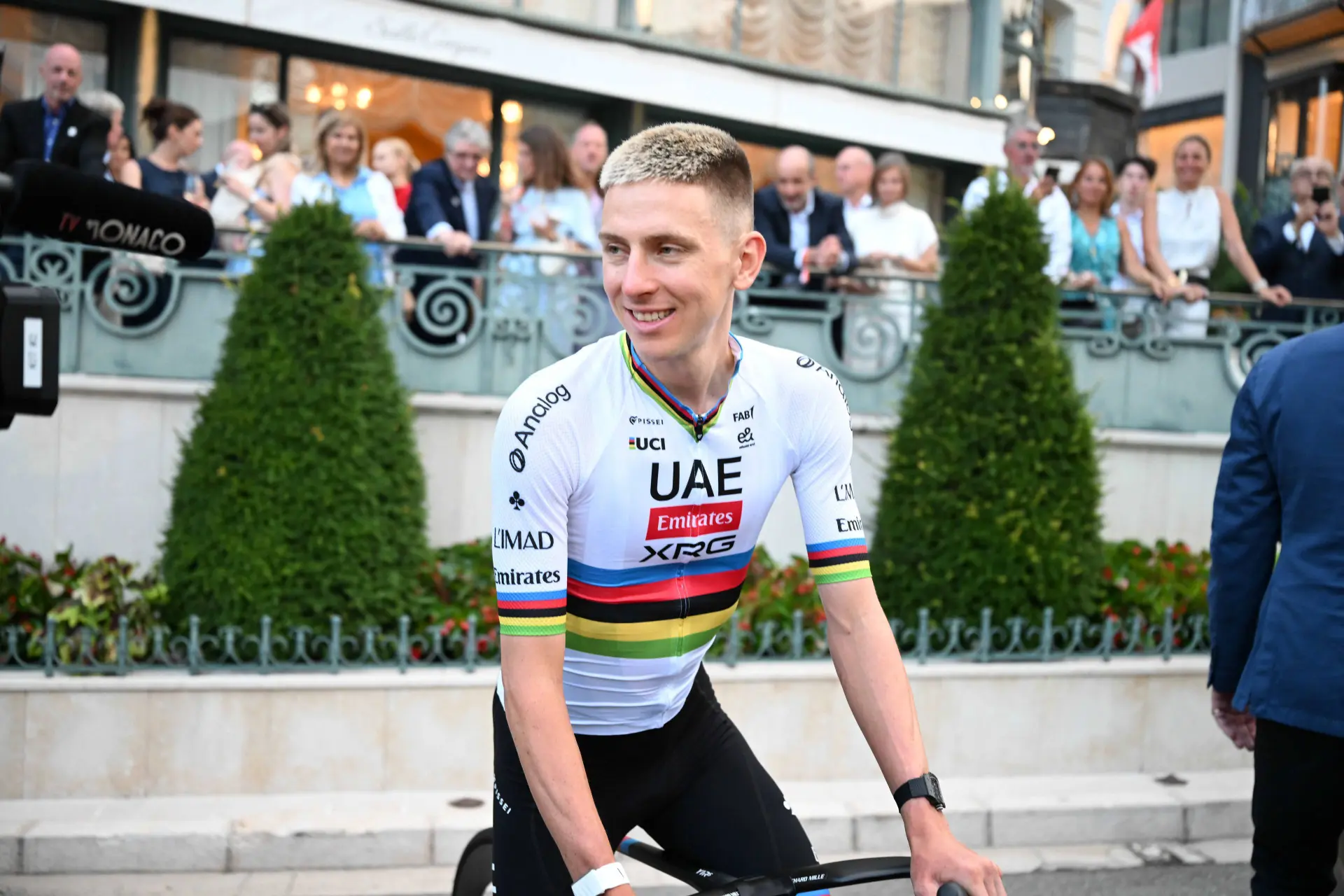
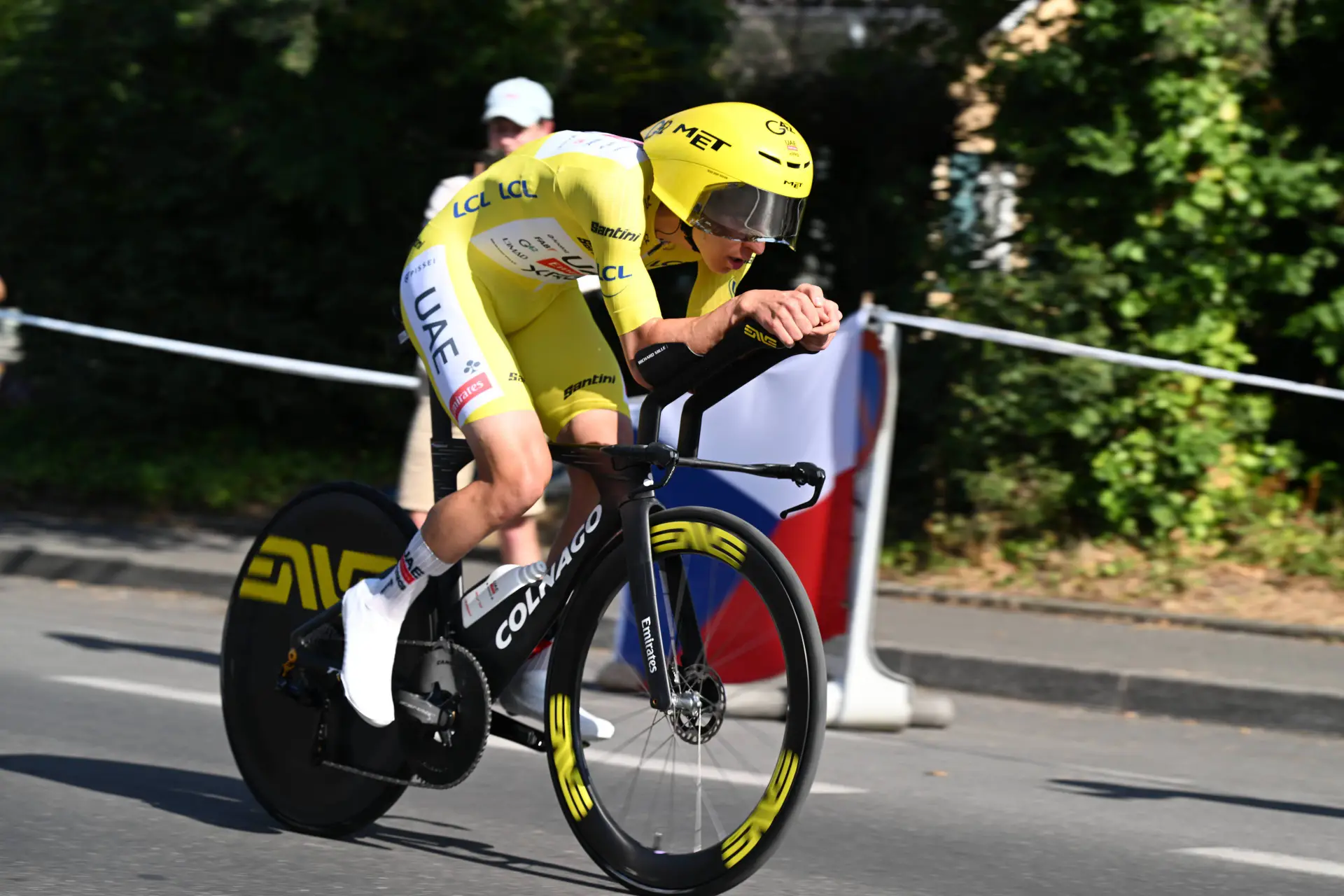
Pogacar reinforced his position at the top of the sport by winning a fifth Tour de France in July, equalling the all-time record and taking five stages along the way. For Bahrain, the response has been to invest further down the development chain rather than trying to match the biggest budgets rider for rider.
“We build, we don’t buy”
That strategy has been several years in the making. Bahrain placed greater emphasis on youth development in 2023, while Cycling Team Friuli was fully incorporated as the Bahrain Victorious Development Team ahead of the 2025 season. The structure now links the team’s junior programme, U23 setup and WorldTour squad, giving Bahrain a pathway designed to keep riders inside the same system from their teenage years through to senior level.
“That is why we were the first team with our own junior team,” Erzen explained. “We wanted to connect the entire circle: 16 and 17-year-olds, the development team and then the WorldTour.”
The timing is central to Erzen’s thinking. The first riders to pass through that complete system are now only just reaching the WorldTour, while Pogacar remains at the height of his powers.
“The first generation that went through the entire system is now coming into the senior team,” said Erzen. “These guys are around 20 years old. If Pogacar races for another six years, they will then be 26 and in the best period of their careers.”
That six-year example is Erzen’s own hypothetical timeframe rather than any indication of Pogacar’s retirement plans, although the Slovenian is currently contracted to UAE Team Emirates – XRG through the end of 2032.
“If you then have ten riders who are among the best in their areas, you can create the best team in the world,” Erzen continued. “Our goal is that in the coming years around 75 per cent of the senior team will have been developed in our system. We build, we don’t buy.”
The ambition is significant for a team operating with a budget Erzen himself places at around €25 million, comfortably below the spending power of several of Bahrain’s biggest WorldTour rivals.

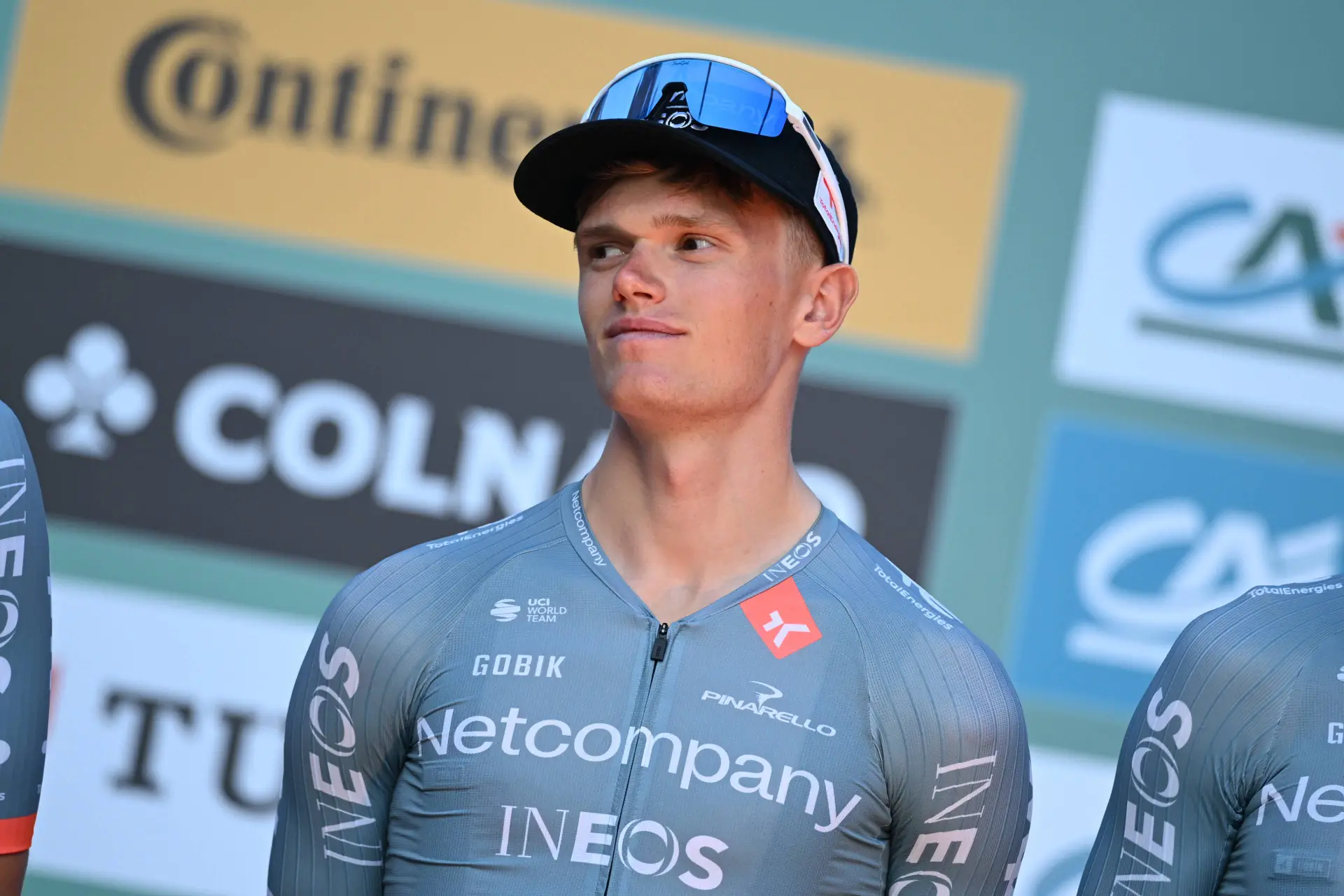
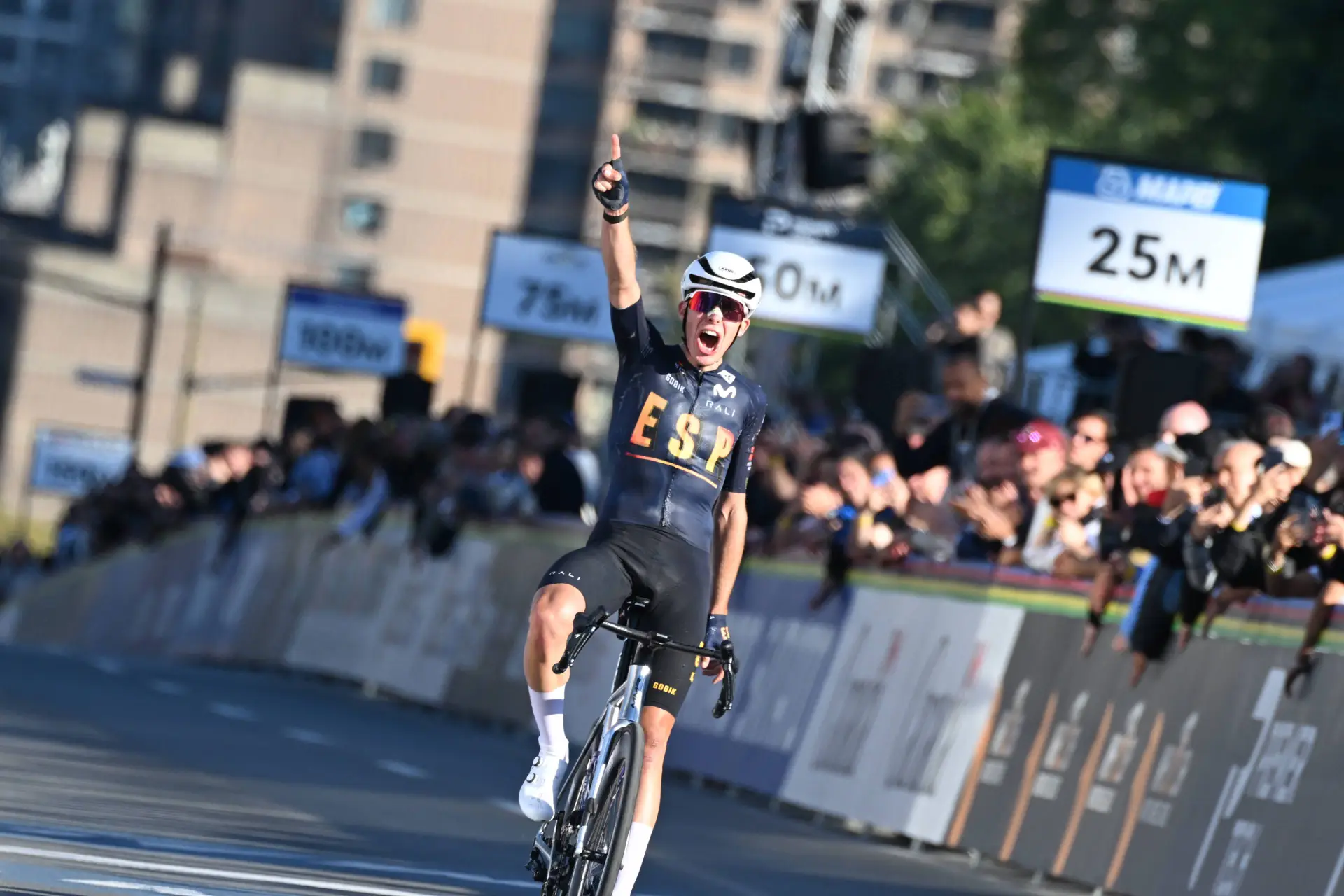
Jakob Omrzel won stage 12 of the Vuelta a España 2026.
Bahrain see opportunity in cycling’s crowded superteams
Erzen believes the same concentration of talent that makes teams such as UAE Team Emirates – XRG and Red Bull – BORA – hansgrohe so difficult to beat could also create an opening for Bahrain.
According to the Slovenian, riders who joined the sport’s biggest teams as teenagers are already beginning to reassess their options once it becomes clear how difficult it will be to earn leadership opportunities.
“We’ve now reached a position where talents who left at 18 or 19 for the biggest teams are calling us,” Erzen said. “Now they are 21 or 22 and realising that if they stay there, they will only ever be domestiques. In some teams, the leadership positions for the next five or seven years are effectively already occupied.”
The depth of talent across the leading squads illustrates the problem. Red Bull – BORA – hansgrohe have Remco Evenepoel and Florian Lipowitz, while UAE Team Emirates – XRG can build around both Pogacar and Isaac del Toro. Paul Seixas has meanwhile emerged as one of the central names in Decathlon CMA CGM Team’s future.
“So what is left for you as a rider?” Erzen asked when discussing Red Bull – BORA – hansgrohe. “Perhaps the Vuelta at the end of the year or working for Remco or Lipowitz. If you go to UAE Emirates, it’s a similar story. They have Tadej Pogacar and Isaac del Toro. A lot of riders decide that they like the money and are happy to work for their leaders.”
Bahrain’s counter-offer is centred on opportunity. Rather than promising the biggest salary, Erzen believes they can attract riders with a clearer route to responsibility and leadership.
“What do they see in us? A team that is very good at preparing and developing riders and that brings two or three boys to the highest level every year,” he said. “The question is what matters more: being better paid, earning €500,000 more and being unhappy, or having an opportunity, having freedom, being happy and racing for yourself.”
Read also
Omrzel has accelerated through the system
Omrzel has become the most immediate example of where that development model could lead. Bahrain originally expected the Slovenian to remain with their U23 setup through 2026, but his 2025 season forced a change of plan. At 19, he won the Giro Next Gen overall, claimed the elite Slovenian road title and finished fourth overall at the Tour of Slovenia while also taking the young rider classification. He was promoted to the WorldTour after only one full season with the development team.
Erzen’s knowledge of Omrzel goes back much further. The Bahrain boss has known him since childhood, with Omrzel growing up and racing alongside Erzen’s son Zak, who is now also part of Bahrain Victorious.
“We could see he had potential,” Erzen said. “There is a big difference at junior level between someone who already looks like a grown man at 18 and someone like Jakob, who still has a childlike face even now and is still developing physically. With a boy like that, you can see there is still a lot of room for improvement.”
Erzen also pointed to training load as one of the details he watches closely when judging junior riders, arguing that some young talents may already have used up part of their development by training at near-professional volumes before reaching senior level. That was not the case with Omrzel, whose physical development Bahrain believed still had considerable room to progress.
“Nobody knows who Jakob Omrzel is”
His first Grand Tour has brought that progress onto a much bigger stage. Omrzel finished fourth on the summit finish on stage 7 of the Vuelta before attacking from the breakaway on the final climb to Calar Alto five days later. He rode the final 12 kilometres alone to claim his first professional victory.
The result made him the youngest Slovenian ever to win a Grand Tour stage, surpassing the previous benchmark set by Pogacar. At 20 years, five months and 13 days, he also became the youngest rider of any nationality to win a Vuelta stage since Celestino Prieto in 1981.
Erzen says the decision to send Omrzel to Spain came once Bahrain saw his physical numbers were already strong enough to justify the opportunity. “When you see someone go beyond certain numbers, you ask yourself why you would leave him at home,” he said. “We said: let’s put him in there. He could race for one week, two or three. That would have been entirely his decision. If we had seen that he was going too far into the red and wasn’t capable of continuing, we would have told him to go home, rest or end his season.”
Rather than imposing targets on a rider making his Grand Tour debut, Bahrain gave Omrzel room to race and discover where he stood. “He didn’t have to force anything,” Erzen added. “Everything he has achieved, he achieved through his own performance and his own condition.”
The Bahrain boss believes Omrzel’s race intelligence has been just as important as the numbers. “His intelligence also helps him a lot. He is a very intelligent rider and he thinks correctly,” Erzen said. “We exchanged a lot of messages and I sent him just one: ‘Don’t be afraid to go in the break. Nobody knows who Jakob Omrzel is.’ Before he won, nobody knew who Jakob Omrzel was. Everyone thought: look at him, the youngster. But from the moment he won, he was noted down and everyone started watching him. That’s why you have to dare.”
One of Bahrain’s coaches had already offered a similarly positive assessment before the Vuelta. “One of our coaches said after a training camp that he has the complete package: physical ability, intelligence, mentality and that determination to fight for a goal.”
“Someone else has arrived”
Omrzel’s emergence also changes the internal picture at Bahrain, where he joins a young core that already includes two riders with serious Grand Tour credentials.
“Within our team, I can see what his arrival has caused,” Erzen said. “Lenny Martinez is already thinking differently. Questions are appearing about whether Jakob will go to the Tour next year. Antonio Tiberi is thinking that someone else has arrived, that it is no longer just him.”
Martinez, still only 23, finished fifth overall at this year’s Tour de France. Tiberi, 25, has already accumulated several seasons of Grand Tour leadership experience. Omrzel is now entering that same conversation after less than a year in the WorldTour.
A Tour de France debut in 2027 is not guaranteed. Erzen believes Bahrain may instead decide that another race offers Omrzel a better opportunity to lead, with the team set to review his season and the available routes before mapping out his next step.
“It could be, but the question is whether that should happen as soon as next year,” he said. “Perhaps next year it would make more sense for him to go as a leader to another race.”
Erzen is also wary of assuming that success at the Vuelta can simply be transferred to the Tour. “You have to understand that the Vuelta and the Tour de France are two completely different races,” he said. “The difference in racing level is significant."
“At the Vuelta, seven or eight riders may remain at the end of a climb. At the Tour, there can be 20. Then there is Tadej, a few individuals behind him, and another 15 or 16 riders who are very evenly matched,” Erzen added. “At the end of the season we will do an analysis and prepare a plan with Jakob.”
Bahrain now have three young riders at different stages of that progression: Martinez already inside the Tour’s top five, Tiberi established as a Grand Tour leader and Omrzel arriving with a first Grand Tour stage win at 20.
Behind them sits the development structure Erzen hopes will eventually supply around three-quarters of Bahrain’s WorldTour roster. Omrzel’s victory in Spain has become its clearest Grand Tour result so far, while Erzen’s longer-term target stretches well beyond one breakthrough rider.

Kieran WoodDeputy Editor-in-Chief
Kieran Wood is a sports journalist based in Wales and has been active in journalism since 2022. He regularly contributes to DartsNews.com and CyclingUpToDate.com, where he covers professional cycling and darts. In cycling, his work includes liveblogs from major races, including the Tour de France, the Giro d’Italia, and La Vuelta a España, alongside race reports and analysis. He has also conducted interviews with professional riders.
His reporting spans the full racing calendar, from one-day classics to stage races, with a focus on accurate, real-time coverage and clear contextual analysis. For statistics, results, and historical context, he regularly uses resources such as ProCyclingStats. To support reporting on rider activity and training context where relevant, he also references Strava.
In his work, Kieran places strong emphasis on careful sourcing, editorial accuracy, and updating articles as new, verified information becomes available.
claps 0visitors 0
Just in

Popular news
Latest comments
- We also don't know how much Pog was really putting into gaining time. Feels like watching Usain Bolt, where you can only wonder how much faster he'd have gone if he was sprinting 100% to the line, instead of being two feet ahead and starting to pull up with ten yards to go. If any of the other riders really started to close in on Pog, I do think he'd simply have gone even deeper and crushed them. I would really like that kind of race though, none of this "4 minutes lead by the first rest day" trouncing. So if introducing more TT and less summit finish makes the race go more to the wire, I'm all for that. I don't think it'll change the outcome necessarily, but it'll make the whole thing less of a foregone conclusion by week 2.wrsty23-10-2026
- That nearly is 7 mins and you win GTs comfortably by 2 mins. Remco fans - he almost won the TDF, He beat Pogi twice in the mountains this year.abstractengineer23-10-2026
- What would be your preferred Tour design then? Just out of interestwrsty23-10-2026
- I like Remco but even I'll admit he didn't get anywhere close to Pogacar, just like everyone else.megasmacky23-10-2026
- That's what y'all said this year, "remco will come fifth"bruins3022-10-2026
- That used to be the norm, 100 kms of TTs. Now look at the '87 route...acem8222-10-2026
- Well, crashes can happen, so it's not impossible...acem8222-10-2026
- that would be kinda cool. there is a lot of untapped potential. which I'm sure the UCI will overlook. in order to get sock length correct.mij22-10-2026
- Nice! Now Remco can finally show that he cannot win the Tour!!! 😂😂😂PogiSloFans22-10-2026
- Nice! Now Remco can finally show that he cannot win the Tour. 😂PogiSloFans22-10-2026
Loading
Write a comment