“The most expensive Grand Départ ever”: UK faces sharp debate over £65 million bill for 2027 Tour de France double-start
Cycling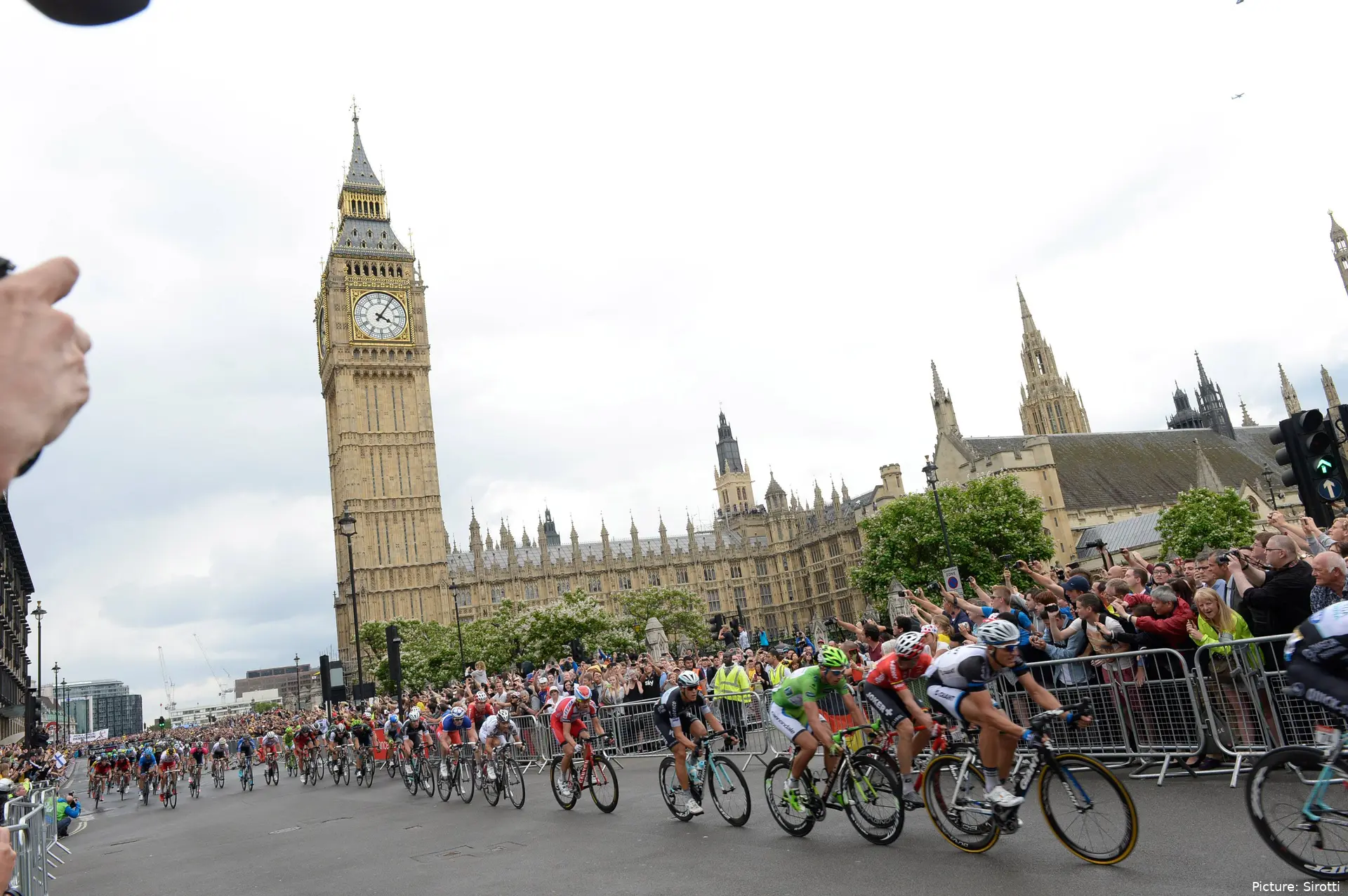
The United Kingdom is expected to spend approximately £65 million hosting the 2027 Tour de France and Tour de France Femmes Grand Départs, making the event one of the most expensive international cycling ventures ever staged. With public funding covering much of the bill, the investment has prompted questions about whether the races can deliver lasting benefits for participation in cycling, beyond the economic activity and crowds generated during race week.
British journalist Jeremy Whittle described the project as the “most expensive Grand Départ ever” in his Substack newsletter, estimating that the combined cost of the six days of racing across the men's and women's events would amount to roughly £11 million per day. The expenditure covers more than the race itself, including organizational costs, safety and security, local authority support, and projects intended to encourage cycling after the peloton has left.
The UK Government has confirmed that it will provide £32.17 million toward staging the two events. Scotland has announced funding of up to £9.25 million for the men's Tour start, while Edinburgh City Council plans to use £1.7 million in revenue from its visitor levy to support the opening stage. Wales has allocated £4.5 million for cycling tourism infrastructure intended to create a lasting legacy from the race.
The figures announced by the different administrations account for a substantial portion of the reported overall cost, although they do not by themselves explain the entire £65 million estimate. The wider spending includes the arrangements required to host both races across several parts of the country.

Mark Cavendish and Christian Prudhomme at the unveiling of the 2027 Tour de France Grand Depart in Edinburgh
Economic benefits are expected to exceed £150 million
The UK Government has forecast more than £150 million in economic benefits across Great Britain from the combined Grand Départs. The projected return would come through tourism, visitor spending, business activity and the international exposure generated by the races.
There is a precedent for substantial short-term returns. When the men's Tour last began in England in 2014, staging costs for local and national authorities were estimated at approximately £29.4 million, compared with an estimated £128 million in economic benefits. The 2007 London start and the 2014 Yorkshire Grand Départ also helped bring cycling to a wider British audience, attracting large roadside crowds and extensive television coverage.
However, projected economic benefits are not the same as money returned directly to public budgets. They can include spending by visitors and activity generated for local businesses, while the public cost of hosting the event remains a separate consideration. The longer-term value of the 2027 races will therefore depend partly on whether the initial investment produces measurable benefits beyond the summer of 2027.
ASO, the Tour's organizer, charges host destinations a substantial fee to stage the Grand Départ. Recent editions have reportedly involved fees exceeding £10 million, with Barcelona and other recent hosts facing significant costs. The exact fee paid for the British start has not been publicly established.
Read also
Can the races reverse Britain's cycling decline?
One of the main concerns is whether the event can reproduce the longer-term effects associated with previous British Grand Départs. While the 2007 and 2014 editions helped raise cycling's profile, the wider environment has changed considerably.
“So how do you measure the legacy of these grand, one-off events? Certainly in Yorkshire more pints were pulled, more cups of tea brewed, more hotel beds sold. Economically there was a tangible short-term benefit. The vibes were good,” Whittle wrote.
“The landscape has changed since then. There is no more Team Sky, no more ITV free-to-air coverage and the membership of British Cycling is now in decline. We have had a pandemic, a cost-of-living crisis and there is war in Europe.”
The government and organizers are seeking to address that challenge through legacy initiatives, including cycling tourism infrastructure and a social impact program designed to encourage participation and physical activity. The key question will be how these commitments are implemented and whether they produce results that can be measured after the event.
Félix SernaCycling Journalist
Félix Serna is a writer at CyclingUpToDate and has been part of the team since 2025. He covers professional cycling across both the men’s and women’s calendars, with a focus on UCI rankings, race developments, and rider performance. His work includes interview-based reports, liveblogs, and tournament coverage designed to provide clear, accurate context throughout the season.
In his reporting, Félix regularly uses ProCyclingStats for results, statistics, and historical reference. He places strong emphasis on careful sourcing, editorial accuracy, and updating articles promptly when new, verified information becomes available. He holds a bachelor’s degree in International Studies.
claps 0visitors 0
Just in

Popular news
Latest comments
- It’s not only that, it’s this obsession with running after money, whether it be teams, riders, sponsors, broadcasters. As soon as one player gets ahead, others feel obliged to match their moves with increases for fear of losing out and for fear of someone else following in your place instead without looking at the long-term consequences of blindly following. Other sports ahead (or behind depending on how you look at it) in such matters should serve as a warning but humanity has a habit of heading straight into walls even when the writing is on it. When financial objectives and limits aren’t clear, it’s impossible to manage any organisation, you can’t even recruit the right riders or tell them what is needed to make sure they’re a good fit because you can’t clearly explain what they can expect. Not all riders are motivated by money alone and some of the teams are proof of that.Jumpyjohn25-10-2026
- To be honest, their signings weren't actually too bad. Oscar and Kevin had great 2025 seasons. Most of the top leaders were signed. But Red Bull, Lidl-Trek and Pinarello showed that that's not actually the coast. So team culture is probably the foremost reason. Whether there's a bad sporting culture now is debatable, but certainly there's the past. 2024 was the end of the old Ineos (it was not actually transition, it was slow decline)
 Rafionain-Glas25-10-2026
- FYI. Pogi made his World Tour debut at the TDU in 2019. I remember it well because someone said watch out for Pogi as he did a good time up Corkscrew during training. Who would have thought he'd end up as the GOAT.Santiago25-10-2026
- FYI. Pogi's first World Tour race was at the TDU in 2019. I remember it well because someone said watch out for Pogi as he did a good time up Corkscrew during training. Who would have thought he end up as the GOAT.Santiago25-10-2026
- 50 million isnt low. But if you hire super domestiques for a million and 3rd rung leaders for 3-5 million, natural you dont have money left not the results expected. Most monuments and TDF are out of reach due to Pogi. But there were a promising 2nd rung leaders on the market and they went for broke to get Onley and Kevin. I put their entire troubles due to mismanagementabstractengineer25-10-2026
- I think it’s becoming clear that cycling got way ahead of itself for a few reasons and is now coming to the realisation that some rider salaries just exploded without justification and it snowballed until sponsors started pulling money out because THEY did not see any return on increased costs. Cycling is still a dying sport (that never moved out of the niche family) and will remain so if it doesn’t embrace and promote new ventures or manage to attract new markets. Even within cycling, fans are basically compartimentalised, (almost nobody here follows track for example), and the multiplication of possibilities hasn’t grown the sport, it has just split it into a larger number of smaller branches. If it weren’t for nation state sponsors (far too numerous already) other teams would never have (had to resort to) raised bigger budgets that are now leading to sponsor abandonment. That’s the difference between long-term steady growth and financial doping, the latter can also just blow up in your face. I will venture to wager that apart from one or two exceptional cases, rider salaries will no longer go up and are quite likely to actually drop over the next decade.Jumpyjohn25-10-2026
- You know you can post all this on idlprocycling too with your account(s) don’t you? There’s a whole bunch more articles and people there to inform.Jumpyjohn25-10-2026
- That’s the kind of word my foreign grandma would have rendered fashionable again, like flabbergasted (at her time) ;-) Perhaps he should get a pro to fill out his papers and pack his bag too, customs have become keen on controlling anyone from the balkans.Jumpyjohn25-10-2026
- Alternatively, just call Rod StewardJumpyjohn25-10-2026
- I will be in Adelaide in a shot if Pogi comes to the Tour Down Under. Fingers and toes crossed that this will eventuate, he has just got to remember to stay aware of kangaroo’s, as Jay Vine can attest to. Though can’t be any worse than some of the passionate fans in EuropeSearider25-10-2026
Loading
Write a comment