Inside the massive security operation Barcelona plans for the 2026 Tour de France Grand Départ
Cycling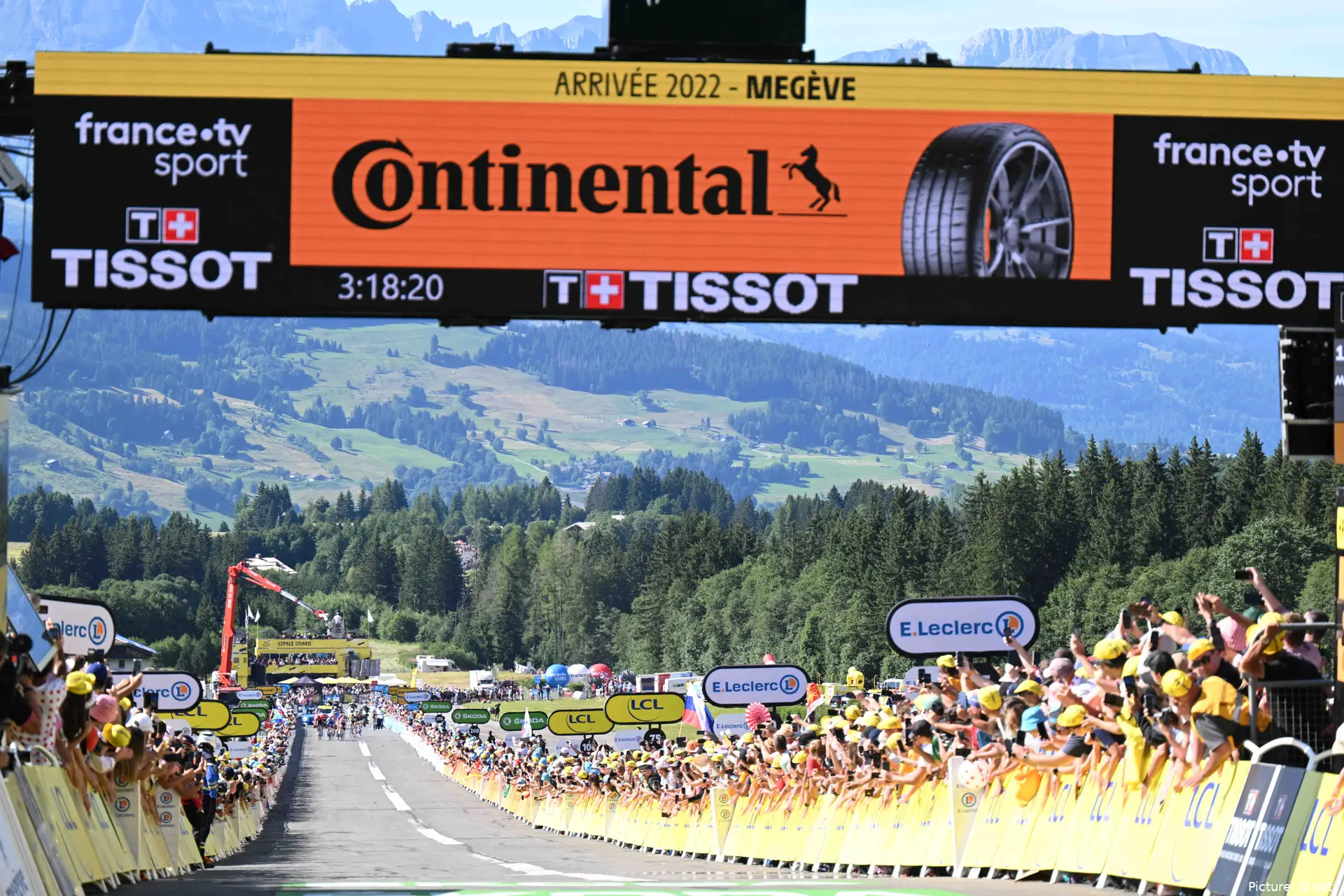
Barcelona dresses up to host, for the first time in its history, the official Grand Départ of the Tour de France from 04.07.2026 to 06.07.2026, a world-class event that will reshape mobility in the Catalan capital. Official estimates forecast more than 850,000 spectators, forcing an unprecedented urban operation.
The opening moment will come on July 2nd with team presentation, a ceremony stretching from the Modernista Sant Pau complex to the Sagrada Família, drawing 80,000 fans. Two days later, racing begins with an explosive team time trial of almost 20 kilometres entirely on city streets, rolling out from the Fòrum to crest Montjuïc.
This opening stage will attract close to 600,000 people, locking down key traffic corridors. The cycling festival continues on day two, linking Tarragona back to the ramps of Montjuïc before 170,000 spectators, ahead of the international peloton’s farewell as it departs Granollers towards the Pyrenees, with a summit finish in Les Angles.
To choreograph a sporting landing of this scale, authorities have devised a meticulous security and public transport plan to soften the impact across six of Barcelona’s ten districts.
Reinforcements on the metro and cleaning
The Metro network will boost frequency by 40%, concentrating efforts on its main lines, while fourteen bus routes will face temporary changes. The deployment will include nine hundred Urban Guard officers to manage order at fifty-four designated pedestrian crossings.
City Hall will also suspend several bike-share stations and significantly reinforce cleaning crews. On this point, the city’s Sports Councillor, David Escudé, underlined the event’s clear significance.
Read also
“It will be the sporting event that brings the most residents onto the streets since the Olympic Games,” said the municipal official.
“It is the most demanding event in logistical terms, but excellence in organisation is one reason why major events want to come to Barcelona,” the political representative concluded, proudly anticipating a rider presentation that “will write a page in Tour history.”
Gavin QuinnCycling Journalist
Gavin Quinn is a cycling journalist and ultra-distance cyclist with a BA in Journalism from Dublin City University. Formerly the Press & Communications Officer for Cycling Ireland, Gavin has worked inside the national team at the World Championships and has reported for the Irish Mirror, Mirror UK, and The42.
His expertise is backed by elite-level access, having interviewed stars like Sam Bennett and Ben Healy, as well as immense personal endurance. In 2025, he completed a 12,000km solo cycle from Ireland to Vietnam, following a 4,600km tour across Europe. From the cobbles of Paris-Roubaix to the gradients of the Tourmalet, Gavin’s writing focuses on the "romance and brutality" of the sport. Having visited 50+ countries, he brings a global, cultural perspective to his coverage of the pro peloton for CyclingUpToDate.
claps 0visitors 0
Just in


Popular news

Latest comments
- writing about yourself in third person ... please, at least have someone else from your staff author these self-coverage articles!Ketterechts25-11-2026
- Don’t forget Yates’s podium at 2023 TdF!Lozza25-11-2026
- It was stage 14 to Morzine that Carlos Rodriguez won in 2023, not Puy de Dome. And Kwiato actually won the previous stage himself to Grand Colombier!Lozza25-11-2026
- Go Pogi!! 🐐❤️Lozza25-11-2026
- They didn’t have or need “extraordinary information”. All they needed was for a French judge to sign off on the night-time testing for it to go ahead.Lozza25-11-2026
- If the sponsors voted for Primoz then you get him, otherwise not.flyer25-11-2026
- It sure can feel or seem that way but I wonder if the same amount of prodigious performances (compared to the others) would occur if no one was ever doping at all.flyer25-11-2026
- Given the similarity of two articles (published on I think the same date), I'm reusing (copy-n-pasting) my post from the twin: I've always thought the last day of each of the grand tours was problematic mostly in that the GC is considered completed before the race starts when that is not really true. There is some tension, but not desirable tension. What saves the awkward practice is the race finish is legit for those who participate - so it's not wholly different from the other stages. That neutralizations usually make good sense demonstrates their necessity so if that has to be the way to go I agree that the design plan for the neutralization should be completed before the race starts. This years end stage in the Vuelta had one of the best first half's I've seen in that many of the riders looked to be thoroughly enjoying themselves making it a joy to watch. But I think it was slightly closer to the exception rather than the rule.flyer25-11-2026
- Even I often win without being there at all, not even breaking a sweat. Beat that!flyer25-11-2026
- It is not about rest and peaking again - 5 weeks is not enough for that. It is about recovery while maintaining form. 4 weeks is easier for that. With a Giro-Vuelta, the 12 week break is enough to rest and then peak again. Not for the Tour
 Rafionain-Glas25-11-2026
Loading
Write a comment