“Some corners were very slippery; I didn’t feel safe” - Stefan Küng pushes limits to secure Vuelta victory
Cycling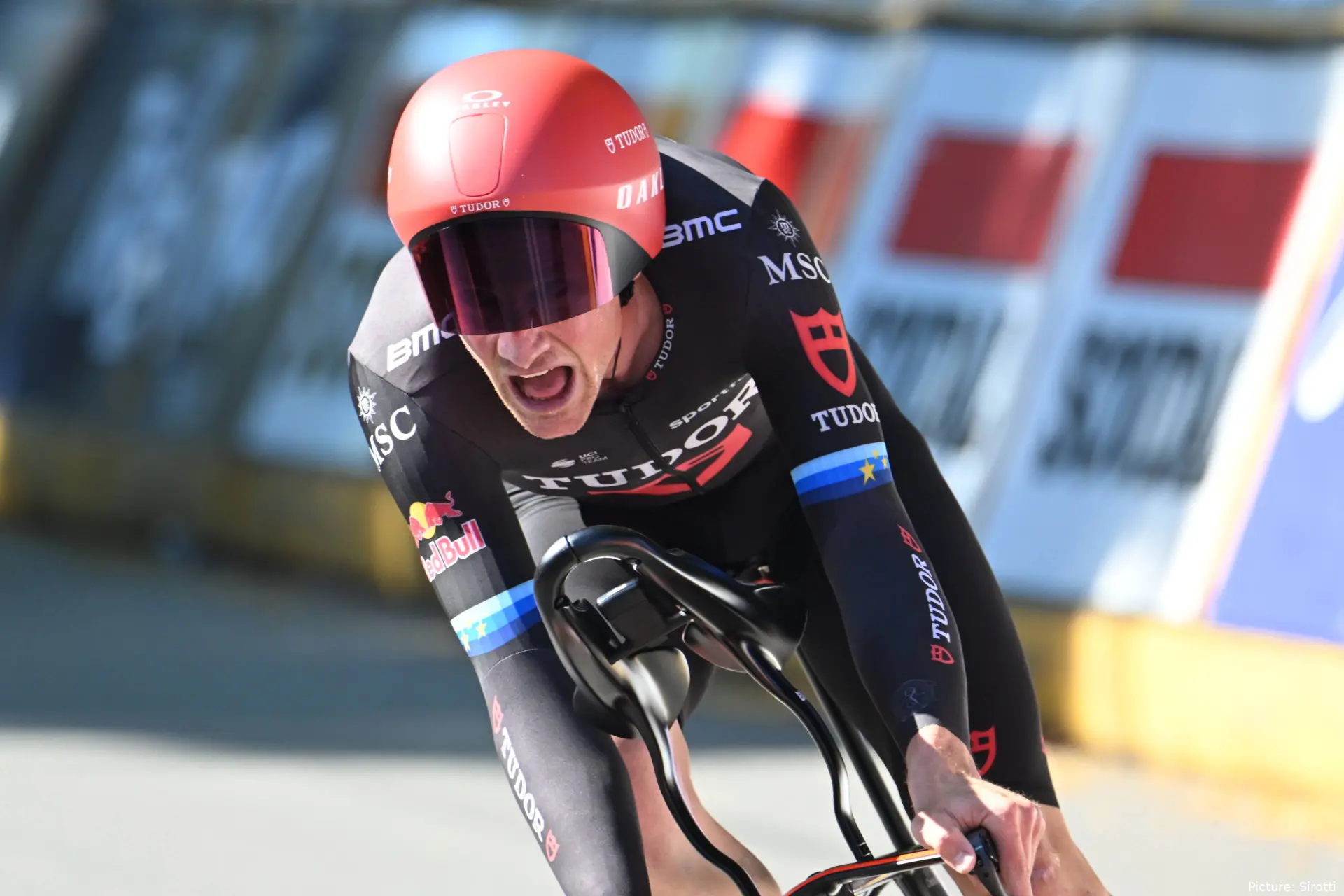
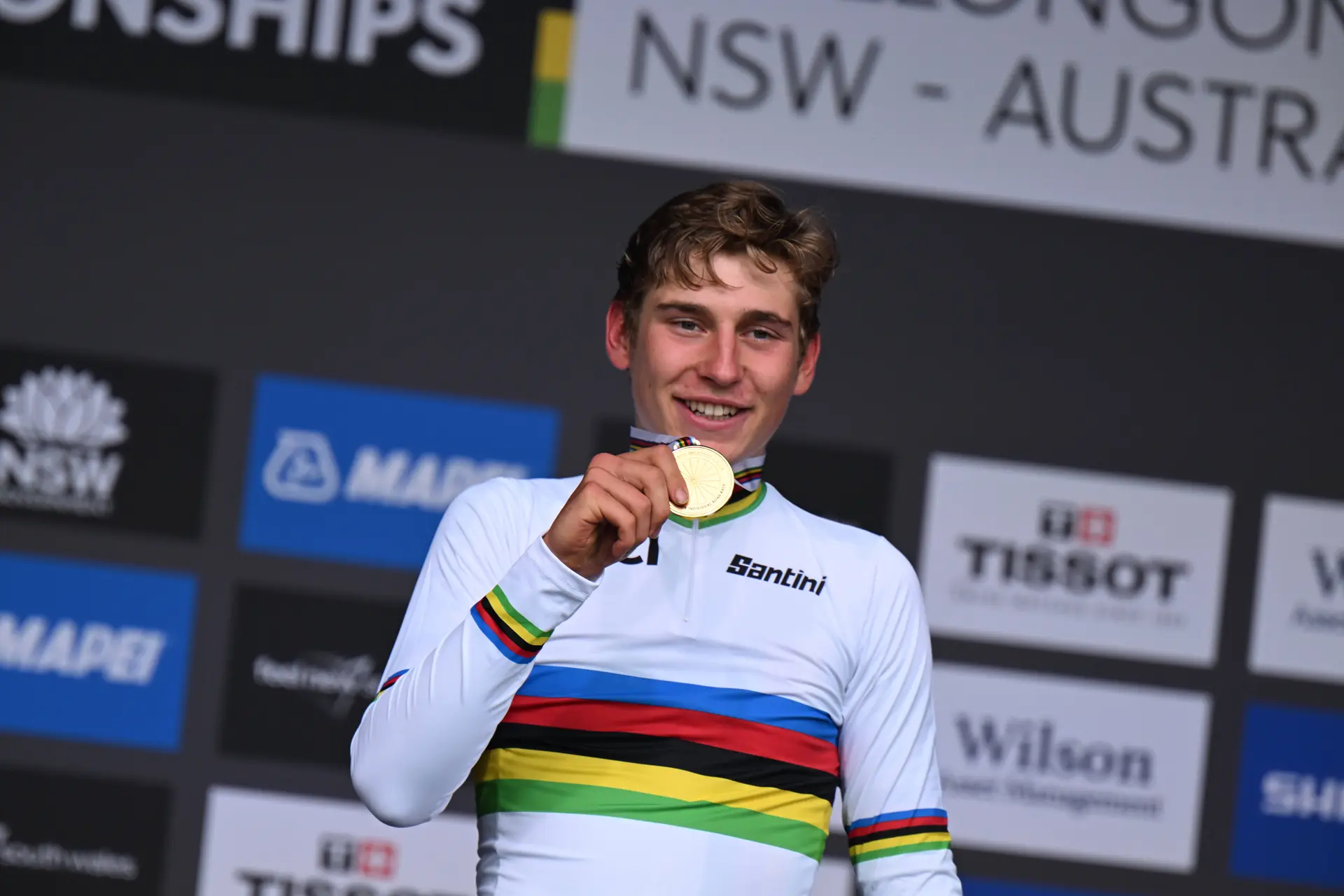
Stefan Küng was the standout performer in the time trial on stage 18 of the Vuelta a España 2026. The Swiss rider set the fastest time over 32 kilometers between El Puerto de Santa María and Jerez de la Frontera, prevailing on a day made especially demanding by the conditions and the timing in the race, deep into the third week of a Grand Tour.
The Tudor Proc Cycling Team rider admitted in comments to CyclingUpToDate after crossing the line that the effort was particularly tough due to accumulated fatigue, though he said he still found the legs to hold his pace to the finish.
The time trial was all about speed on a course where the corners forced riders to stay fully alert. Küng explained that some sections made him uneasy, especially given the road surface.
“Why is it always so hard? A time trial in the third week of a Grand Tour. You just have to empty yourself and try to hang on,” the Swiss said after completing the route. “Today some corners felt very slippery, so I didn’t feel very confident in that regard,” he added.
Despite those issues, Küng managed to sustain his effort into the final kilometers and felt that was precisely where he gained time on his rivals. “I still had something left to go all the way to the line, and I think that’s where I made the difference,” he noted.
Heat offers brief respite
Another key factor was the temperature. The Vuelta has endured several days near 40 degrees, though conditions eased slightly in the past few hours.
Küng acknowledged that the small drop in temperatures was already noticeable on the bike. “I feel quite good today. On some days it’s been extremely hot, but since yesterday it’s cooled a bit, we’re around 35 °C instead of 40 °C, and you can feel the difference,” he explained.
The Swiss also recalled that riders already knew the course profile when the Vuelta was unveiled, but racing it in such conditions always adds another layer of difficulty. “We knew what we were getting into when the Vuelta route was announced, but still, the fact that it’s a race adds an extra challenge,” he said.
A victory deep into the third week
Küng also highlighted the work done throughout the race and the effort required to reach this time trial with the legs to fight for the win. At this point in a Grand Tour, every effort feels different. “I feel like today I had a little less to lose, but that’s always hard in the third week of a Grand Tour,” he admitted.
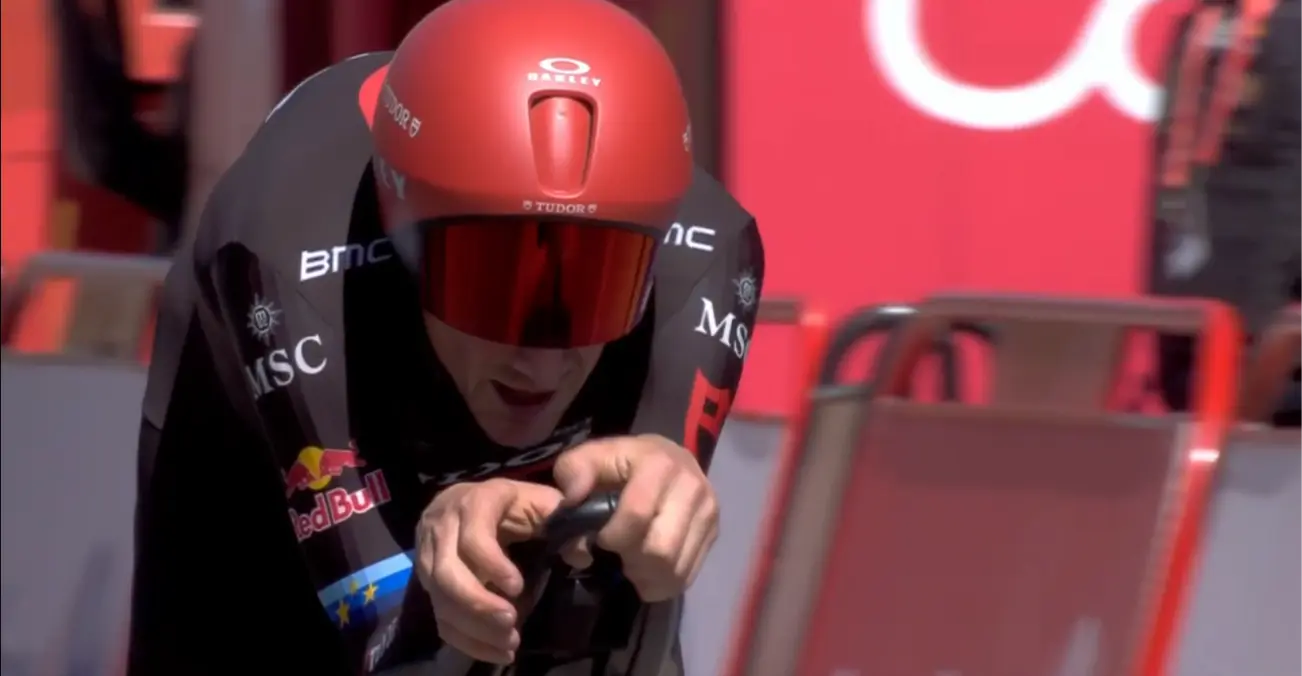
The Swiss rider said he had emptied the tank and, for that reason, could only be satisfied with his performance. “I gave it everything, so in the end, yes, I have to be happy with today’s result. I hope it’s enough to win,” he said.
The course also tested technique
Küng stopped the clock at 35:22, a time that, as he explained, was very close to what they had projected in pre-race simulations. “Yes, I think it’s more or less spot on, although it’s hard to factor in the corners during recon,” he said.

The Swiss pointed to the final roundabout as an example, where speed and the need to hold a clean line made things particularly tricky. “Especially the last roundabout—being well positioned and then, in the race, when you hit it at more than 50 km/h, it’s really hard to hold your line—but I hope it’s enough,” Küng concluded.

Jorge BorregueroWriter
Jorge Borreguero is a journalist with a degree from the Complutense University of Madrid and has been a writer for Cyclinguptodate and Ciclismoaldia since early 2023. In this role, he has played a key part in the evolution of the website, particularly as a specialist covering Movistar Team. He regularly writes race reports, analytical pieces, and in-depth features about the team, and has conducted exclusive interviews and attended multiple team presentations, providing readers with firsthand insights into one of the leading professional cycling squads.
Throughout his career, Jorge has maintained a strong focus on sports journalism, gaining experience across a variety of disciplines, including basketball and football. However, his current work is almost entirely dedicated to cycling, contributing extensively to Ciclismoaldia and its sister website Cyclinguptodate. For these platforms, he combines thorough research with detailed reporting to deliver high-quality content, ranging from race previews and results to expert analysis of teams and riders.
Jorge’s reporting is marked by accuracy, depth, and a commitment to providing readers with reliable and authoritative information. His direct engagement with teams, athletes, and events ensures that his coverage reflects firsthand knowledge and professional insight. Through his work, he has established himself as a trusted voice in professional cycling journalism, bridging the gap between the sport and its global audience while maintaining rigorous editorial standards.
claps 0visitors 0
Just in

Popular news
Latest comments
- If I were Visma I would take a bunch of money, buy out the Seixas contract and get him on that team. He is the next star after Tadej starts to slow down in two or three years.awp21-10-2026
- If the UAE follows Saudi fortunes, a lot of this might actually happen.Jumpyjohn21-10-2026
- Really? And you know this from who?Jumpyjohn21-10-2026
- Obviously speeds have gone up ( partially because only 20y ago, the peleton was often not interested in keeping speed high which nowadays they’re almost forced to accept) but using stage 11 as proof is ridiculous, the wind was a huge factor.Jumpyjohn21-10-2026
- The truth is: "We’ll avoid rushing from race to race" - Remco Evenepoel reveals 2027 focus and what he'll change from this season to avoid the races where Pogi will be.PogiSloFans21-10-2026
- while goofing off with stats, looked at all riders with more than 100 wins. Of these, Delio Rodríguez (1935-1948) won an astonishing 43% of the races he entered, 117 wins in just 271 race days. Never really heard of the guy, beyond lists of Vuelta winners, but nobody else comes close. Maertens and Merckx are around 32%, Poblet and Pogačar at 29%, and that makes for only 5 riders who have won more than 1/4 of the races that they entered.RidesHills21-10-2026
- lackluster transfer market - because they retained all of their best riders.mij21-10-2026
- Saying that the "only thing" he got was the World TT and the Euro championship is amusing - plenty of riders would define their career by just one of those wins. At 26, after 8 seasons, Evenepoel has 81 wins, 13 of which are Olympics (TT/RR), Worlds (4 TT/RR), Euros (TT/RR), Monuments (2 LBL), and a Grand Tour (Vuelta). To pick a non-random comparison, at age 26, Sagan (10 years and a day older than Evenepoel) had 89 of his 121 wins, with 2 Worlds RR and Flanders. If you prefer to compare seasons on the World Tour, after 8 seasons, he had 3 Worlds and a Monument. Yet somehow Evenepoel only wins when the field is weak? Either that's not true, or he has impeccable timing that somehow others aren't able to copy. I am making a statistical point here, and can bring in other riders as well. Using Procyclingstats, Evenpoel has won about 19% of the races he enters. In comparison, Sagan won 11%, Kelly 12%, Van Aert 13%, van der Poel 18%, Hinault 22%, Pogačar 29%, and Merckx 32%. Everyone loses far more than they win, no surprise, and Evenepoel wins a lot.RidesHills21-10-2026
- hah, neat!wrsty21-10-2026
- He also had more than two months away from racing between Liege and the Tour, tho he did start his season in January.Lozza21-10-2026
Loading
Write a comment