Richard Carapaz’ departure forces EF Education-EasyPost to reinvent itself - Less money, new leaders and a risky gamble
Cycling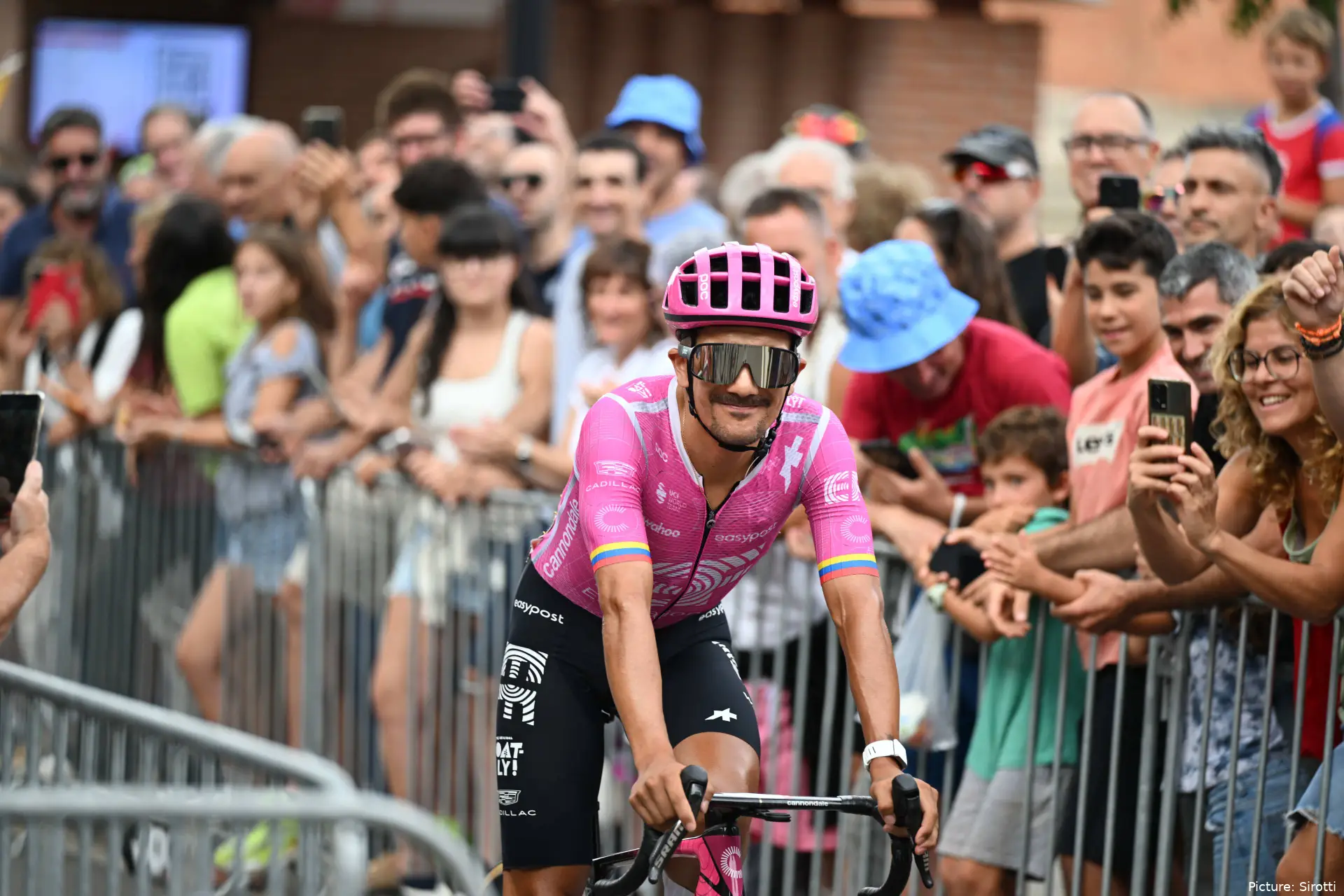
Richard Carapaz’s move to NSN Cycling Team in the transfer market marks a turning point for EF Education-EasyPost ahead of the 2027 season. The American team is losing its leading rider, but also facing a far deeper transformation: budget cuts, a major reshaping of its roster and a change in philosophy as it looks to keep competing against the peloton’s most powerful teams.
Rather than seek a direct replacement for the Ecuadorian, Jonathan Vaughters wants to build a team in which several riders have the freedom to take the lead. The decision is not based solely on sporting considerations. EF’s financial situation has significantly shaped the transfer market.
Vaughters himself acknowledged that the team’s budget was under pressure and that letting one of its highest-paid riders leave was among the simplest ways to cut costs. Carapaz was still under contract, but both parties agreed to facilitate his departure so he could join NSN in 2027.
The move is especially significant after a season in which the Ecuadorian once again showed he could make the difference in the biggest races. At the 2026 Tour de France, he won two mountain stages and claimed the mountains classification jersey. He also finished fourth at the Vuelta a España after contending for the overall title for much of the race.
EF is therefore losing far more than a prominent name. It is saying goodbye to a rider capable of contesting a Grand Tour overall, winning demanding stages and serving as one of the team’s leading public figures. The question is how the team plans to fill that gap without entering a financial bidding war to sign another star.

Richard Carapaz' departure leaves a big dent at EF Education-EasyPost
Carapaz’ departure driven by financial pressures
The Ecuadorian’s departure must be viewed in the context of EF Education-EasyPost’s finances. Vaughters said the team had to make difficult decisions as its resources came under mounting pressure. The team boss said its budget could be cut by around 15%, amid factors including the loss of Oatly as title sponsor of the women’s team and rising operating costs.
In that context, Carapaz was one of the team’s biggest expenses. Vaughters acknowledged that letting the rider go was a relatively straightforward way to ease the pressure. He also stressed that the move was not a departure forced on the rider.
The impact is clear. EF no longer has one of the few riders on its roster capable of challenging for a Grand Tour overall, while also reducing the investment required to build a team around a single leader.
However, the sporting management believes the team can share that responsibility among several riders. The plan is not necessarily to find another Carapaz, but to change the way the team races and make better use of a roster with more room to take risks.
A team of opportunities rather than a structure built around one star
EF Education-EasyPost’s new philosophy is perhaps the most interesting part of this rebuild. Vaughters has said he does not want the entire sporting strategy to depend on protecting a single leader. He wants riders to have the freedom to pursue results, whether they are young talents seeking a first WorldTour opportunity or experienced cyclists aiming to rediscover their best form.
The shift means moving away from a setup in which much of the team’s planning and resources could be concentrated around Carapaz at Grand Tours. The Ecuadorian needed a group of climbers and teammates able to support him on decisive days, but that division of roles also limited other riders’ chances to pursue their own results.
EF sports director Tom Southam said the Ecuadorian’s departure would give other riders who had spent years working for him the chance to step up. The Briton stressed that Carapaz’ results were not down to individual effort alone; the team had committed significant resources to supporting his goals.
That does not mean the team is giving up on major results at Grand Tours. Rather, it will have to pursue them with a different allocation of resources and a broader range of options. Ben Healy and Neilson Powless are two riders who could take on greater roles, though the team also expects others to make the most of the new landscape.
| New arrival | What he can bring |
| Tao Geoghegan Hart | A return to the level that enabled him to win the Giro d’Italia |
| Iván Sosa | A climbing option and Grand Tour experience |
| Emil Herzog | Young talent and versatility in one-day races and stage races |
| Nicolas Milesi | Time-trial strength and room to develop |
| Tobias Bayer | Teamwork, consistency and opportunities in breakaways |
Tao Geoghegan Hart, the signing that embodies the new project
Among the team’s signings for 2027, Tao Geoghegan Hart perhaps best reflects EF’s sporting ambitions. The Briton, winner of the 2020 Giro d’Italia, joins after several difficult years following his crash at the 2023 edition of the Italian race. His signing is not about bringing in another established leader immediately, but about the possibility of helping a rider who has already proved he can compete at the highest level rediscover his best form.
His contract will run for one season, with the aim of rediscovering the form that enabled him to win a Grand Tour. For EF, this is an obvious sporting risk, but it also carries considerable potential if the Briton can get close to his best level.
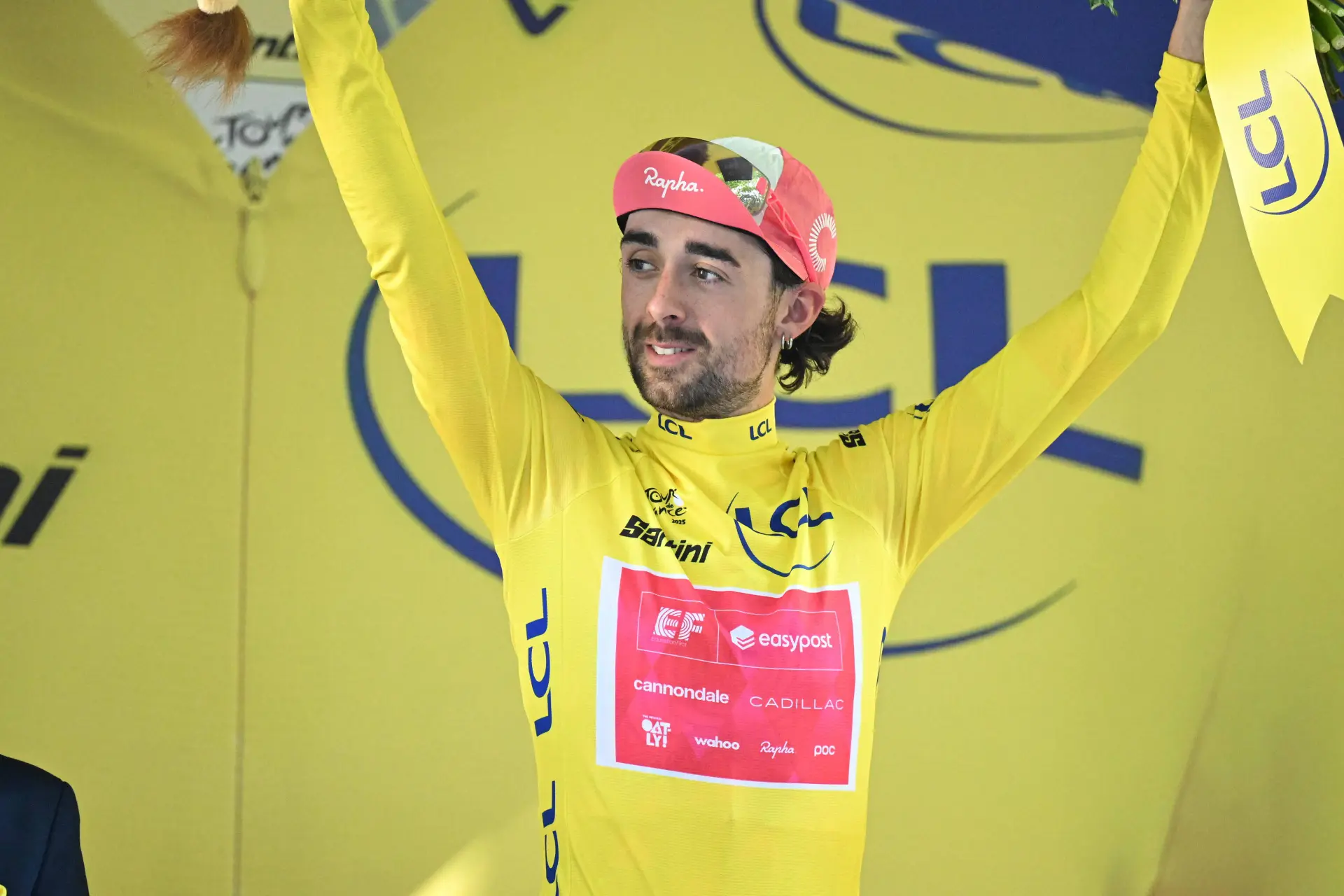
The arrival of Iván Sosa follows a similar logic, though his career has taken a different path. The Colombian will return to the WorldTour after two seasons with Kern Pharma, where he has regained prominence and sought opportunities away from the biggest teams. His addition strengthens the team’s climbing options, a particularly important factor after Carapaz’s departure.
The squad is also adding riders with room to develop and a range of different strengths. Emil Herzog, who joins from Red Bull - BORA - hansgrohe, is one of its most promising bets for the future. The former junior world champion stands out for his versatility and his ability to seize opportunities in one-day races and stage races.
Nicolas Milesi, arriving from the Netcompany INEOS development team, brings particular strength against the clock. The Italian won silver in the U23 time trial at the 2026 World Championships in Montreal and has also produced strong results in other time trials. Tobias Bayer, meanwhile, offers experience in team support and the ability to make the breakaway.
This blend of riders shows that EF is not looking solely for immediate results. The team also wants to bring in riders who can develop within its structure and become key contributors in the years ahead. That strategy suits a more limited budget and the need to find value before riders command a high price on the market.

Iván Sosa will ride for EF in 2027
EF turns to its development team to offset departures
The rebuild is not limited to external signings. EF will also draw on its own development team to complete its WorldTour roster. Four riders will step up to the first team: Gavin Sherry, Tomos Pattinson, Roberto Capello and Gavin Hlady.
Promoting these riders matters for two reasons. It brings youth and potential into the squad, while also offering a cost-effective way to replace the many riders who have left during the transfer window. EF has lost nine riders, including Carapaz, and must rebuild much of its roster without the resources available to the peloton’s biggest teams.
Capello, 19, is one of the most intriguing names in this group. The team highlights his climbing and time-trial abilities, two strengths that could help him develop into a stage-race rider. Hlady, 23, joins after two seasons with Aevolo and brings experience from the US calendar and stage races.
Sherry and Pattinson complete the group of young riders who will get the chance to make their debut at the highest level. For EF, this is not simply about filling roster spots; it is about maintaining a development pathway that identifies talent and gives riders continuity in the WorldTour.
This approach also brings a degree of uncertainty. The young riders will need time to adapt to the calendar and demands of the top tier, so it would be unrealistic to expect all of them to play a decisive role straight away. Their promotion nonetheless reflects the model Vaughters wants to strengthen: identify riders with potential, give them opportunities and help them become capable of competing for major results.
Ben Healy and Neilson Powless face a different opportunity
Carapaz’ departure could also change the roles of riders already on EF’s roster. Ben Healy and Neilson Powless are among the leading candidates to take on greater responsibility, particularly in one-day races and stage races where the team is targeting stage wins.
Healy has already shown he can compete with the best on demanding terrain and win at the highest level. His attacking style fits the philosophy Vaughters wants to reinforce and could make him one of the team’s leading riders in the mountains and in selected one-week races.
Powless offers a different profile, with experience in the Classics and the ability to adapt to a range of race scenarios. Without a leader who commands much of the team’s planning, he may have more freedom to pursue his own goals.
The key will be turning that freedom into results. The transfer frees up resources and opportunities, but it also removes a proven contender from the team’s Grand Tour plans. Not every rider can match his ability to challenge for the overall classification or his level on the toughest mountain stages.
Jorge BorregueroWriter
Jorge Borreguero is a journalist with a degree from the Complutense University of Madrid and has been a writer for Cyclinguptodate and Ciclismoaldia since early 2023. In this role, he has played a key part in the evolution of the website, particularly as a specialist covering Movistar Team. He regularly writes race reports, analytical pieces, and in-depth features about the team, and has conducted exclusive interviews and attended multiple team presentations, providing readers with firsthand insights into one of the leading professional cycling squads.
Throughout his career, Jorge has maintained a strong focus on sports journalism, gaining experience across a variety of disciplines, including basketball and football. However, his current work is almost entirely dedicated to cycling, contributing extensively to Ciclismoaldia and its sister website Cyclinguptodate. For these platforms, he combines thorough research with detailed reporting to deliver high-quality content, ranging from race previews and results to expert analysis of teams and riders.
Jorge’s reporting is marked by accuracy, depth, and a commitment to providing readers with reliable and authoritative information. His direct engagement with teams, athletes, and events ensures that his coverage reflects firsthand knowledge and professional insight. Through his work, he has established himself as a trusted voice in professional cycling journalism, bridging the gap between the sport and its global audience while maintaining rigorous editorial standards.
claps 0visitors 0
Just in

Popular news

Latest comments
- Mathieu and Wout!!! You must start in CX this winter! (hope you reading comments here...) ;-)averagecyclist12-11-2026
- Who made you site boss?Lozza12-11-2026
- This shows so well you’ve never ventured out to a cycling event and checked out spectators.Jumpyjohn12-11-2026
- I preferred the one about amateur riders and passing (perhaps to explain why he can’t ride at 220 which would probably be more effective to return to shape).Jumpyjohn12-11-2026
- Not just ManU, far worse in some minority sports ventures.Jumpyjohn12-11-2026
- From your writing it sounds like you’ve been sharing your views with people here for quite a while, quite presumouptuous for a new profile.Jumpyjohn12-11-2026
- Which is amazing given his weight and size, though, unlike in boxing and some rare instances we haven’t a clue what his fighting weight was. Anybody know why these “public” figures floated around are considered as being accurate?Jumpyjohn12-11-2026
- That’s a first point, everyone can have an off year or just stagnate before a new upward cycle. What would have been more interesting is including Skjelmose’s performance into the discussion, things have also been expected from him after several performances in the past but he hasn’t really progressed either, his TdF was basically what you would have expected but he’s 26 and been kind of stuck at this level for at least 2-3 years. Maybe he’s a late developer or maybe he needs something to change but as manager I’d be just as demanding and worried about both. Perhaps the recruitment concept was to have enough talent so at least one every year would be in shape and they’ve just been unlucky. Don’t want to rub it in but you could even say Mads lost a notch, so is it the riders or is it more to do with the team?Jumpyjohn12-11-2026
- Bingo...I was also going to say that young pretty women are obsessed Pogi fan girls... who are chasing him. All glossy "____" (blank) about Tadej. PS: You can all fill in the "blank" yourselves, whatever you prefer. The definition of glossy is: It looks unusually shiny, glazed over, watery, or vacant/unfocused.PogiSloFans12-11-2026
- Are you able to discuss ANYTHING without making a reference back to your Special 1? It’s almost as if you’re paid by his marketing team to improve his ranking in search results.Jumpyjohn12-11-2026
Loading
Write a comment