Quinn Simmons' crazy power data at World Championships - American's Strava shows just how hard it was to win rainbow jersey
Cycling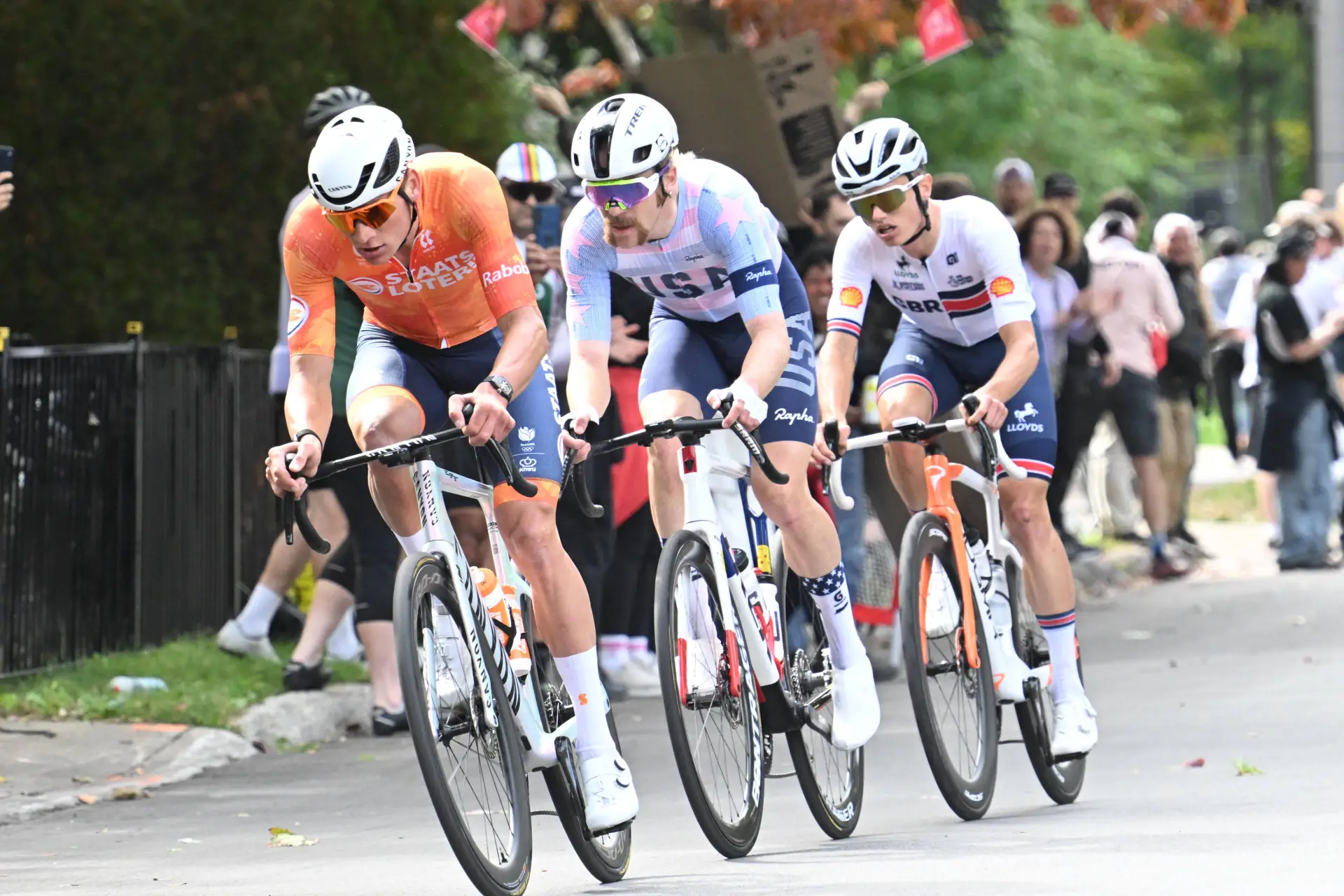
The numbers behind Quinn Simmons' extraordinary teammate ride behind Brandon McNulty's extraordinary World Championships win show just how hard it is to win the rainbow jersey.
While the UAE rider took the headlines from victory, a remarkable team performance saw Quinn Simmons first mark a rampaging Mathieu van der Poel over a 50-kilometre period of the race, allowing McNulty and Matteo Jorgenson the advantage of not contributing to the chase behind.
For Simmons, the plan was forged before the race to use their triple leadership credentials to their advantage - which in practice saw the 26-year-old spring into action while Jorgenson also did the bidding among the favourites group.
“We’re all on different teams, but after last night’s meeting, we said: ‘No matter what, an American has to finish on the podium',” Simmons said after the race.

Quinn Simmons in action at the 2026 Montreal World Championships
Simmons follows van der Poel to put USA in driving seat
“I said, ‘Hey guys, anything is possible. We’re racing for the podium, but we can do even better if we ride like this'. And that’s exactly what we did.”
McNulty showed his cards with 35 kilometres to go after Simmons successfully kept van der Poel in check before the race re-grouped at the front. Simmons trusted van der Poel's instincts and followed him in a move that stuck and dictated the race's finale.
"If Van der Poel and Wout make a move, you have to trust their instincts. I think they're pretty good cyclists," he joked.
"I also knew that if the better climbers went, I probably wouldn't be able to keep up. Being up there at the front and giving Jorgenson and McNulty a chance to sit on gave us two options to win."
Read also
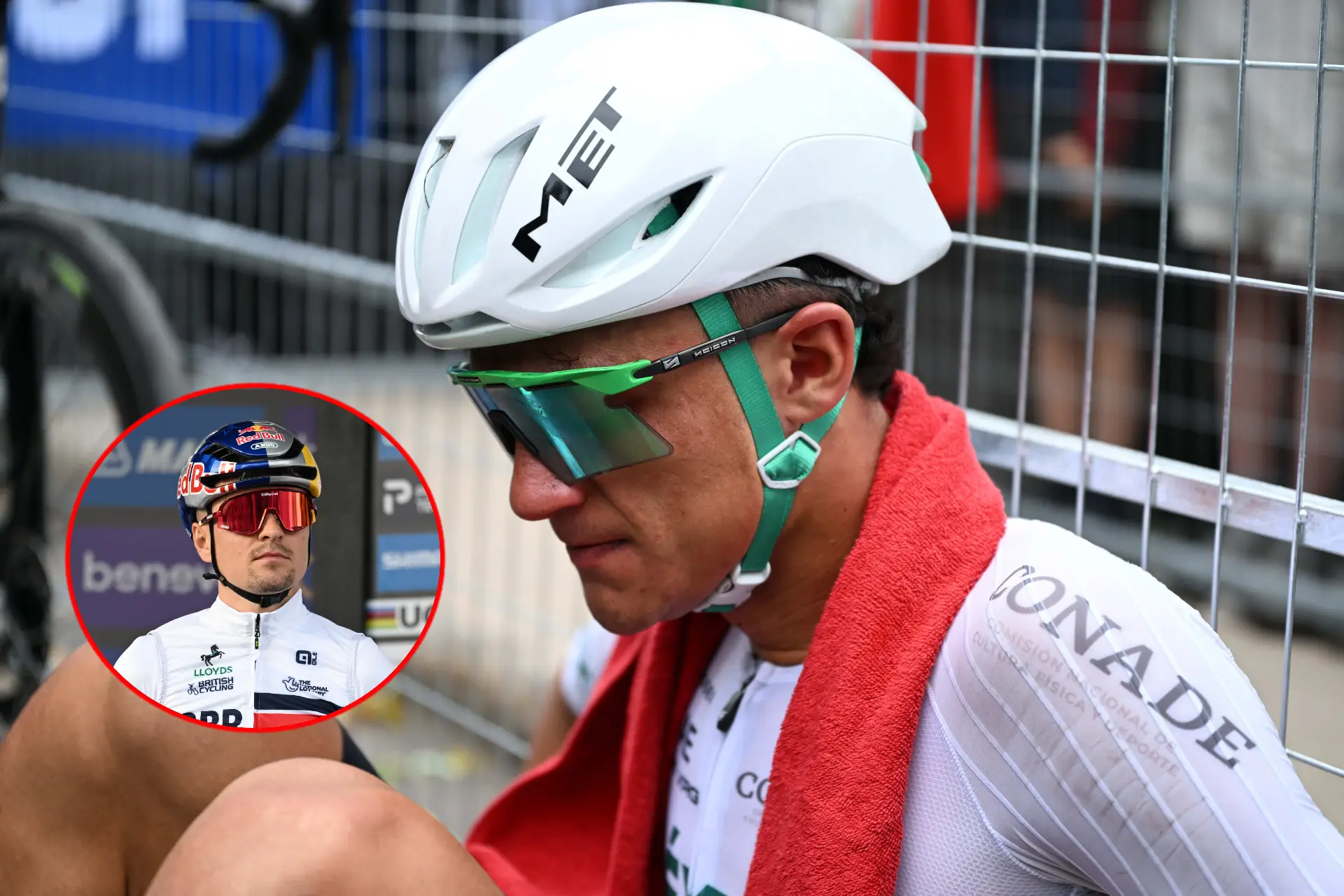
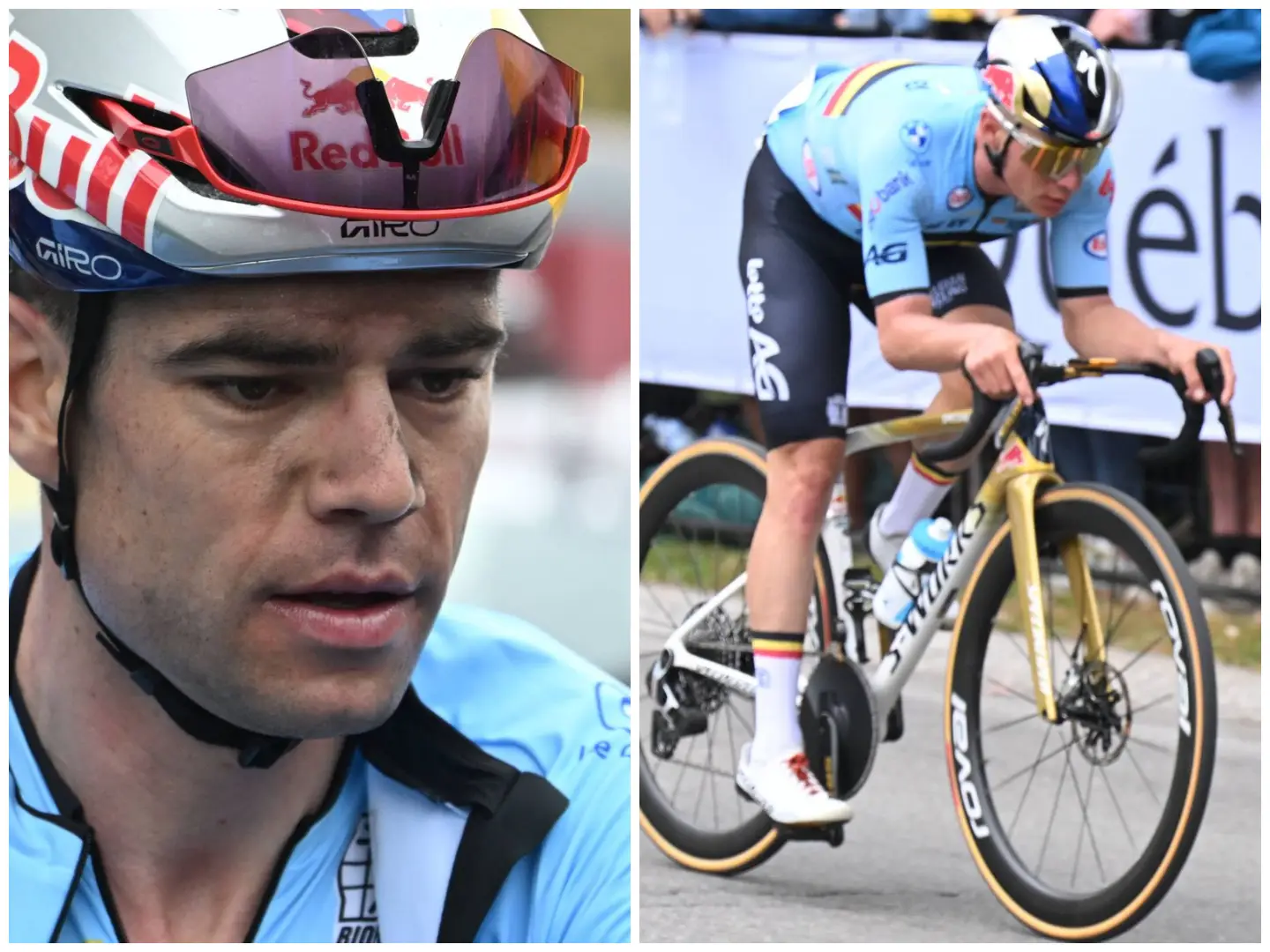
Quinn Simmons power data
When the American uploaded his ride to Strava, fans were given an insight into the incredible power behind his gold-assisting performance. In over six hours of riding, the Lidl-Trek rider averaged over 290 watts.
Translated to normalised power, that figure shows at 362 watts. At his peak, likely following attacks or hanging in with Mathieu van der Poel during their breakaway move, his power peaked at almost 1,100 watts - demonstrating just how hard the Montreal showcase was for the race's protagonists.
Despite his outstanding form, Simmons doesn't mind missing out on his best result when the rainbow jersey is on its way to the USA: “Whatever! Who cares about missing a medal when your team takes the jersey?”
Gavin QuinnCycling Journalist
Gavin Quinn is a cycling journalist and ultra-distance cyclist with a BA in Journalism from Dublin City University. Formerly the Press & Communications Officer for Cycling Ireland, Gavin has worked inside the national team at the World Championships and has reported for the Irish Mirror, Mirror UK, and The42.
His expertise is backed by elite-level access, having interviewed stars like Sam Bennett and Ben Healy, as well as immense personal endurance. In 2025, he completed a 12,000km solo cycle from Ireland to Vietnam, following a 4,600km tour across Europe. From the cobbles of Paris-Roubaix to the gradients of the Tourmalet, Gavin’s writing focuses on the "romance and brutality" of the sport. Having visited 50+ countries, he brings a global, cultural perspective to his coverage of the pro peloton for CyclingUpToDate.
claps 0visitors 0
Just in
Popular news
Latest comments
- While media outlets point to the loss of Richard Carapaz, Kasper Asgreen, and rising talents like Steinhauser as a sign of trouble, this is actually classic EF Pro Cycling tactical pivot at play. Operating on less than half the budget of state-backed super-teams, Jonathan Vaughters smartly maximized Carapaz’s return on investment by turning high salary and health setbacks into Tour stage wins, Yellow, and the Polka Dot jersey, before freeing up vital capital when his valuation peaked. Let us be completely honest here: Carapaz’s departure to NSN is strictly about securing one final massive payday before calling time on his career, rather than building a lasting sporting legacy. EF built a squad around him and gave him tactical freedom that few teams would offer, but given his ongoing health concerns and age, keeping him at that price point represented an unsustainable risk. It is very unlikely he will match the freedom or success he enjoyed at EF with his new team, making this move a pure business decision for a veteran rider cashing in on his remaining value. In contrast, while signing Tao Geoghegan Hart carries its own physical risk, it comes at a vastly different financial scale that protects EF's bottom line while offering immense upside. Replacing that climbing depth won't happen overnight, but bringing in Tao fits EF’s proven reclamation playbook perfectly by providing a low-pressure, culture-first environment for a proven Grand Tour winner to find his magic legs again. Backed by a secured core in Ben Healy, Neilson Powless, and Sean Quinn through 2029, EF isn't crumbling; they are simply resetting their wage structure, staying nimble, and betting on high-ceiling upside where richer teams only see risk.wambo19-10-2026
- This is classic EF Pro Cycling: where other WorldTour squads see risk and injury recovery as a liability, Jonathan Vaughters sees high-ceiling potential and an opportunity to build a custom runway for a rider's resurgence. While Richard Carapaz's high salary and health setbacks made a traditional Grand Tour victory unlikely against today's dominant talents, EF smartly maximized every ounce of his ability by pivoting toward high-visibility targets like a Tour de France stage win, the Yellow Jersey, and the King of the Mountains title. Now, with Carapaz moving on, Tao Geoghegan Hart’s ceiling when healthy is undeniable, and after a tough couple of years recovering from his Giro crash, EF's patient, culture-first approach might be the exact environment he needs to find his magic legs again. EF has consistently proved that they do not need the largest budget in the peloton to extract elite value and deliver memorable performances. By giving Tao the time and tactical freedom to rebuild without overwhelming pressure, this move could easily pay huge dividends and shock a lot of people in the coming seasons.wambo19-10-2026
- The article makes it sound like a great thing and something to be applauded. The reality is is gives the Americans another 6 years to fleece European cycling fans or force them to hunt around Europe with VPN’s for free feeds. Not something to be celebrated in my book. Before someone points out that coverage of this depth costs money, yes, I agree but not £30+ per month a fee I will wager will gradually increase now this deal has been cemented.Paul53119-10-2026
- Great. Thrilled. (Satire) Oh, how I miss the days of GCN. Still wear my GCN hoodie with pride.anonymouscyclist19-10-2026
- You could also look at it another way. How many riders have had better or more consistent results since the Tour?Jumpyjohn19-10-2026
- Whilst I love Tadej (and Remco, who deserves to be mentioned here, too), @JumpyJohn makes a valid point, and he isn’t wrong @MajorPayne. It is a fact that today’s official broadcasters of cycling struggle to keep our attention once the likes of Tadej (or Remco) attacks at ~80km or so. In the 142nd issue of Rouleur, Ned Boulting reflects on the often stressful paradox of commentating on a race that is effectively over before the broadcast window even hits its stride. In this edition, he centres on Remco’s 1hr solo at the Challenge Mallorca this year, and captures the panic and dread shared by the commentators when a dominant rider kills off the racing tension early. I recommend you read it, it’s a fascinating insight into the world of commentary, and the true viewing figures of today’s cycling. I must add here, I love Tadej and Remco, but I would be lying if my heart rate wasn’t higher when watching the World Championships this year. And I’m sure Rob Hatch would say something akin regarding his commentary!anonymouscyclist19-10-2026
- The shattered women’s marathon record was clean and highly surprising and then a few months later the athlete was very positive in another test for something not taken by mistake when recording far less impressive results. Sounds to me like the problem is still the age old one, detection is often way behind. Just like with crime, it’s not because you can’t catch the criminals that you aren’t aware of the crime.Jumpyjohn19-10-2026
- Listen, you have a point but on the other hand in cycling, once some of the riders go solo and build a minute’s gap, there’s hardly any action left to watch. Cycling is definitely not for today’s generations of accelerated viewing. Other people find skydiving or chess exciting but you can’t force everyone to feel the same.Jumpyjohn19-10-2026
- That’s a funny one. Yeah obviously he’s more aero than some but most of the aero effect at elite level is the bike. Now you have me starting to feel sorry for the guy behind him when he pulls a groupetto.Jumpyjohn19-10-2026
- Knew a World Tour promotion was coming for Ben this season. Thrilled for him, and can't wait to see what he can do at this level. Another one to watch at the TTs.anonymouscyclist19-10-2026
Loading
Write a comment