“If there’s women’s football, they go all out with cameras... even though it’s unwatchable” - TV treatment of Demi Vollering’s World Championship triumph sparks fury
Cycling
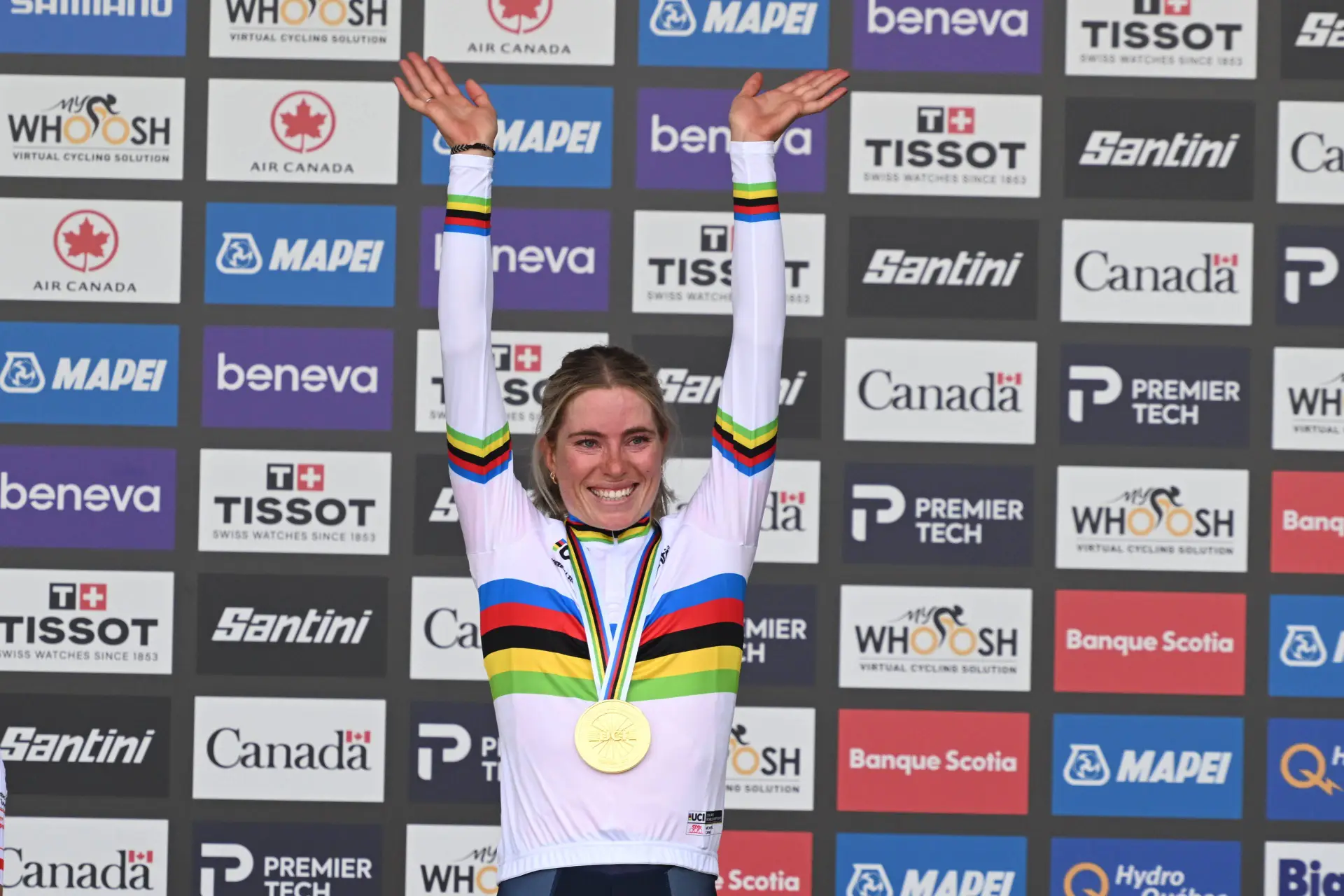
Demi Vollering produced one of the biggest victories of her career in Montreal, finally becoming elite road world champion after a dramatic finale against Kasia Niewiadoma and Elisa Longo Borghini. Back home in the Netherlands, however, the way that triumph was shown on television quickly became a story of its own.
The women's road race was moved away from the country's main public TV channels long before the decisive kilometres, forcing viewers to switch to NPO1 Extra or follow online if they wanted to watch Vollering complete her rainbow jersey victory. That decision has since sparked criticism, with Dutch TV personality Johan Derksen among those questioning why women's cycling was treated differently from other sports.
“Women’s cycling is at least as exciting and as good as men’s cycling”
“I watched that race absolutely engrossed, but then I have to go to Eurosport,” Derksen said on the Groeten uit Grolloo podcast. “If there’s women’s football, they go all out with cameras and people around the pitch, even though it’s unwatchable.”
For Derksen, the frustration was not with women's sport being given airtime, but with the difference he sees between the treatment of football and cycling. “Women’s cycling is at least as exciting and as good as men’s cycling,” he continued. “And then they show some rubbish Young Netherlands match that nobody is interested in. But we have to go to Eurosport, because the NOS doesn’t think it’s relevant.”

Vollering secured the Rainbow Jersey in dramatic style in Montreal
That is not quite how the broadcasting decision was described from inside NOS. The race remained available through NOS on NPO1 Extra and online, while NOS cycling chief Stef Clement later explained that the NPO controls the allocation of programming across the three principal public channels. The NOS sports department, he said, would itself have preferred to keep the race on NPO1.
What viewers switching away from the main channels subsequently missed was a World Championship that remained open virtually until the line.
The Netherlands had committed fully to Vollering as its sole leader under national coach Laurens ten Dam. Puck Pieterse helped launch her into an attack with 38 kilometres remaining, and Vollering initially opened a gap before Kasia Niewiadoma and Elisa Longo Borghini eventually fought their way back.
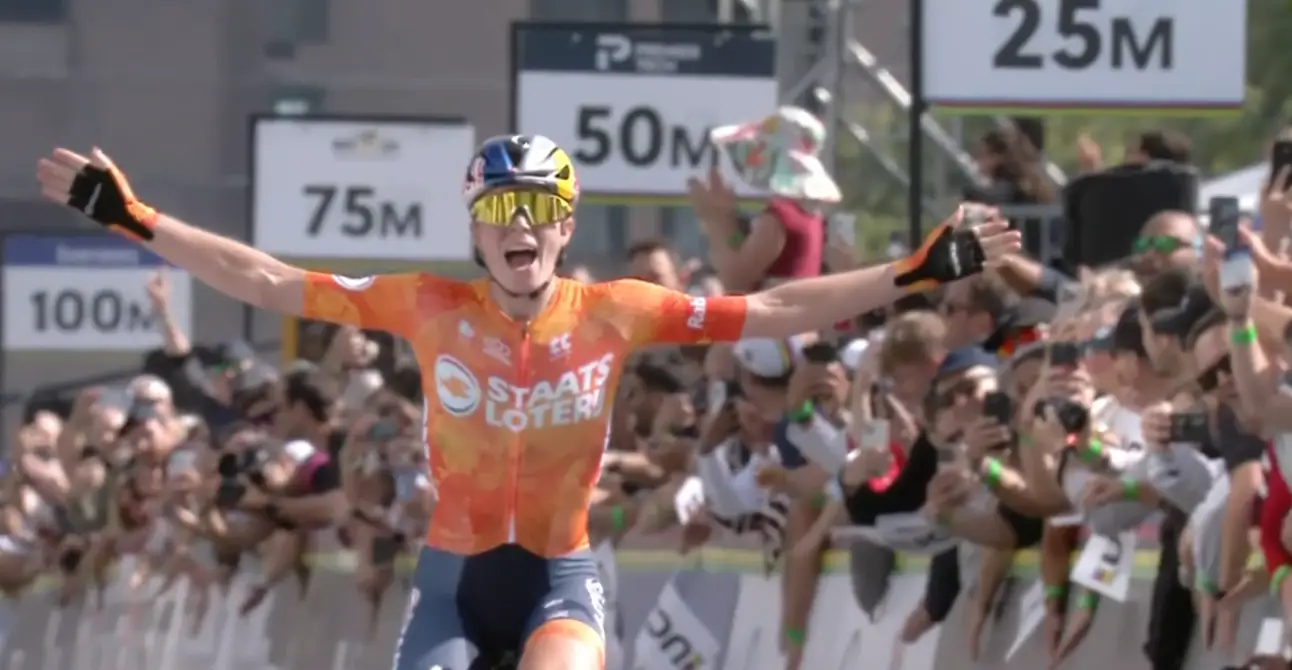
Longo Borghini attacked again approaching the final lap and Niewiadoma made another attempt inside the closing kilometres, but neither could get rid of Vollering. The Dutchwoman reached the finish with Niewiadoma and beat her in the sprint to take the rainbow jersey for the first time in her career.
Derksen also praised Ten Dam for abandoning any ambiguity over leadership and putting the Dutch team behind one rider. “I think that national coach Laurens ten Dam is also a colourful and likeable person,” he said. “He got it absolutely right by racing with one clear leader.”
Read also
“I understand why they feel discriminated against”
Vollering's victory completed the Dutch plan and added a first elite road world title to a season already containing victories at the Tour de France Femmes and Giro d'Italia Women.
“She deserves every bit of credit you can think of,” said Derksen. “She has won everything this season. I understand why she and her colleagues feel discriminated against.”
Vollering herself has not publicly described the television scheduling decision as discrimination. Derksen, however, was not alone in being disappointed by the way the race was moved away from the main channels.
Ten Dam also called it a “missed opportunity” after watching the rider around whom he had built the entire Dutch strategy become world champion. “It is genuinely top-level sport,” Derksen added.
Montreal will not be Vollering's final championship appearance of the season. The newly crowned world champion is due to line up again at the European Championships in Slovenia, where another major women's road race will follow only days after the debate over how her biggest victory was shown back home.
Kieran WoodDeputy Editor-in-Chief
Kieran Wood is a sports journalist based in Wales and has been active in journalism since 2022. He regularly contributes to DartsNews.com and CyclingUpToDate.com, where he covers professional cycling and darts. In cycling, his work includes liveblogs from major races, including the Tour de France, the Giro d’Italia, and La Vuelta a España, alongside race reports and analysis. He has also conducted interviews with professional riders.
His reporting spans the full racing calendar, from one-day classics to stage races, with a focus on accurate, real-time coverage and clear contextual analysis. For statistics, results, and historical context, he regularly uses resources such as ProCyclingStats. To support reporting on rider activity and training context where relevant, he also references Strava.
In his work, Kieran places strong emphasis on careful sourcing, editorial accuracy, and updating articles as new, verified information becomes available.
claps 0visitors 0
Just in

Popular news
Latest comments
- "And we’ll avoid rushing from race to race"...LOL he took all that time off between the end of the Tour and the Canadian one day races ! That got him one win and a failed worlds RR title ! Only thing he got a was TT titles and a Euro championship against a weak field !frieders321-10-2026
- Rasmussen hasn't been relevant for years and that's only because he was booted out of the tour wearing the yellow due to failed doping !frieders321-10-2026
- Yep Pogi can't win the Vuelta if he doesn't cross the finish line in stage 21! PogiFanStalker can't seem to understand that.frieders321-10-2026
- This PogiFanStalker can't seem to help himself with his constant nonsensical comments here.frieders321-10-2026
- Only thing boring here is reading your constant drooling comments about him!frieders321-10-2026
- So much clickbait hereDAS21-10-2026
- Yes, this site has truly become a joke... and about 3/4 of the commentators. For most of them UAE are dopers and Pogi is boring??? They're brainwashed and want Pogi out of cycling.... because he's boring. Yes, in their f***ed up brains, Pogi is the G.O.A.T. ... but he's boring???????PogiSloFans20-10-2026
- As long as the anti doping agencies are on the up and up and doing all they can I can live with the world we now live in without suspicion lurking in the back of my mind all the time.
 Brucegel20-10-2026
 - The message to honour the leaving Felix Gall's performances was more enthusiastic
 Rafionain-Glas20-10-2026
 - "We all know he would have won by a big margin if he didn't crash out." But he did crash out, so why does it matter?Rafionain-Glas20-10-2026
Loading
Write a comment