"I would ask teams that are reluctant to sign an African rider to give us a chance” - The Worlds standout seeking a future in Europe
Cycling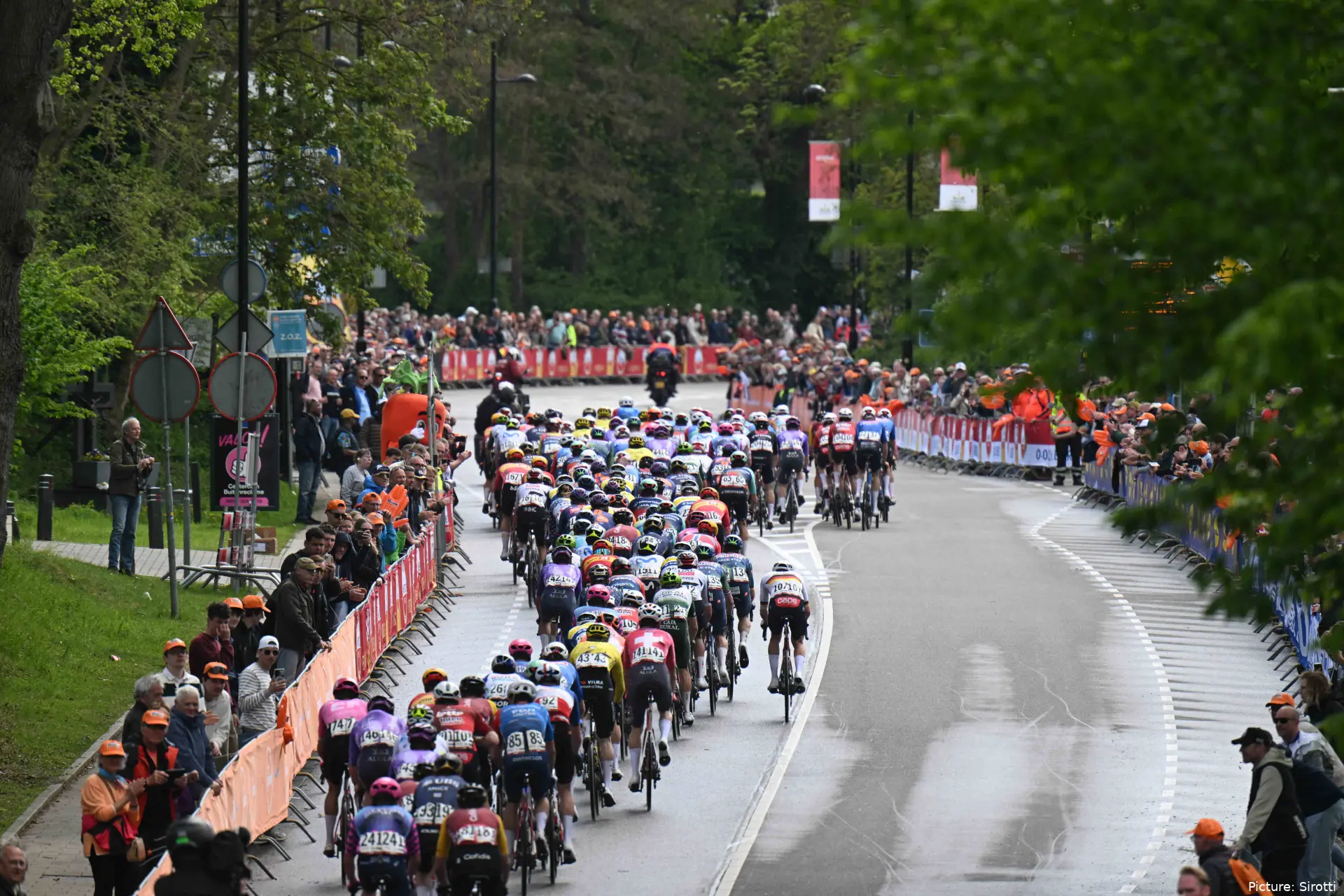
The Montréal 2026 World Championships could become much more than a race for Amaniel Desta. The young Ethiopian arrives at the international event with his national team after a season that has put his name on the map, but also with major uncertainty looking ahead to 2027, as he told MARCA.
Team Amani, the structure that allowed him to grow and race at the highest level, will not continue next season, and the rider needs to find a new team to keep alive his dream of reaching Europe.
Desta heads to Canada with sporting arguments to catch the eye of European outfits. His standout result this season came at the Tour du Rwanda, where he finished fourth overall. There he measured himself against riders from some of the leading development teams and showed he can compete close to them. He added consistency throughout the year, regularly featuring among the young protagonists on the African calendar.
But behind those results lies a reality very different from that of many of his rivals. Desta has had to progress in especially tough conditions and, at times, even tackle training with minimal resources.
The rider himself explains the difficulties he has faced along the way. A lack of financial resources has affected basics such as food, housing, and the travel needed to train and race.
“My experience at Team Amani has been very good for developing my skills and racing at the highest level,” Desta explains. However, that growth has not been free of obstacles. “There have been times when I did not have enough money for food, rent, transport, or even the essentials for training, to the point of having to train with just a banana and sugar cubes to get the session done.”

Amaniel Desta looks to race in Europe from 2027 onwards
It is a situation that reflects the huge disparities between young African riders and those who build their careers in Europe. Desta believes the starting opportunities are not the same, and that inequality can become a barrier even for riders with talent and results.
“There is a big difference between the opportunities a young African cyclist has and those a rider my age has in Europe. European riders enjoy better training conditions, more support, and much more racing experience. We do not have the same opportunities.”
Despite those hurdles, the Ethiopian has stayed competitive and achieved results he now hopes to use as a calling card for European teams.
Fourth in Rwanda, his big showcase
The result at the Tour du Rwanda is one of Desta’s key arguments as he seeks an opening in Europe. His fourth place overall put him in direct competition with riders from development structures and showed his level matches a race that also features young talents with very different preparation conditions.
That result has been backed by a season defined by consistency. Desta has regularly appeared among the standout young riders on the African calendar, reinforcing the sense that his progression does not hinge on a one-off performance.
Now, the Under-23 Worlds offer a fresh chance to prove it to a different audience. Canada becomes an international shop window with riders tracked by teams, sports directors, and decision-makers for next season.
Desta wants to use that exposure to show his results are no coincidence and that he can take a step forward if he finds the right structure to continue his development.
Team Amani folds and Europe is the target
The problem is that, as his performances improve, the platform that helped him do so will disappear in 2027. Team Amani will not continue next season, and Desta must find an alternative to keep racing.
“We African riders do not have enough opportunities to make this jump, and they are very limited. But I will seize the chance if I find someone willing to help me.”
The line sums up the Ethiopian’s situation. The Worlds in Canada arrive at a decisive moment, with the need to turn the season’s results into a concrete opportunity for next year.
His goal is clear: to find a team that trusts him and allows him to continue progressing in Europe. He also sends a direct message to structures that may still hesitate to back a rider coming from African cycling.
“I would ask teams that are reluctant to sign an African rider to give us a chance.”
For Desta, securing a contract for 2027 is not just about changing teams. It means keeping the door to the professional ranks open and continuing to chase a goal he has built over years in far tougher conditions than many of his rivals.
“Personally, getting a contract in 2027 means a lot to me. If I do not get help now, I could lose my goal.”
Canada will be, therefore, a race and also an opportunity. Desta arrives at the Under-23 Worlds in Ethiopia’s colours, with fourth at the Tour du Rwanda as his calling card and a story of graft behind him. Now he hopes that someone on the other side of the Atlantic sees in those results a good enough reason to give him the chance he needs.

Jorge BorregueroWriter
Jorge Borreguero is a journalist with a degree from the Complutense University of Madrid and has been a writer for Cyclinguptodate and Ciclismoaldia since early 2023. In this role, he has played a key part in the evolution of the website, particularly as a specialist covering Movistar Team. He regularly writes race reports, analytical pieces, and in-depth features about the team, and has conducted exclusive interviews and attended multiple team presentations, providing readers with firsthand insights into one of the leading professional cycling squads.
Throughout his career, Jorge has maintained a strong focus on sports journalism, gaining experience across a variety of disciplines, including basketball and football. However, his current work is almost entirely dedicated to cycling, contributing extensively to Ciclismoaldia and its sister website Cyclinguptodate. For these platforms, he combines thorough research with detailed reporting to deliver high-quality content, ranging from race previews and results to expert analysis of teams and riders.
Jorge’s reporting is marked by accuracy, depth, and a commitment to providing readers with reliable and authoritative information. His direct engagement with teams, athletes, and events ensures that his coverage reflects firsthand knowledge and professional insight. Through his work, he has established himself as a trusted voice in professional cycling journalism, bridging the gap between the sport and its global audience while maintaining rigorous editorial standards.
claps 0visitors 0
Just in
Popular news
Latest comments
- Yes. It's like one step forward, three steps back.
 santiagobenites15-10-2026
 - Pure fantasy!Lozza15-10-2026
- yeah and the headline of the next article for me to read on this site is: "Picnic PostNL release statement after explosive investigation - Allegations of fear culture and 'dictatorship' emerge" I wouldn't hold anything against a rider that does not excel and/or quits that team. everything written about them is that of a cancer for years. I hope he gets some results. seems like an easy decision to give him a chance. he is a likable guy. I hope his first win is against Dylan G.mij15-10-2026
- what race was he watching? Tadej looking less brilliant than usual? he was able to win stages for himself, others, and basically control the entire peloton with his strength. this is a crazy comment.mij15-10-2026
- I don't have a beef with Tadej, I think he's great. But had he not crashed and had he continued to race the Vuelta and won it, I don't know if he would have been fresh enough to win Il Lombardia. Maybe and maybe not. I hope you're not as dumb as the other guy who questioned me, we can dive into data if you'd like.awp15-10-2026
- They’re ‘aving a laugh, surely! 😂Lozza15-10-2026
- Especially on a 212 km stage with 1794 m of climbing and 4 climbs in the final 60 km
 Rafionain-Glas15-10-2026
 - considering he went from not finishing stages to top 10, its pretty goodabstractengineer15-10-2026
- Nah , he lost, he could not make that upabstractengineer15-10-2026
- Its more of a teardown rather than a rebuild.abstractengineer15-10-2026
Loading
Write a comment