"I felt free, as if I had been born again" - Inside Richard Carapaz's 16 years of sacrifice that led him to Olympic gold
Cycling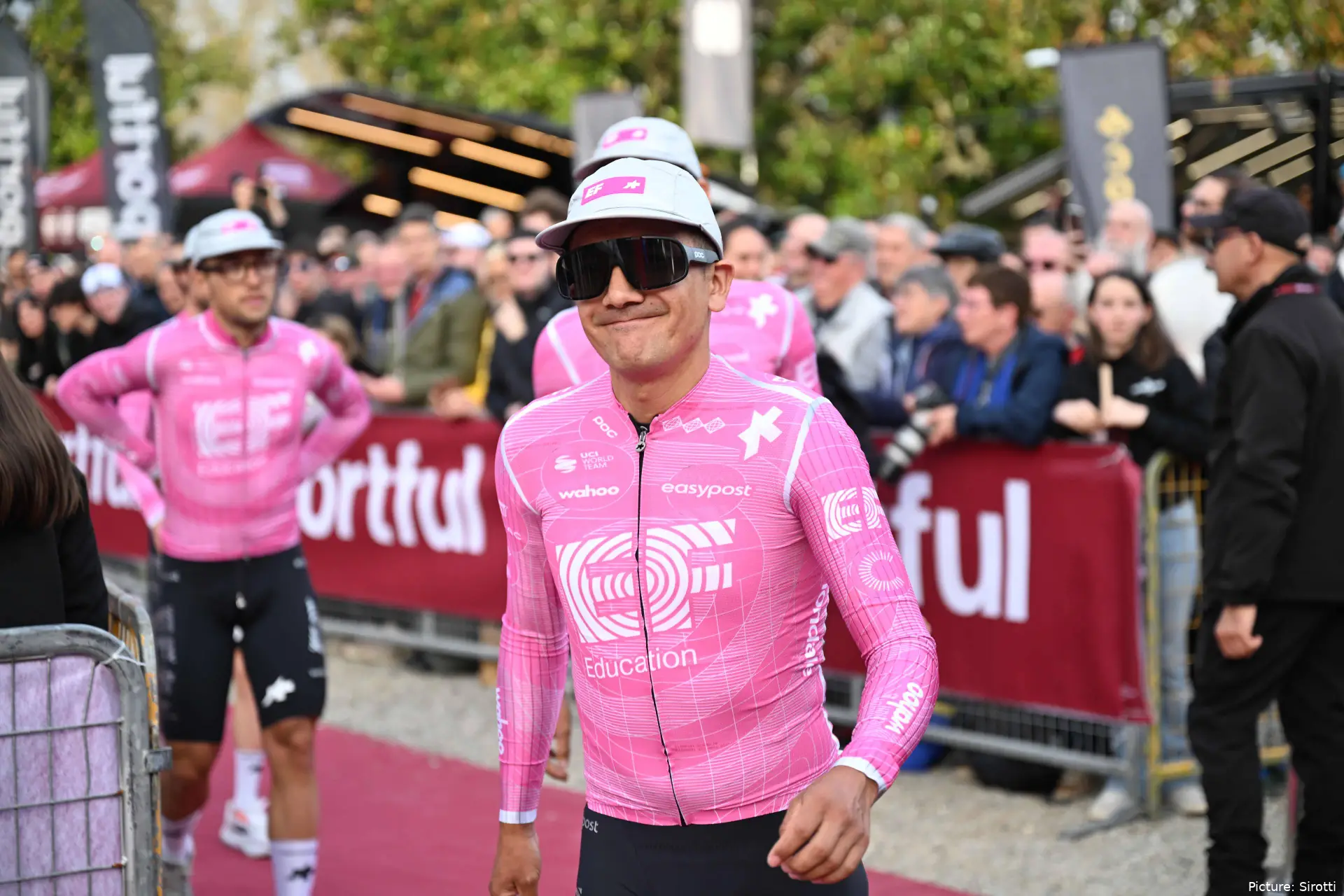
Richard Carapaz found a path to one of the greatest successes of his career through perseverance. The Ecuadorian rider, Olympic champion at the Tokyo 2020 Games, recalled the long journey he had to make to win gold. For years, that goal seemed beyond his reach after a serious accident even cast doubt on whether he would ever ride again.
The South American rider shared his experience at a conference held at the close of Banana Time Guayaquil 2026, Latin America’s largest banana-industry convention. He used his professional career to draw parallels between how a cycling team and a business operate, highlighting the importance of working towards shared goals and planning for the short, medium and long term.
One of the toughest moments of his career came in 2014, when he was hit by a car during training. He was just 20, and doctors could not guarantee that he would ride again. The accident completely changed his outlook and forced him to face a long recovery before returning to competition.
Carapaz’s story of overcoming adversity, from that accident to becoming Olympic champion and winning the Giro d’Italia, was reported by the EFE news agency. The Ecuadorian looked back on the sacrifices that shaped his journey, from his first steps in European cycling to achieving the major goals he had set himself.

Richard Carapaz with Movistar Team
Three months without pay to pursue his European dream
“I remember the day I got back on a bike very clearly. I felt free, as if I had been born again, with a new sense of purpose. That was when I decided I wanted to become the very best, because God had given me another chance to ride,” the rider recalled. From then on, he set himself three major goals: to turn professional in Europe, win the Giro d’Italia and become Olympic champion.
His first major challenge came in 2016, when he was offered a three-month trial with a Spanish team. He took the opportunity without any financial compensation and with no certainty that he would earn a contract.
“The hardest part was getting started,” he admitted. His attitude and performances eventually convinced the team’s management, who opened the door to the professional ranks.
In the years that followed, he learned to take on different roles in the peloton, beginning as a domestique working for the team leaders. In 2019, however, he was given the chance to lead at the Giro d’Italia. After losing time on stage three, he took the initiative and told his teammates how to regroup and win stage four. That victory proved decisive in his overall triumph.
Read also

'Special' Giro podium
“The podium in Verona was very special, because I knew then that all those special moments I had missed with my family, like birthdays and anniversaries, had been worth it,” he explained.
His next major goal was the Tokyo Olympics, but the Covid-19 pandemic disrupted his plans. During lockdown, he had to train at home without knowing when he would race again.
By the time the Olympic road race arrived, Carapaz believed he could win, although he knew victory was not guaranteed: “That thought crossed my mind too.” The gold medal capped 16 years of sacrifice.
“Carapaz did not become Olympic champion overnight. It took 16 years of early mornings, training, eating as well as I could and striving every day to be the best version of myself,” he concluded.
Javier RampeCycling Journalist
Javier Rampe is a sports analyst with more than 15 years of experience. He holds a degree in Economics from the University of Rome and a Diploma in Business Studies from the University of Cádiz. Despite coming from an academic background not particularly associated with cycling, his passion for both cycling and journalism was instilled in him from an early age. He grew up following Miguel Indurain and José María “El Chava” Jiménez. An admirer of Michael Robinson’s communication style and journalistic approach, he was inspired to pursue a degree in Journalism at the University of Buenos Aires, which he is currently completing.
He has always maintained close ties with the worlds of sport and culture, contributing from a young age to sports blogs and film and music review websites. His work has appeared in media outlets such as Cope, RAI, and Radio Con Vos. He is also the founder of the cycling-focused podcast El Contraanálisis and the football interview channel Días De Fútbol, dedicated to conversations with professional footballers.
In addition to his work at Ciclismoaldia, Javier has interviewed some of the most influential figures in modern cycling, including Alejandro Valverde and Tadej Pogačar, as well as key voices in anti-doping policy such as Alberto Yelmo, David Varillas, and Marcelo Milano. Marcos Maynar, in relation to the ‘Operación Ílex’ case, is also among the personalities he has interviewed. He enjoys conducting in-depth analysis of the cycling ecosystem and has attended major events such as Strade Bianche, the Vuelta a Andalucía, and Itzulia, as well as numerous national cyclo-cross races.
His background in economics, combined with extensive experience in marketing and corporate communications, drives his continuous study of positioning strategies and ensures that he always keeps his focus on crafting compelling and evocative headlines.
claps 0visitors 0
Just in


Popular news

Latest comments
- If this site is only about the love of cycling, then why did they write an article about some cyclists going to sit down with the Holy Father? Make it make sense..🤣awp20-11-2026
- 85% of the globe believes in a higher power. I think it's okay to go sit down with the Holy Father and discuss a few things. As I said, you can believe what you want, that is your right, but don't throw shade at those who don't agree with you.awp20-11-2026
- nothing nasty in what i wrote. a perfectly objective description of what it means to accept the invitation of a leader of a world-wide cult. i guess it seems only nasty for his followers ...Ketterechts20-11-2026
- Ah the Internets...where everyone picks apart everyone else's lives and feigns wisdom at every turn.Live and let live.Happy is the GOAT who knows not to pay attention to the naysayers and heresay.
 Brucegel20-11-2026
- I'm not 100% sure but I'm feel like he had some titanium placed around his back fracture. It takes about a year to grow bone back over it, at least that's how long it took mine to grow back. If this is the case he needs to focus on his 6th Tour, not a crash fest that could derail his whole year. Update: I did some digging and it looks like he didn't have any titanium placed around his fracture. That said, he still needs to avoid PR this year, his main stated goal is the Tour so he needs to come into it as healthy as he can. He has a chance to be the first guy to get a 6th win, if you don't count Armstrong, which of course we do not.awp20-11-2026
- He had absolutely 0 trouble winning the TdF after riding P-R in 2025 or 2026. Why tf would he skip it in 2027 then??vappaxbipmv20-11-2026
- Tadej needs to skip Paris Roubaix, take his sixth Tour and go for it next year.awp20-11-2026
- That's true, but if we had a chance to sit with him for a few minutes, we might learn something.awp20-11-2026
- It's your opinion and right to call him a fraud, but what does being nasty get you? Does it move you forward in life in a positive way?awp20-11-2026
- Hey, did you guys see @frieders3 comments down below? He went off the rails. That usually happens when you're brought up by the maga society.PogiSloFans20-11-2026
Loading
Write a comment