“His value is simply too high” – Tadej Pogacar's agent on "symbolic" release clause and why even cycling's richest teams can't prise him away from UAE
Cycling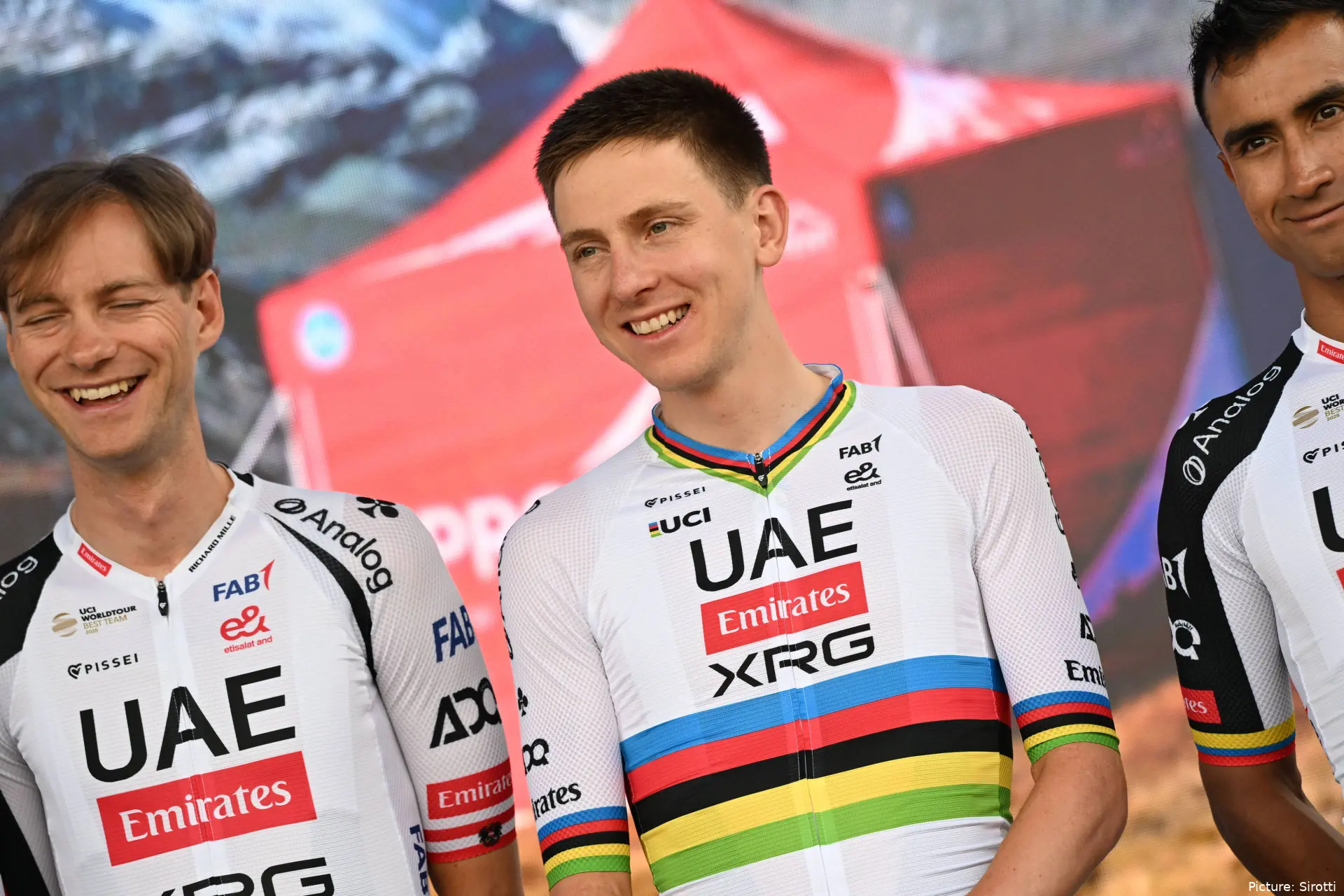
Even the enormous financial resources available to cycling's wealthiest teams are unlikely to prise Tadej Pogacar away from UAE Team Emirates – XRG, according to his own agent. Alex Carera has described the five-time Tour de France winner's release clause as almost "symbolic", with the Slovenian seemingly beyond the reach of an increasingly aggressive transfer market.
Speaking to La Gazzetta dello Sport amid a wave of high-profile contract terminations ahead of 2027, Carera was asked whether Pogacar remained the exception to the growing trend of riders leaving teams before their agreements expire.
"Yes, because his value is simply too high. The release clause is almost symbolic. Tadej has transcended the boundaries of cycling," explained the Italian, who also represents leading riders including Isaac del Toro, Giulio Ciccone and Jasper Philipsen.
The comments come less than two months after Pogacar extended his agreement with UAE Team Emirates – XRG until the end of 2032, adding another two seasons to a contract that had already been due to run until 2030. The 27-year-old has been with the team since turning professional in 2019, winning five Tours de France, the Giro d'Italia, multiple Monuments and two world road race titles.

Tadej Pogacar's agent Alex Carera at the 2026 Strade Bianche
The extraordinary release clause behind Pogacar's UAE commitment
When Pogacar signed his previous extension in October 2024, reports suggested his contract was worth approximately €8 million per season, with a release clause valued at €200 million.
Carera subsequently confirmed in a November 2024 interview with Marca that the clause had doubled from €100 million. He also revealed that rival teams regularly enquired about Pogacar's availability, although the Slovenian had little interest in leaving UAE.
The financial terms of his latest extension through 2032 have not been publicly disclosed, meaning it remains unclear whether the €200 million clause has been retained or amended.
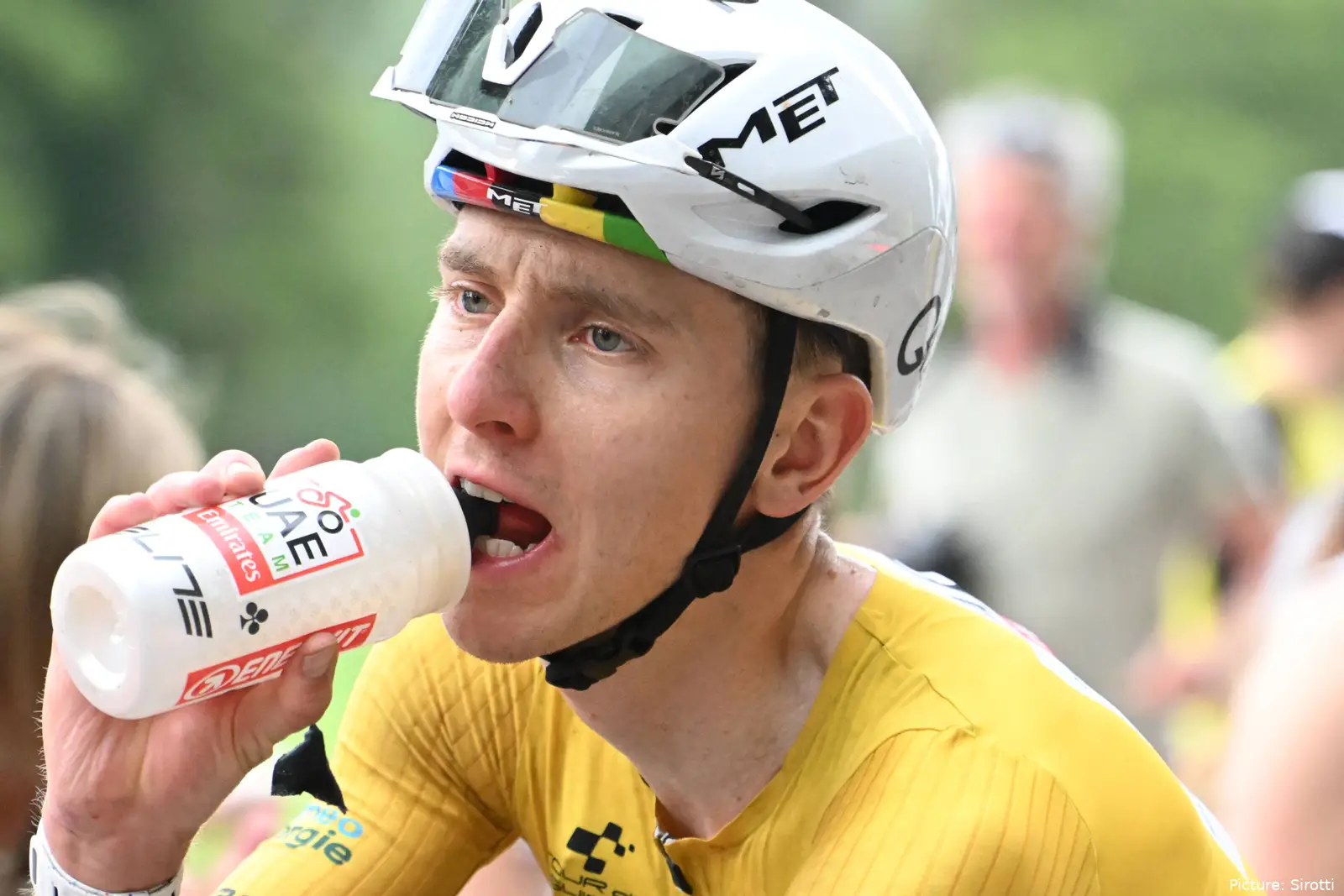
The new agreement was announced at a difficult moment in Pogacar's career. Having secured his fifth Tour de France title in July, he was leading the Vuelta a Espana when a serious crash on stage eight ended his attempt to complete the set of Grand Tour victories. The injuries, including a fractured collarbone, concussion and a stable cervical fracture, subsequently ruled him out of the remainder of the 2026 season.
Pogacar quiz for cycling experts
10 questions · ≈ 5 min · 148 players
to compete in the ranking.
"An era-defining change" as cycling's richest teams transform the transfer market
Filippo Ganna has agreed to leave Netcompany INEOS for Lidl-Trek in 2027, while Giulio Ciccone is departing Lidl-Trek for Pinarello Q36.5 Pro Cycling Team. Richard Carapaz is also leaving EF Education-EasyPost for NSN Cycling Team, with all three riders securing moves before their previous agreements were due to expire.
Carera believes the growing length of contracts is partly responsible. "First of all, the average length of contracts has increased. Significantly," he told La Gazzetta dello Sport. "That means the likelihood of disputes arising during a long contract, potentially even leading to a termination, also increases."
"If a contract is only for two years and problems arise, you don't have to wait too long for it to expire, so it's not even worth getting into a confrontation. You might spend a year feeling unhappy about it, and then you move on. But if, for example, the contract is for five years, it's easy to see that the situation is very different."
Breaking an existing agreement also requires another team willing to take the rider on, potentially paying compensation to secure the move. "Until five or six years ago, in most cases, team owners were the team managers themselves, often former cyclists," Carera explained. "They didn't have a long-term vision, and they weren't prepared to risk potentially paying compensation to sign riders from other teams."
Major corporate sponsors have since taken a more prominent role in financing cycling's leading teams. "Now, the owners of the teams are the sponsors themselves. UAE, Decathlon, Lidl and Red Bull, for example. They have a more business-oriented, longer-term vision," Carera continued. "A cycling team is a fundamental asset for the company or investment fund, unlike before, when there often wasn't really a business strategy behind it."
"There's also a greater tendency to be more aggressive in the transfer market because they need to generate value from their annual investment in cycling. On top of that, the amounts of money involved are much greater. It's an era-defining change."
Read also
From one early contract termination every three years to ten annually
Carera traces the acceleration of this trend back to Cian Uijtdebroeks' controversial departure from BORA to Team Visma | Lease a Bike in December 2023, a dispute involving two leading WorldTour outfits that attracted widespread attention.
"Until then, there was roughly one case of a contract being terminated early every three years. Now there are around ten a year," he estimated, before offering another striking comparison of cycling's changing finances. "In 2020, a team with a budget of €25 million could consider itself rich. Now, it would be among the bottom five."
Independent financial reporting supports the broader trend, with average budgets among leading men's professional teams rising from €26.2 million in 2023 to approximately €33.1 million in 2026, although the latter calculation includes 20 teams rather than 18. Carera's precise comparison with 2020 remains his own estimate.
While Ganna, Ciccone and Carapaz prepare to begin new chapters in 2027, Pogacar's latest agreement keeps him at UAE until the end of a season in which he will turn 34, potentially taking his partnership with the team to 14 years.

Kieran WoodDeputy Editor-in-Chief
Kieran Wood is a sports journalist based in Wales and has been active in journalism since 2022. He regularly contributes to DartsNews.com and CyclingUpToDate.com, where he covers professional cycling and darts. In cycling, his work includes liveblogs from major races, including the Tour de France, the Giro d’Italia, and La Vuelta a España, alongside race reports and analysis. He has also conducted interviews with professional riders.
His reporting spans the full racing calendar, from one-day classics to stage races, with a focus on accurate, real-time coverage and clear contextual analysis. For statistics, results, and historical context, he regularly uses resources such as ProCyclingStats. To support reporting on rider activity and training context where relevant, he also references Strava.
In his work, Kieran places strong emphasis on careful sourcing, editorial accuracy, and updating articles as new, verified information becomes available.
claps 0visitors 0
Just in
Popular news
Latest comments
- I predicted months ago Roglic would sign with Visma. It may not work out however the advantages are Visma need another climber since Yates retired, he's another potential threat to Pogi, his signing would probably be for 2 years giving Visma time to get another climber or two. Also, Roglic knows the Vista system, Visma needs a team leader for the other stage races Jonas doesn't ride and sentimentally, I believe, he would want to finish his career there. Of course, it remains to be seen if he signs.Paggss23-10-2026
- This speculation is all so amusing, because it's noise before the storm. We don't know how Pogačar will recover from his crash. We don't know how much he'll train for this time trial. We can't use the last week of this Tour because he was so far ahead that he didn't bother attacking more and instead ensured del Toro's podium (a sign of his absolute control of the race). Similarly, we don't know how Evenepoel will climb after smashing the TT. We don't know how much better he can get at time trialing, though this should give him new motivation to get even better (which is scary). So, sure, go ahead, publish a bunch of articles about all the predications, but I'm going to wait until the race to actually watch. Until then, it's fun speculation but not much more.RidesHills23-10-2026
- If Remco wants to take 2 minutes out of Pogi he better hope Pogi uses one leg...Paggss23-10-2026
- And Prudhomme can sh** his pants after Pogi-Baby Hulk "tears" everyone apart.PogiSloFans23-10-2026
- It's all about stopping Pogi. If Pogi was French the TDF would be very different. But in the end game, Pogi doesn't give a sh**... he's gonna win anyway. Ad acta!!!PogiSloFans23-10-2026
- I second your comment. I completely agree with your statement and opinion. @frieder and other foolish commentators don't.PogiSloFans23-10-2026
- Cyclinguptodate: Evenepoel finished the 2026 Tour 6:26 behind Pogacar, winning both the individual time trial and a mountain stage against the Slovenian and his UAE Team Emirates – XRG teammate Isaac del Toro!?!? That's just not true. Yes, Remco won both TT's and the "mountain stage"? But really? Yes, officially he won the mountain stage, but we all know why, don't we? If Pogi had gone his own tempo, he could just say "Hey Remco, see you in the douches." But Pogi went Del Toro's tempo. Del Toro said to him during the race: "Don't leave me behind." ... That's the only reason Remco won... capish?PogiSloFans23-10-2026
- My prediction for R.ev.no.balls is DNF TDFabstractengineer23-10-2026
- the issue is Tadej wins everywhere. if you make it 21 days of flanders, he will wins by 10 minutes. he can win in other scenarios beyond high mountains. and if you make it TT heavy, he puts more time on his TT bike. he has won TTs before.mij23-10-2026
- What is Pogi if not the very best of all-rounders!?Lozza23-10-2026
Loading
Write a comment