"He could have a field day... but it's difficult to judge how motivated he'd be" - Jonas Vingegaard's 2027 Giro defence questioned after Tour de France struggles
Cycling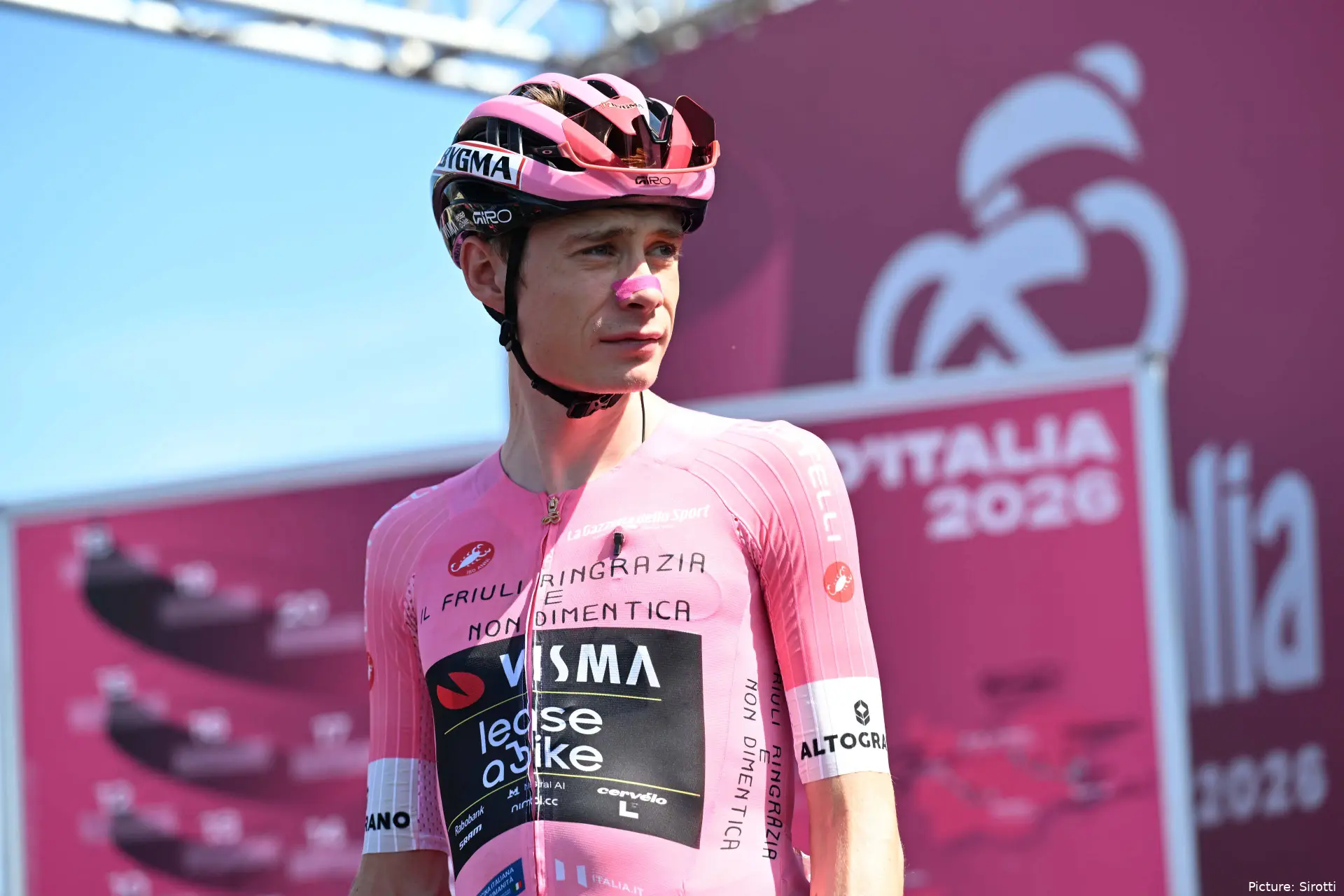
The 2027 Giro d'Italia route looks almost tailor-made for Jonas Vingegaard, but Dutch cycling analyst Thijs Zonneveld has questioned whether the defending champion would want to return after his difficult Giro–Tour double in 2026.
Seven uphill finishes, an uphill individual time trial and a final week featuring the Gavia, two ascents of the Mortirolo and the Zoncolan await next year's contenders. The Italian route offers a markedly different challenge from the 2027 Tour de France, where the emphasis on time trialling has already raised questions about how well the race will suit the Team Visma | Lease a Bike leader.
"For him, it's very suitable. He could have a field day," Zonneveld said on the In de Waaier podcast. "Plenty of summit finishes where he can make the difference, easy for his team to control, and an uphill time trial where he can ride up on his time trial bike. Compare the Giro with the Tour and the Italian route is far better suited to Vingegaard."
The Tour features 71 kilometres of individual time trialling across two relatively flat tests, compared with 56.9 kilometres in Italy, including a 19.6-kilometre uphill effort from Sulmona to Campo di Giove.
France will still provide substantial climbing in the Alps and Pyrenees, notably on the Grand Colombier and Col du Portet, but there are only three summit finishes compared with seven at the Giro. In Italy, several of the biggest mountain tests come in the final week, including a particularly demanding stage immediately after the second rest day.

Vingegaard completed his set of Grand Tour wins at the Giro in 2026
Why the Giro route could play into Visma's hands
Stage 16 from Sondrio to Aprica covers 192 kilometres with 5,700 metres of climbing, taking in two ascents of the Mortirolo and the Gavia. Four days later, the peloton will tackle the Zoncolan from the notoriously steep Ovaro side, with the final opportunity for the climbers to overturn the general classification before the race finishes in Rome.
Zonneveld expects the stages between those major mountain tests to favour a strong team protecting its general classification leader. "Overall, they've designed a route that heavily favours the strongest climber, and it's also a Grand Tour that his team should find fairly easy to control," he explained. "There are lots of stages with a flat run-in followed by one decisive climb."
He was more critical of the shortage of transitional stages, arguing that the route offers relatively few opportunities to catch the leading contenders off guard. "What's really missing from this Giro are the in-between stages, the sort of stages where you can set up an ambush around every corner."
The 199-kilometre stage from Rovereto to Sacile, immediately before the Zoncolan, is one such opportunity, with 3,000 metres of climbing and more varied terrain. Much of the route, however, follows the pattern Zonneveld describes, with the major difficulties concentrated into clearly defined mountain stages.
Vingegaard's first Giro appearance in 2026 ended with five stage victories and an overall winning margin of 5 minutes and 22 seconds over Felix Gall. It was another display of his superiority on the climbs, with the Dane winning five of the race's six summit finishes.
The victory made him the first Danish winner of the Giro and completed his collection of Grand Tour titles, adding the maglia rosa to his Tour de France triumphs in 2022 and 2023 and his 2025 Vuelta a Espana success.
Read also



Would another Giro–Tour double be worth it?
Vingegaard's return to the Tour de France in July was a far less successful experience. After three weeks of domination in Italy, he struggled to stay with Tadej Pogacar in France, losing substantial time before a crash brought his race to an early end.
"Will he attempt the double again? I don't think it worked out particularly well in terms of his level at the Tour de France, although he did win the Giro," Zonneveld said. "I find it difficult to judge just how motivated he'd be to do it."
By Stage 15, Vingegaard was already four minutes and 30 seconds behind Pogacar in the general classification. His race ended following a crash around 20 kilometres from the finish, on the approach to the final climb to Plateau de Solaison, leaving him with a fractured collarbone that subsequently required surgery.
The injury denied him the chance to contest the final week, although he had already lost considerable ground to Pogacar. Whether the demands of winning the Giro contributed to that deficit remains unclear, and Zonneveld stops short of claiming that the double was responsible for his difficulties.
Vingegaard also enters 2027 with a different set of objectives. He has now won all three Grand Tours, removing the incentive that made his maiden Giro appearance so significant. Another victory in France would take him to three Tour titles, matching Greg LeMond, Louison Bobet and Philippe Thys, and end a run dominance by Pogacar.
The 2027 calendar would again leave little time between the two races. The Giro finishes in Rome on 30 May, with the Tour beginning in Edinburgh on 2 July, giving Vingegaard 33 days between the end of one Grand Tour and the start of the next.
Visma have yet to confirm his programme. With his Giro title defence pencilled in as a possibility rather than an obligation, the team must decide how much of its season to commit to Italy before returning to the Tour, where Vingegaard has not stood on the top step of the podium since 2023.

Kieran WoodDeputy Editor-in-Chief
Kieran Wood is a sports journalist based in Wales and has been active in journalism since 2022. He regularly contributes to DartsNews.com and CyclingUpToDate.com, where he covers professional cycling and darts. In cycling, his work includes liveblogs from major races, including the Tour de France, the Giro d’Italia, and La Vuelta a España, alongside race reports and analysis. He has also conducted interviews with professional riders.
His reporting spans the full racing calendar, from one-day classics to stage races, with a focus on accurate, real-time coverage and clear contextual analysis. For statistics, results, and historical context, he regularly uses resources such as ProCyclingStats. To support reporting on rider activity and training context where relevant, he also references Strava.
In his work, Kieran places strong emphasis on careful sourcing, editorial accuracy, and updating articles as new, verified information becomes available.
claps 0visitors 0
Just in


Popular news

Latest comments
- Hopefully it was just a particularly bad year!Lozza05-11-2026
- He has the Twin combo of being vulnerable to germs and prone to crashes on top of not heeding the complaints from his body. Thats just crash and burn career.abstractengineer05-11-2026
- You can't complete a journey without taking next step. He has to do that or start looking for another job. I hope he can get his act together. It's a make or break next season for him. I wish him well.Cyclingsbestfan05-11-2026
- does anyone really think he is taking a next step?mij05-11-2026
- in the team’s defense, Bernal is 29. when he won his first TdF people were talking about him winning a record # of GTs. Where would they be if that crash had never happened. I’m not saying he would compete with Tadej, but he did podium Strade Bianche, and certainly could have won a GT that Tadej wasn’t in.mij05-11-2026
- "c'mon Jonas!"wrsty05-11-2026
- I see I missed a lot during my boycott.Jumpyjohn05-11-2026
- What kind of sauce is on that rice? Ketchup?Kbd05-11-2026
- 18 broken bones. 78 crashes, among 30 rider per year is a lot. so for a rider over 15 seasons, they will break their bones 7-8 times and crash 38 times.abstractengineer04-11-2026
- i dont think he is ready ot win against the top 2 or the 2nd rung of evenepoel, del toro , Almeida. In the third week in the TDF he was very very defensive, no attacks. i think he was exhausted. right now he needs time not the brutal Giro or the intense TDF.abstractengineer04-11-2026
Loading
Write a comment