"Even though I’ve had two difficult years due to crashes..." - Mikel Landa reflects positively on his time with Quick-Step
Cycling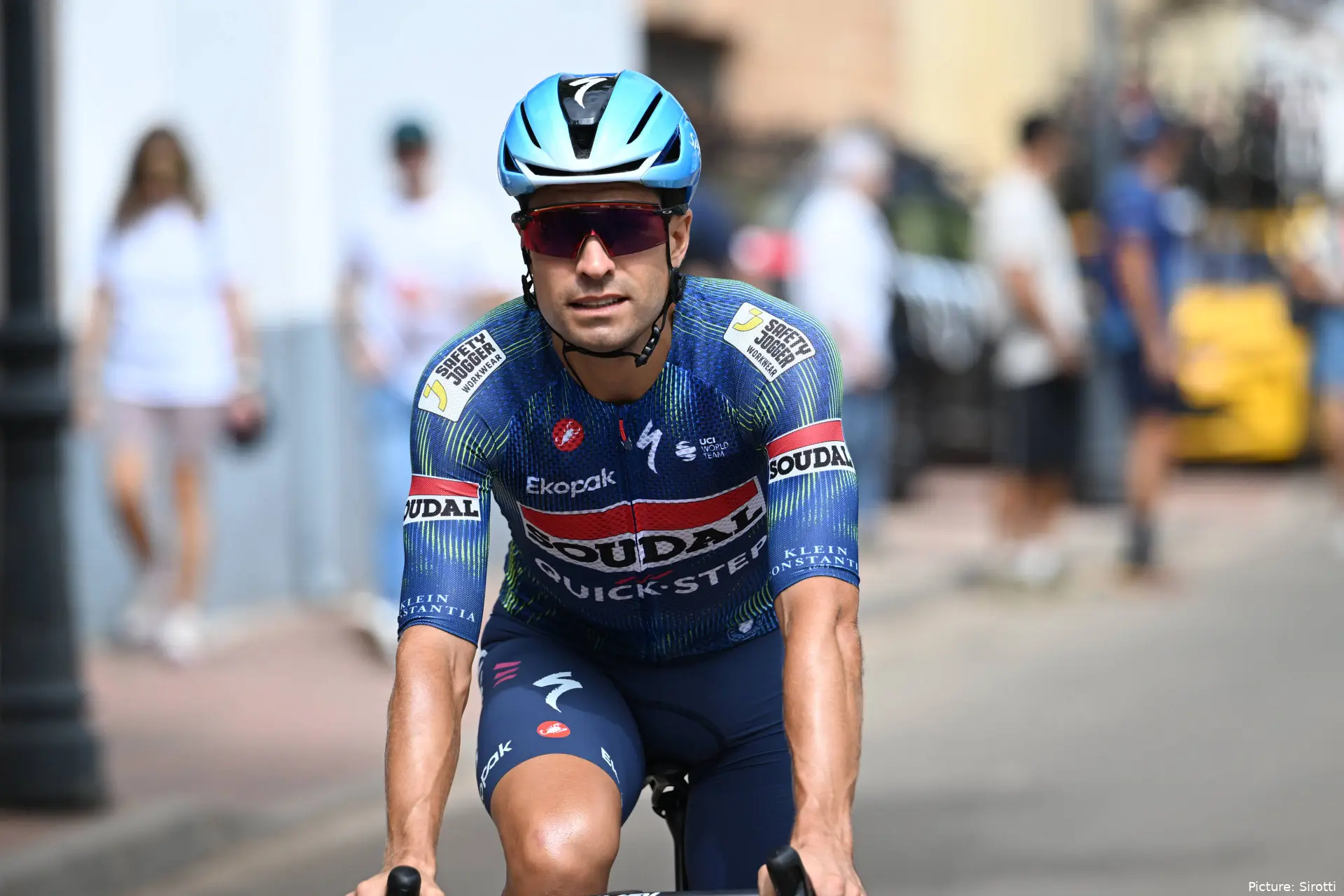
In 2027, Mikel Landa will begin a new chapter in his sporting career with a very special return to Euskaltel-Euskadi—the team where he launched his professional career in 2011. The Basque rider, who turns 37 next month, has signed a two-season contract to once again don the orange jersey and conclude his career with a team deeply rooted in his origins.
His return also represents the revival of an important piece of Basque cycling history. Euskaltel-Euskadi began as a project driven by local fans and regional institutions, possessing a distinct identity that achieved its greatest successes in the early 2000s. After folding in 2013, the team resumed professional operations in 2018, once again with Euskaltel as its primary sponsor.
Landa was a key figure in the generation that developed within the Fundación Euskadi structure. Before making the leap to the professional ranks, he raced for the amateur team Orbea, subsequently making his professional debut with Euskaltel-Euskadi. Although his career took him to various international teams, he always maintained a close connection to the project that helped him take his first steps in cycling.
In an interview with Domestique, the Murgia native reflected on his recent seasons with Soudal Quick-Step, his relationship with Remco Evenepoel, and the reasons behind his decision to return home. It is a look back at a career defined by team changes, physical setbacks, and a desire to bid farewell to professional cycling while wearing the orange jersey.

Mikel Landa is returning to Euskaltel - Euskadi in 2027
Landa reflects on his time at Soudal as he prepares for his return home
Joining Soudal Quick-Step in 2024 offered Landa the chance to step out of his comfort zone and experience a different cycling culture. The Spaniard joined the team to become one of Remco Evenepoel’s key support riders at the Tour de France—where he helped the Belgian secure third place in 2024—while also achieving an impressive fifth-place finish in the general classification. "I joined looking for something different, a new environment, and a chance to step a bit outside my comfort zone," he explained.
The adaptation, however, proved much easier than expected. "I felt at home right from the start. It’s a team with a different mindset—more focused on the Classics—but, honestly, everything has gone well for me. I’ve enjoyed it," he acknowledged, who looks back positively on his three seasons with the Belgian outfit, despite physical issues that hampered much of his performance.
Injuries hid the best Landa
Crashes were, in fact, the primary obstacle during his time with the team. The most serious incident occurred on the opening day of the 2025 Giro d'Italia; the accident compromised a large portion of his campaign.
In 2026 he suffered a pelvis fracture after having been hit by an organization car going downhill at the Itzulia Basque Country, which forced him to withdraw from the Giro d'Italia and Tour de France.

At the Vuelta he never looked like his old self, until the final days of the race. Landa managed to sign off with a solo victory at Collado del Alguacil—a win that reaffirmed his ability to deliver standout performances in the mountains - on stage 20, the hardest of the race. "Even though I’ve had two difficult years due to crashes, I’m happy," he summarized.
His return to Euskaltel-Euskadi follows a decision that had long been a possibility for his future. Having previously served as president of the Euskadi Foundation—a role he had to step down from due to a conflict of interest while competing for another team—Landa had always intended to return to racing for the "orange squad." Having developed through the ranks at Orbea and turned professional in 2011, the climber feels the time has come to complete the circle, returning to the place where it all began.
Javier RampeCycling Journalist
Javier Rampe is a sports analyst with more than 15 years of experience. He holds a degree in Economics from the University of Rome and a Diploma in Business Studies from the University of Cádiz. Despite coming from an academic background not particularly associated with cycling, his passion for both cycling and journalism was instilled in him from an early age. He grew up following Miguel Indurain and José María “El Chava” Jiménez. An admirer of Michael Robinson’s communication style and journalistic approach, he was inspired to pursue a degree in Journalism at the University of Buenos Aires, which he is currently completing.
He has always maintained close ties with the worlds of sport and culture, contributing from a young age to sports blogs and film and music review websites. His work has appeared in media outlets such as Cope, RAI, and Radio Con Vos. He is also the founder of the cycling-focused podcast El Contraanálisis and the football interview channel Días De Fútbol, dedicated to conversations with professional footballers.
In addition to his work at Ciclismoaldia, Javier has interviewed some of the most influential figures in modern cycling, including Alejandro Valverde and Tadej Pogačar, as well as key voices in anti-doping policy such as Alberto Yelmo, David Varillas, and Marcelo Milano. Marcos Maynar, in relation to the ‘Operación Ílex’ case, is also among the personalities he has interviewed. He enjoys conducting in-depth analysis of the cycling ecosystem and has attended major events such as Strade Bianche, the Vuelta a Andalucía, and Itzulia, as well as numerous national cyclo-cross races.
His background in economics, combined with extensive experience in marketing and corporate communications, drives his continuous study of positioning strategies and ensures that he always keeps his focus on crafting compelling and evocative headlines.
claps 1visitors 1
Just in
Popular news
Latest comments
- Yeah, unreal.
 parisbound0008-11-2026
- there needs to be space in life for pointless comments!Ketterechts08-11-2026
- That is a very lazy way of putting it but so far on this website it seems like everyone is happy to look at everything lazily, even things that annoy them intensely. All they want to do is state their feeling and position but ask most to analyse a problem or come up with solutions or improvements and you’re stunned by silence. Nobody even really knows how this all happens. It’s very simple and quick to just say the UCI did it but I bet you they didn’t, I bet you not more than 2 people were involved, more likely just 1. The UCI may be ultimately responsible but it is not their decision, this is about hierarchy, power and delegation. The fact that protest is possible also means it isn’t over and that MORE people could get involved for a thorough review which could throw up anything. It is highly likely it was a sole commissar who decided and has that power in a first round. Therein might lie the problem the UCI has to consider, is it acceptable to give so much authority to one single person when it is quite possible for them to have a natural bias or be too easily susceptible to imposed bias. Who is to say an individual in this position isn’t susceptible to collaboration with outside players with interests in the results, nations, families, teams, betting companies, etc. On the one hand we have sports where these problems have been worked on way more to reduce such problems, on the other hand we have sports with far stricter and more draconian rules not even concerning safety or obstruction that nobody really questions like false starts or stepping out of lane or zones in athletics. If cycling hastowork on itself, it would be good if protagonists (all kinds) would start doing a little more than just moaning over outcomes.Jumpyjohn08-11-2026
- Yes, so why not make comments less pointless?Jumpyjohn08-11-2026
- What a race! I didn't expect Vanthourenhout to collapse like that, and Wyseure did take the fight to Nys, but there was no doubt at the end. I also wonder what Aubin Sparfel would be capable of were he to race in the elites now. In the U23 ranks he is making good work of Giel Lejeune, who himself is among the better riders in the elites, and a top 10 contender in the big races (3rd at Kleebergcross, 8th at Berencross and 5th at Heerderstrand). In the French Cup, Sparfel is significantly better than Romain Debord (8th at Koppenbergcross and 10th at the Euros) and Rémi Lelandais (12th at Koppenbergcross and 19th at the Euros).
 Rafionain-Glas08-11-2026
- There really was nothing in it. Schreiber was so much faster, and Brand was fighting to stay in the wheel in the sprint. Schreiber did move a bit, but to say she closed the door doesn't make sense because Brand couldn't enter it anyway, abd she wasn't impeded.Rafionain-Glas08-11-2026
- He should have been allowed to go to Movistar. Right now both arent a good fit for each other and are just wasting each other's time and effortabstractengineer08-11-2026
- Thibau Nys does exactly what Iserbyt is calling forRafionain-Glas08-11-2026
- i did not see it. was the relegation justified or an overly hard decision? and don‘t cross riders deviate from straight lines all the time? bumping into each others when they cut corners, etc … why being more strict with the rules on the finish sprint?Ketterechts08-11-2026
- seems like we are advertising the website with pointless comments…Ketterechts08-11-2026
Loading
1 Comments