"Beating Tadej head to head is almost impossible" - Pogacar's absence changes everything as Movistar chases Vuelta win
Cycling
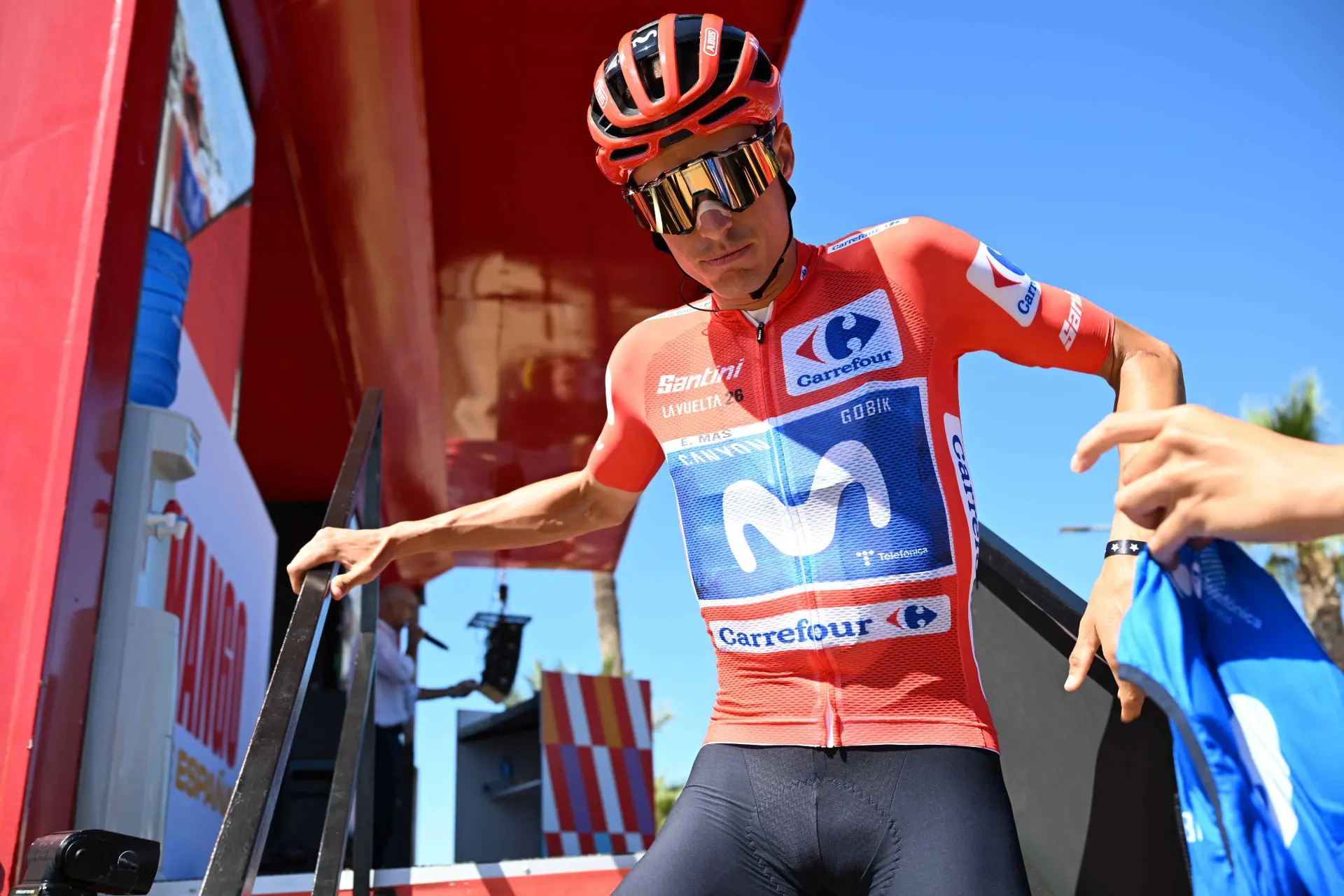
Movistar Team have been among the headline acts at the Vuelta a España, driven by Enric Mas’ form and a team strategy that has let the Spanish squad challenge the big favourites. The team is benefitting and chasing an historic victory after Tadej Pogacar was forced to withdraw from the race.
José Joaquín Rojas, the team manager, broke down the team’s moment on El Larguero (Cadena SER) and the plan they executed on a day with a clear objective: attack Primoz Roglic.
The strategy was anything but improvised. The team had earmarked this stage for days as a chance to claw back time by placing riders up the road. The plan came off almost perfectly, with standout rides from Pablo Castrillo and Raúl García Pierna, two pieces Movistar could deploy in the decisive phase.
Rojas also set expectations in context for how Movistar Team came into the race. The initial plan was to have Enric Mas and Cian Uijtdebroeks in the fight for the sharp end, with the podium as the main target. However, Tadej Pogacar’s presence reshaped the race and forced the Spanish squad to rethink their ambitions. With the Slovenian as the clear favourite, the overall win looked virtually out of reach for the rest.
In that context, Movistar accepted that the most realistic goal was to fight for second place without giving up on the podium. Rojas explained that facing Pogacar “head to head is almost impossible,” a line that sums up their approach from the start. It was a more measured strategy in terms of objectives, but it did not stop the team from taking the initiative when racing allowed, and they now enjoy an Enric Mas firmly back among the main protagonists.
“We’re enjoying an Enric who’s giving us a super beautiful race”
Above all, Rojas highlighted Enric Mas’ performance and how the Movistar leader is tackling this Vuelta. “We’re enjoying above all an Enric who’s giving us a super beautiful, super exciting race,” said the manager, pleased with the Spaniard’s progression and the team’s growing momentum. For Rojas, the aim now is to keep that level through to the finish.
The Spanish squad had this day circled for some time. “We had it marked since the moment we took the lead,” Rojas explained, noting the team began preparing specific strategies for certain days. The stage they had just contested was one of the ones highlighted in red, mainly because the route’s features allowed them to move several pieces and then use them in the finale.
“It was one of the marked days, above all because strategically it was one of the best to move the team,” he admitted. The key was to place riders up the road so they could later serve as a tactical tool for Enric Mas. The run-in, less demanding than earlier sections, also offered the chance to deploy those cards in support of the team leader.
The blueprint worked almost to perfection. “Once I set it up that way, it clicked and this time it came off almost perfectly,” Rojas summed up. The manager especially praised the work of Pablo Castrillo, calling it “tremendous,” and that of Raúl García Pierna. Both were crucial in a strategy that let Movistar seize the initiative and hunt time against one of Mas’ key rivals.
Read also
“When Tadej comes to the race it changes everything for every team”
Movistar’s current situation, however, was hard to foresee before Pogacar’s participation was confirmed. Rojas admitted the initial roster build matched a different scenario. The arrival of the overwhelming favourite reshaped the objectives of almost every team, forcing them to recalibrate their general classification ambitions.
“When Tadej comes to the race it changes everything for every team,” he said. The Movistar manager was blunt when assessing the chances of beating the Slovenian: “We’re playing for second because beating Tadej head to head is almost impossible.” It reflects respect for the champion, but also a pragmatic reading of the race.
That is why Movistar’s initial goal was to fight for the podium. Rojas recalled that Enric Mas was not their only card for that aim, as the team also trusted in Uijtdebroeks, although his crash on day one forced him out. With both riders, the plan was to contest the top spots, but always from a realistic standpoint.
“Fight for the podium, but with our feet on the ground,” Rojas explained. The manager pointed to lessons learned in recent years, especially in Enric Mas’ case. Expectations around the Mallorcan had at times turned into added pressure when results fell short.

Tadej Pogacar and Enric Mas on stage 6 of La Vuelta
“He generated so much expectation that the cold shower felt much harsher afterwards”
In that sense, Rojas believes one of the major shifts at this Vuelta has been tackling the race without loading Enric Mas with outsized expectations. “What had happened to us in recent years, especially to Enric, was that he generated so much expectation that when you didn’t meet it, the cold shower felt much harsher afterwards,” he said.
The manager’s message sums up a philosophy Movistar seem to have applied this edition: compete with ambition while keeping reality in sight. Pogacar’s presence made an equal-terms bid for victory virtually impossible, while the podium stood out as a more reasonable target. That view has also allowed the team to take more risks when the race situation invited it.
The day’s strategy is a case in point. Movistar did not just wait for Enric Mas’s moment, but used riders from afar to wear down rivals and create multiple tactical scenarios. Castrillo and García Pierna were key pieces in that move, showing the team can be far more than simply their leader’s domestique.
Javier RampeCycling Journalist
Javier Rampe is a sports analyst with more than 15 years of experience. He holds a degree in Economics from the University of Rome and a Diploma in Business Studies from the University of Cádiz. Despite coming from an academic background not particularly associated with cycling, his passion for both cycling and journalism was instilled in him from an early age. He grew up following Miguel Indurain and José María “El Chava” Jiménez. An admirer of Michael Robinson’s communication style and journalistic approach, he was inspired to pursue a degree in Journalism at the University of Buenos Aires, which he is currently completing.
He has always maintained close ties with the worlds of sport and culture, contributing from a young age to sports blogs and film and music review websites. His work has appeared in media outlets such as Cope, RAI, and Radio Con Vos. He is also the founder of the cycling-focused podcast El Contraanálisis and the football interview channel Días De Fútbol, dedicated to conversations with professional footballers.
In addition to his work at Ciclismoaldia, Javier has interviewed some of the most influential figures in modern cycling, including Alejandro Valverde and Tadej Pogačar, as well as key voices in anti-doping policy such as Alberto Yelmo, David Varillas, and Marcelo Milano. Marcos Maynar, in relation to the ‘Operación Ílex’ case, is also among the personalities he has interviewed. He enjoys conducting in-depth analysis of the cycling ecosystem and has attended major events such as Strade Bianche, the Vuelta a Andalucía, and Itzulia, as well as numerous national cyclo-cross races.
His background in economics, combined with extensive experience in marketing and corporate communications, drives his continuous study of positioning strategies and ensures that he always keeps his focus on crafting compelling and evocative headlines.
claps 0visitors 0
Just in


Popular news
Latest comments
- LOL...it's a predetermined finish ! N one is 'clashing' at these exhibition crits!frieders307-11-2026
- Surely the UCI and the race organisers have a responsibility to ensure the best medical care is available to riders when incidents like this happen. All very well pushing for global expansion but not so good if riders lives are put at risk because medical support is not up to scratch.Andy12306-11-2026
- Well it clearly helps that this was Pidcock's own car, no?Occam06-11-2026
- The American performance at the World's road race was a masterclass in cycling tactics. If it wasn't McNulty, it might well have been Jorgensen or Simmons to take off and win in a solo break.Occam06-11-2026
- What a gimmick
 Rafionain-Glas06-11-2026
- Thats only cause he rides for UAE. In any other team he would be captain in many races atleast. UAE is just to crazymiguel06-11-2026
- He seems to be the rare athlete whose passion and curiosity about life beyond his sport equals his extraordinary achievements in it. It would be great for him to risk less of that life. He seems very grateful and joyful for what he has already attained.
 MarkFour06-11-2026
- As much as I admire and even revere Wout, the less I know about his backside the better.MidnightRider06-11-2026
- Ok, Walt 🤣... Vingegaard would be lucky to get on the poduim. He would not beat Seixas or Del Toro, let alone TP. Then there are the Americans...BD06-11-2026
- So, for starters. Cycling is a saturated, static/dying sport in traditional lands, it will not have resurgences like eg running occasionally does because of several obstacular (yes, I know that’s not a word but don’t make me point out the obvious at your expense) factors. Obviously, like almost everything involving money, there is a desire/need/advantage to growth and that can only come from (developing or just testing) new markets. For me, the WC is the obvious and best choice for several reasons, it comes at the end of the season so is less critical season risk wise, it is not a “pro” team race but nation based which makes integration of uncommon participation more natural. It is a vehicle for redistribution (one of a very limited number of available mechanisms to develop new markers fairly) that the fixed calendar doesn’t allow and it helps make budgets fairer over the long run (moving the whole circus to everywhere evens out everyone’s budget as opposed to having everyone always come to the same location.Jumpyjohn06-11-2026
Loading
Write a comment