ANALYSIS: Mas, Roglic, Gall, Onley, Almeida... Which Vuelta a España climbers can shine in Montréal?
Cycling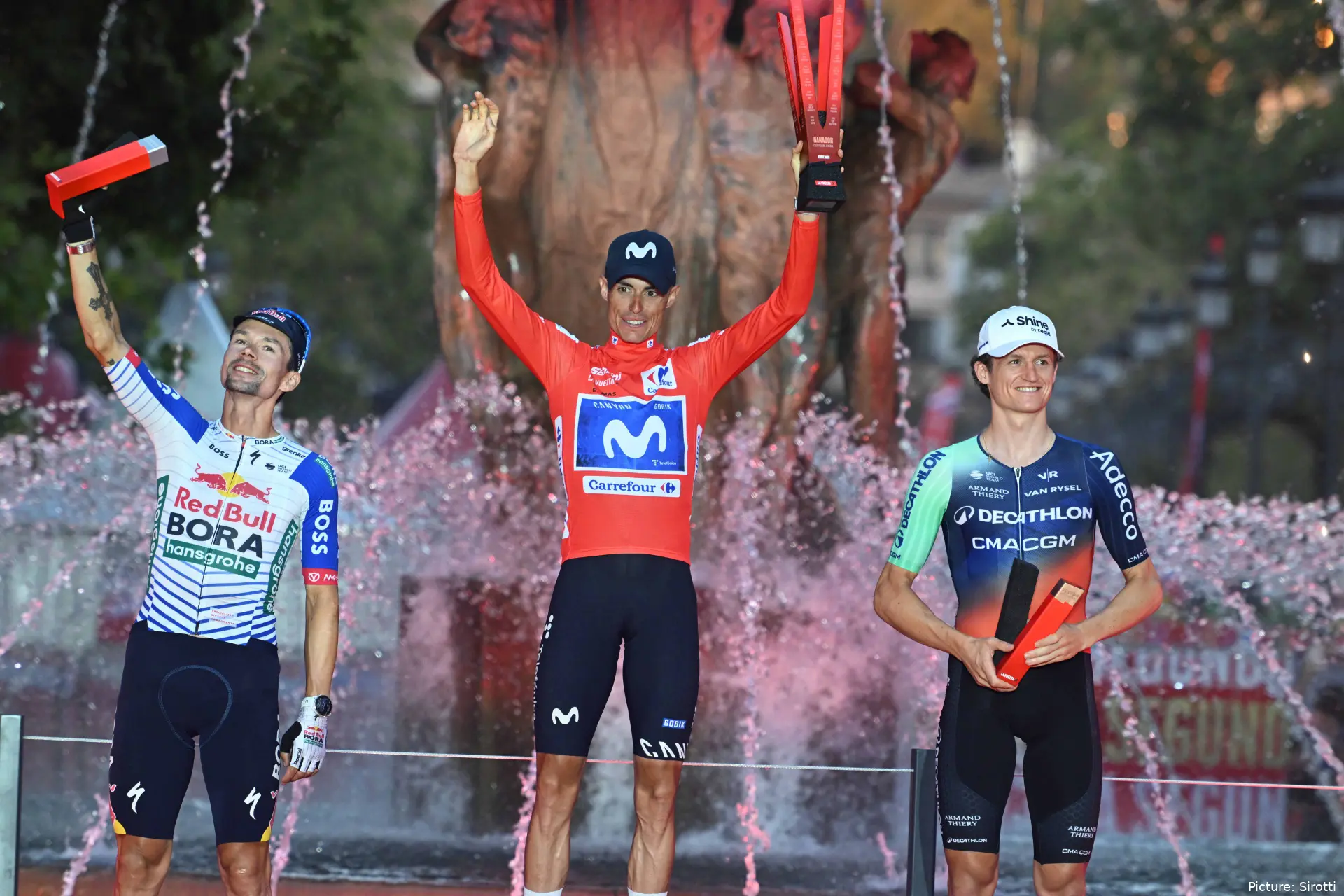
The Vuelta a España ended only one week ago, but for several of its strongest climbers the next main challenge is just around the corner. Enric Mas, Primoz Roglic, Felix Gall, Oscar Onley, João Almeida, Santiago Buitrago and Tobias Halland Johannessen are all due to line up in Montréal next Sunday, carrying very different expectations from three weeks of racing in Spain into a World Championship course that will reward a particular type of climber.
That makes the Vuelta an unusually useful reference point, but also a potentially misleading one. Mas has just won the biggest race of his career, Roglic finished second and Gall third, while Onley took the white jersey and Buitrago the mountains classification.
Johannessen, meanwhile, won the final stage in Granada. On paper, therefore, this is an extraordinary group of riders to bring into a World Championships. The question is whether the form they built in Spain will still be there after another two weeks of recovery, and whether their characteristics actually match Montréal.
The elite men's road race on September 27 will cover 273.7 kilometres and 3,803 metres of climbing. After a 112.4-kilometre opening section from Brossard, the riders will cross into Montréal and complete 12 laps of the final 13.4-kilometre circuit. The decisive terrain includes the Voie Camillien-Houde, the Chemin de la Polytechnique, which contains sections above 11 percent, and the uphill drag towards the finish on Avenue du Parc.
This is an important distinction when assessing the climbers. Montréal is undoubtedly hard enough to favour riders who can climb, but it is not a traditional climber's course. There is not a long ascent on which a pure mountain specialist can establish a rhythm and gradually distance the opposition.
Instead, the race will be decided through repeated short and explosive efforts, with 12 passages over the final circuit and almost 3,800 metres of total elevation gain gradually accumulating in the legs. That makes the course a meeting point between climbers, puncheurs and strong all-rounders.
That distinction could make the difference between a rider who looks perfectly suited on paper and one who struggles despite arriving from a successful Grand Tour. And there is another variable that cannot be ignored: fatigue.

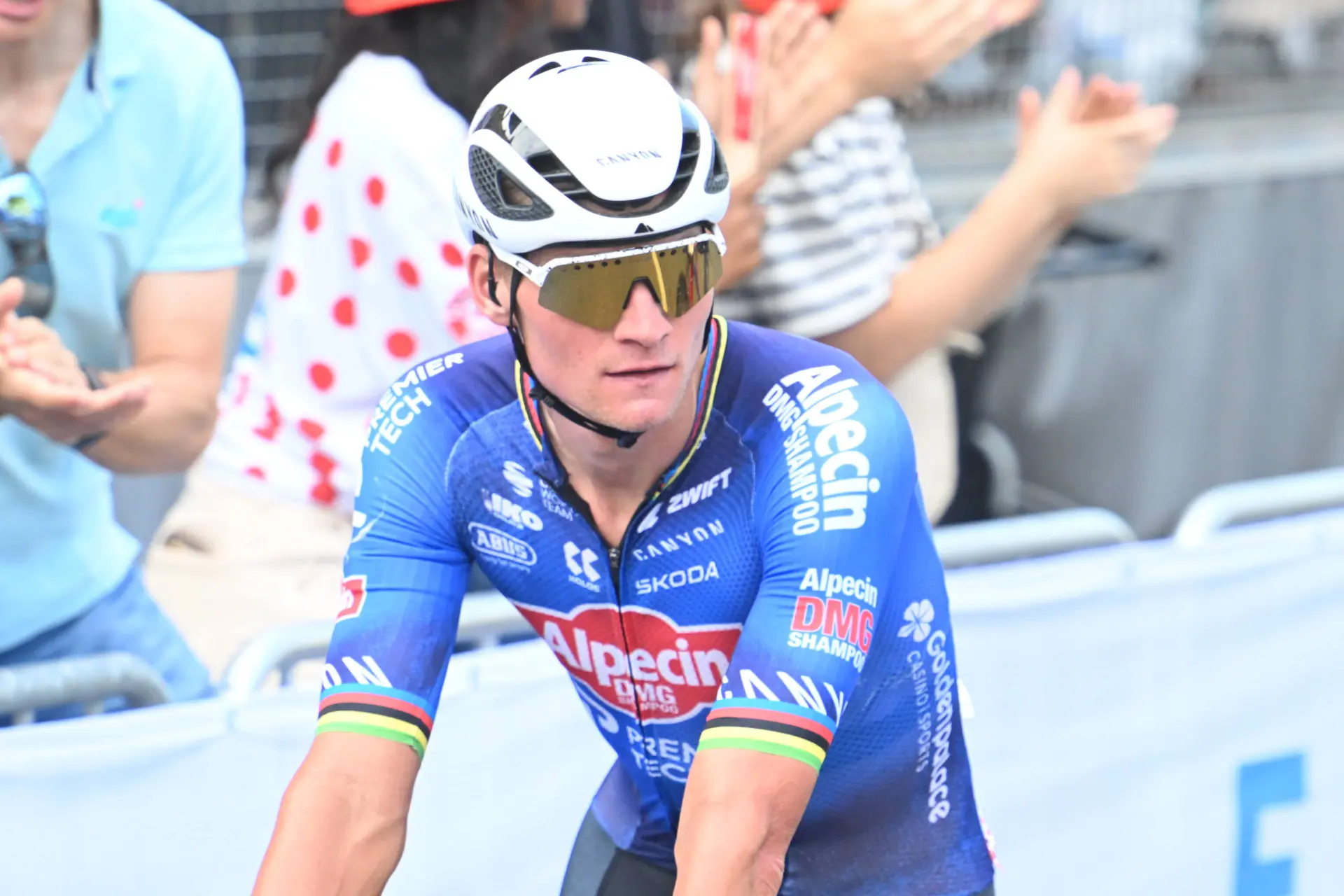
Enric Mas crosses the line on Stage 20 of the 2026 Vuelta a Espana
Enric Mas: the Vuelta champion facing the wrong type of course
If this were decided purely on recent form, Enric Mas would be impossible to ignore. The Spaniard has just won the Vuelta for the first time, finally converting years of podium finishes into a Grand Tour victory. He finished 2:15 ahead of Roglic and 2:44 ahead of Gall after three weeks in which he always looked the strongest after Pogacar's abandon.
The problem for Mas is that Montréal seems almost designed to expose one of the weaknesses in his profile: explosiveness. Mas is a great climber. He is at his best when he can settle into a hard rhythm and steadily eliminate rivals rather than repeatedly respond to short accelerations, but Montréal asks a different question. The steepest sections are short, the circuit encourages repeated attacks and the final kilometres contain another uphill drag towards the finish.
That does not make Mas a non-factor. Far from it. His Vuelta performance demonstrated that his current level is extremely high, and winning a Grand Tour after years of near misses should give him a considerable psychological boost. More importantly, he has now demonstrated that he can survive repeated attacks from riders with more explosive characteristics.
Could that allow him to outperform what the course profile suggests? Absolutely. But if I had to judge purely from rider characteristics, I would still say the course is against him. A top 10 feels realistic if he is in the same shape as at the Vuelta; a podium would require Mas to produce something outside the usual version of himself, while winning the rainbow jersey would be a major surprise.
The wildcard is precisely what makes him interesting: perhaps the best version of Enric Mas is now a different one from the rider who arrived in Montréal on paper.
Primoz Roglic: the perfect course for his prime, but not necessarily for 2026
There is a slightly strange contradiction with Roglic. If you transported the Primoz Roglic of his prime to Montréal, this would look like an excellent World Championship opportunity. Short climbs, repeated accelerations, a technical finale, an uphill finish, and no Pogacar.
Few riders have historically been better than Roglic at turning a short uphill acceleration into decisive time. His explosiveness, combined with his sprint from small groups, would have made this type of World Championship particularly attractive during his peak years.
But the relevant question is not what Roglic could have done five years ago, but what he can do now. At 36, the Slovenian arrived at the Vuelta after a serious training accident and a disrupted preparation. His second place was impressive under those circumstances and represented his sixth Vuelta podium.
Yet the race also provided signs that he is no longer the dominant climber of his best years. Mas was able to distance him in the decisive stages, while Roglic's strongest moments came more through consistency and a solid time trial performance. He finished the Vuelta without a stage victory and 2:15 behind Mas.
That matters in Montréal. Roglic can certainly finish inside the top 10 if he has a good day, and Slovenia has made him its leader following Pogacar's absence, meaning the whole team will be backing him. But he is nowhere near the main favourites for the rainbow jersey.
Read also
Felix Gall: a contender if the Vuelta has not emptied him
Gall comes out of the Vuelta with perhaps the most interesting combination of form and course suitability among the three riders on the podium. The Austrian finished third overall, only 2:44 behind Mas, and that followed an already excellent season in which he won the Vuelta a Burgos and finished second at the Giro d'Italia. At Burgos, he also demonstrated that he can perform on shorter, steeper climbs, winning on El Escudo before securing the overall victory.
That makes him a better fit for Montréal than Mas, at least on paper. Gall is not the most explosive rider in this group, and if he could choose the World Championship route himself, he would probably ask for something with more sustained climbing.
But he has enough punch to survive the shorter climbs, and his durability could become particularly important after 250 kilometres. If the race turns into an attritional battle rather than a succession of pure attacks, Gall could move up the hierarchy.
The major concern is obvious: he has already raced the Giro and Vuelta this season and has now completed another three-week Grand Tour. The legs could be either perfectly ready for Montréal or simply exhausted.
Thus, I would consider Gall a very plausible top-5 candidate, with his ceiling dependent heavily on how much the Vuelta took out of him.
Oscar Onley: the attacking route may be his best chance
Onley arrives with a somewhat different story. His sixth place overall and victory in the young rider classification at the Vuelta were impressive considering the difficult season that preceded them. The 23-year-old admitted after Granada that he had been ill early in the race and suffered several crashes, describing 2026 as “not a great season” before saying that simply finishing the Vuelta at a decent level gave him confidence for the future.
That makes his Vuelta result difficult to assess. Sixth overall is strong, but it was not the Onley who looked capable of challenging the very best in every mountain situation years ago.
The course is another issue. Like Gall and Mas, Onley would prefer longer climbs. He is a natural climber rather than a classic puncheur, and the repeated short accelerations in Montréal do not maximise his strengths.
Britain also has Tom Pidcock, who is the obvious leader after finishing sixth at the recent Grand Prix Cycliste de Montréal and explicitly targeting the road title after his cross-country world championship victory. Adam Yates and Oscar Onley give the British team additional options, but Pidcock is likely to receive the clearest support.
Onley could therefore be most dangerous if he avoids waiting for the final kilometres. An attack from further out, particularly once the repeated climbing has reduced the peloton, would give him a better chance of fighting for a solid result. However, my feeling is that he will just be a domestique for Pidcock, forgetting about his own ambitions, so making it into the top-10 would be a very big surprise.
Joao Almeida: a difficult case after a lost season
Almeida is perhaps the easiest rider in this group to underestimate, and also the hardest to recommend based on what he has shown in 2026. His season started well. He finished second at the Volta Comunitat Valenciana and third at the Volta ao Algarve, where he was competitive on the short and steep Alto do Malhão.
After that, however, his season largely disappeared. A crash-marred campaign and poor results left him nowhere near the level he showed during his outstanding 2025. His Tour Auvergne-Rhône-Alpes ended in a DNF, while he finished only 38th overall at the Volta a Catalunya. At the Vuelta, his overall position tells the story: 34th, despite a third-place finish in the Jerez time trial.
That Vuelta was especially revealing. Almeida was entirely absent from the GC battle, even after Pogacar's abandon, and he never showed to have the legs to fight for a stage win. He has nevertheless been selected by Portugal alongside António Morgado, Ivo Oliveira, Afonso Eulálio and others.
Could a fresh Almeida suddenly appear in Montréal? Of course, but there is currently very little evidence for it. The course is not his biggest problem; his form is. I think Portugal has much better cards with Morgado or Eulálio, who should arguably have more freedom and a better chance of exploiting the race than Almeida.
For me, a top 10 would be a huge surprise, and after what he has shown throughout the season, simply finishing the race would be a victory.
Read also
Buitrago and Johannessen: the dark horses
The two riders I would not completely rule out are Santiago Buitrago and Tobias Halland Johannessen. Neither is an obvious Montréal specialist. Both would prefer a course with longer climbs, and neither has the explosive profile of the favourites. But both leave the Vuelta with something extremely valuable: momentum.
Buitrago won the mountains classification after spending much of the second half of the Vuelta attacking from breakaways and repeatedly finishing close to stage victories. He was second on multiple occasions and admitted after the final mountain stage that he arrived at the finish “completely empty”.
That final detail is important. Buitrago may have arrived at the perfect level in Spain, but the question is whether his body can recover sufficiently in time for Montréal. Colombia will also have to decide how aggressively to use him, as he will be a co-leader alongside Tejada and Higuita.
Johannessen has an even more intriguing case. The Norwegian finished 26th overall, but his Vuelta ended spectacularly: second on stage 20 and winner of the final stage in Granada, taking his first Grand Tour stage victory.
His late-race form is therefore difficult to ignore. The question is whether he can reproduce it after travelling from Spain to Canada and whether Norway can create the right tactical situation for him.
Neither Buitrago nor Johannessen would be among my first names for the podium or the top-5. But both could become relevant if the favourites mark each other, the race explodes earlier than expected, the Vuelta shape is still there and they have a great day. And I believe a top-10 is a realistic goal for both of them.
The Vuelta factor
The Vuelta has also reduced the number of climbers who could have been relevant in Montréal. Two-time winner Tadej Pogacar will miss the race after his crash ended his season, while Richard Carapaz, Mattias Skjelmose and Jakob Omrzel have also withdrawn after the Vuelta, with fatigue and recovery issues affecting their plans.
That leaves Mas, Roglic, Gall, Onley, Almeida, Buitrago and Johannessen among the main Vuelta climbers still heading to Canada. Their Vuelta performances provide some encouraging signs, but the different demands of Montréal mean their form cannot simply be transferred from one race to the other.
The World Championship road race on September 27 should provide the answer. For some, the Vuelta may have been the ideal preparation; for others, three weeks of racing may have left too much fatigue. The course will also determine which of these climbers can adapt best to its short and explosive climbs.

Félix SernaCycling Journalist
Félix Serna is a writer at CyclingUpToDate and has been part of the team since 2025. He covers professional cycling across both the men’s and women’s calendars, with a focus on UCI rankings, race developments, and rider performance. His work includes interview-based reports, liveblogs, and tournament coverage designed to provide clear, accurate context throughout the season.
In his reporting, Félix regularly uses ProCyclingStats for results, statistics, and historical reference. He places strong emphasis on careful sourcing, editorial accuracy, and updating articles promptly when new, verified information becomes available. He holds a bachelor’s degree in International Studies.
claps 2visitors 2
Just in

Popular news
Latest comments
- I watched Il Lombardia today... :) What a loser Remco is!MajorPayne10-10-2026
- Couldn’t agree more, @RidesHills. CyclingUpToDate endeavours to ban him, but he continues to create new accounts. He was banned from CyclingNews. Whilst I used to argue against his negativity, I’ve simply lost interest. He is so utterly boring. I was initially worried he'd bully other fans, but nobody's having it. Most of us simply pay him no mind, anymore. At this point, everybody just scrolls right past him. He is quite a coward though, I’ll tell you that. His toxic comments on this site are nothing compared to what he is able to post on Twitter.anonymouscyclist10-10-2026
- C’mon, don’t follow in Horner’s footsteps. At least he had the courage to post HIS prediction ahead, I didn’t see many others disagreeing or claiming it was ridiculous.Mistermaumau10-10-2026
- @SLO: Your ridiculously rude language about riders makes it really hard to read your consistently condescending comments. "BS losers," how is it ok to talk about people like that? Also, you truly sound like you do not understand that this is a team sport, where del Toro rides for his leader and therefore doesn't follow his attacks. We can all agree that we are watching a once in a generation (really, a once in a century) rider in Pogačar, and that's great, but come on, you don't have to be a jerk when it comes to other riders. It's clear that I prefer to praise the positive in what I see, mostly because I am in awe of what these humans can do (including the ones who don't win), but your negativity about anyone but your idol is just so very very exhausting.RidesHills10-10-2026
- Huh??? You’ve obviously forgotten all the contrary you’ve been trying to sell us the last weeks. Shall I dig some out for you?Mistermaumau10-10-2026
- Doesn’t sound like it from his post-race interview. That old record you’re still playing is starting to jump a bit too often.Mistermaumau10-10-2026
- Sorry but who is this guy? If HE doesn’t know that « much » about Seixas by now, I’m recalibrating my opinion of his finish line questioning. As for PS, the most amazing thing about him so far is not what he’s won or almost won at this age, although that’s already phenomenal, it’s how consistent, numerous and long this seasons’ results have been. I don’t think there’s ever been a 19/20 year old quite as developed. Of course, you can’t expect development at this level to go backwards in time but it’s amazing to witness a rider you assume won’t be able to keep things up forever prove you wrong.Mistermaumau10-10-2026
- I agree, it was a good feeling to end the season this way... and only hope the knee injury held Del Toro back. Some how I have a feeling it wasn't just that... I wish my feelings are wrong.PogiSloFans10-10-2026
- Seixas is an amazing rider. Remco disappointed. Del Toro should rather have withdrawn if he had an injury linked to over-training. Anyway, a satisfying end to the season.Hills3310-10-2026
- History books won't care who had good legs or bad legs, or who did or didn't get laid last night; what the history books say is that Del Toro and Remco are two losers, while Seixas is a Monument winner at the age of 20. Let's not forget who was the only one that could follow Pogi in Strade Bianche. Paul Seixas, not Del Toro. Ad acta!!!PogiSloFans10-10-2026
Loading
Write a comment