Picnic PostNL need 2027 miracle in the face of relegation doom - Inside the under-fire team's plan to close huge gap
Cycling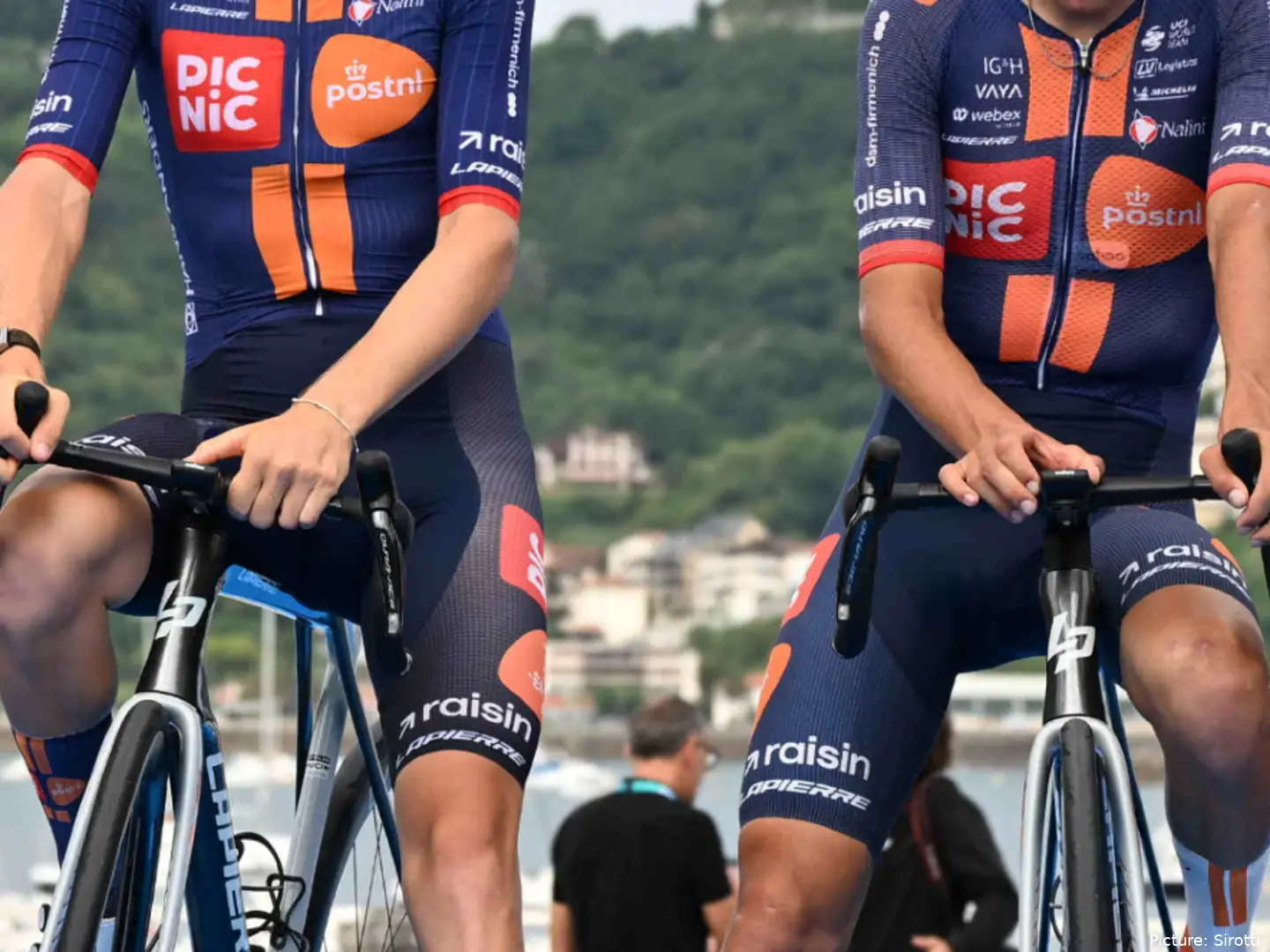
Team Picnic PostNL faces one of the most important seasons in its recent history in 2027. The Dutch team finished 2026 in 30th place in the UCI team ranking, with just 2,822 points. That is a deeply concerning result for a WorldTour team that needs to make up ground as soon as possible.
The problem goes far beyond a poor season: the team must finish among the top 18 at the end of the 2026-2028 scoring cycle to retain its place in the top tier from 2029. The transfer market has therefore become a vital part of its bid to turn things around.
The gap Picnic PostNL must close is substantial, and a slight improvement will not be enough. The team needs to become competitive for victories again, place riders among the leading finishers in major races and score consistently throughout the calendar. The 2027 season will be crucial in changing its trajectory before it enters the final year of the cycle with an even bigger deficit.
The team’s management has started to make moves. The arrival of Paul Penhoët, along with several young signings and riders promoted from the development ranks, reflects a plan to refresh the squad.
However, significant departures will also leave the team needing new sporting leaders. The ambition is clear: turn a team that has fallen well short of the level required in the WorldTour into one that can score points consistently again.
Picnic PostNL’s 2,822 points in 2026 explain much of the concern surrounding the project. The team finished 30th in the UCI ranking, behind ProTeams that scored more points over the course of the season. The gap to the leading teams is enormous, but the situation is particularly precarious even among the WorldTour squads.

Team Picnic PostNL
A 2026 to forget leaves the team on the ropes
The campaign was marked by a lack of consistency. Injuries and illness affected numerous riders and disrupted the team’s sporting plans. The team publicly acknowledged its difficulties during the season, with absences affecting riders such as Pavel Bittner, Max Poole, Nils Eekhoff, Gijs Leemreize and Warren Barguil.
Results also fell short. Casper van Uden took a win at the Tour of Türkiye, but the team lacked enough alternatives to turn its race appearances into significant points. Pavel Bittner was among the more prominent riders in some sprint finishes, although physical problems also limited his performances. Picnic PostNL failed to make the impact in the Grand Tours that a team of its stature needs.
The situation looks even more worrying when measured against the standards expected of a WorldTour team. It is not just about winning races; teams also need riders who regularly finish near the top.
Relegation is no distant threat: 2028 will shape the team’s future
The UCI licensing system makes Picnic PostNL’s situation a strategic concern. The current cycle covers the 2026, 2027 and 2028 seasons. The 18 highest-ranked teams at the end of that period will be eligible for WorldTour licences in the next cycle, provided they also meet the administrative, financial, organisational and ethical requirements.
Picnic PostNL’s 30th place in 2026 does not mean automatic relegation. The team still has two seasons to climb the rankings, but its first year has left it in a very difficult position. The longer it takes to respond, the harder it will be to close the gap to its rivals.
| Metric | Picnic PostNL’s situation |
| UCI position at the end of 2026 | 30th |
| Points scored in 2026 | 2,822 |
| Seasons in the current cycle | 2026-2028 |
| Position required to retain a licence | Top 18 |
| Next decisive season | 2027 |
There is another factor adding to the pressure. When the UCI granted licences for 2026-2028, it initially limited Picnic PostNL’s licence to one year and set financial criteria that had to be met for it to be extended through 2027 and 2028. This does not mean the team has already lost its WorldTour status, but it does show that the organisation must provide guarantees off the bike as well.
The Dutch project therefore faces a dual challenge. It must improve on the road to avoid finishing outside the top 18, while also maintaining the financial and administrative standing needed to secure its place among the elite.
Paul Penhoët, the signing set to strengthen the sprint train
Among the signings announced for 2027, Paul Penhoët stands out. The French sprinter is leaving Groupama-FDJ United after seven years in the team’s structure to begin a new chapter with Picnic PostNL. His arrival matters because the team needs to regain its ability to contest bunch sprints and find riders who can score points consistently.
Penhoët is 24 and represents an investment in a rider who still has room to develop. He is not expected to immediately become one of the peloton’s top sprinters, but he can offer an option in an area where Picnic PostNL needs to improve. His signing is all the more significant given the departures of Casper van Uden and Fabio Jakobsen.
The team is losing two riders who could take charge in sprints, making the Frenchman’s arrival even more important. The question is whether he can bring the consistency needed to become a regular source of points at his new team.
He will not be the only new arrival. Picnic PostNL has also strengthened its roster with riders such as Jochem Kerckhaert, Bert Bolle and Louka Lesueur, alongside further promotions from its development team. These moves reflect a rebuilding strategy and give the coaching staff more options.
A major shake-up brings many new faces, but also significant departures
Picnic PostNL’s transfer business cannot be understood through its signings alone. The departures also require the team to rethink its roster and redistribute responsibilities. Among those leaving are Pavel Bittner, Nils Eekhoff, Fabio Jakobsen, Casper van Uden and James Knox.
Bittner’s departure is particularly significant because of his ability to deliver results in sprints and certain one-day races. The Czech was one of the structure’s most productive riders in 2026, so his exit leaves a gap that cannot be ignored. The departures of Van Uden and Jakobsen, meanwhile, mean much of the team’s sprinting depth must be rebuilt.
Against that backdrop, Penhoët’s signing makes even more sense, though it is not enough on its own to guarantee improvement. The team will need to find new sources of points in other types of races and help its younger riders take the next step.
| Signings for 2027 | From |
| Paul Penhoët | Groupama-FDJ United |
| Jochem Kerckhaert | BEAT Cycling |
| Bert Bolle | VolkerWessels / development team |
| Louka Lesueur | VC Rouen 76 |
| Jules Hesters | Team Flanders-Baloise |
| Mees Vlot | Picnic PostNL development team |
Max Poole and Frank van den Broek must step up
The rebuild will also depend on riders already on the roster. Max Poole is one of the names likely to take on greater importance in the process. The Briton has the ability to compete in stage races, and his progress will be crucial if the team is to regain a presence in the general classifications.
Frank van den Broek could also play an important role. His versatility allows him to target opportunities on different terrain and gives the team another option for results when the calendar offers few clear chances for sprinters or climbers.
Read also

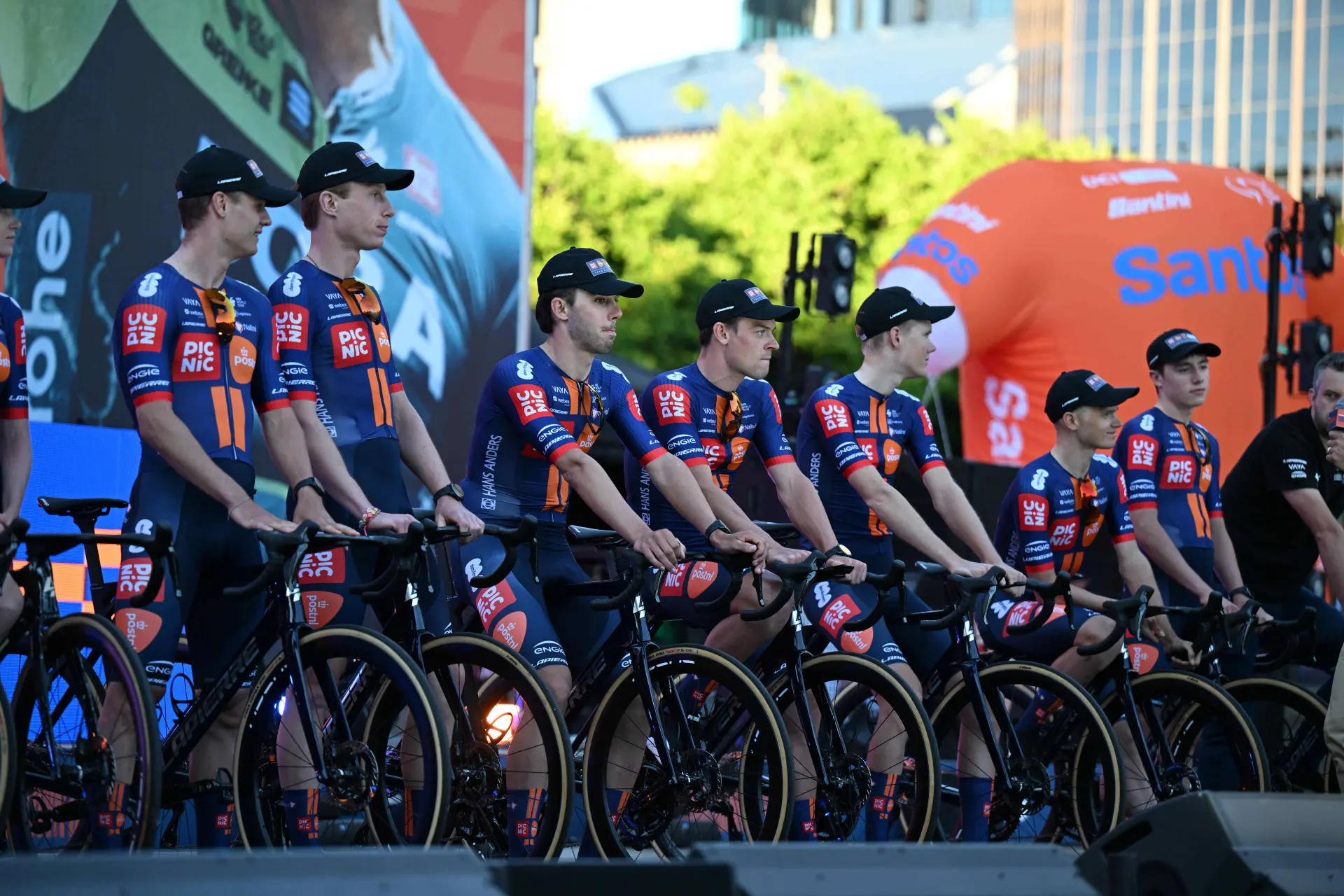
They are joined by riders such as Gijs Leemreize, Matthew Dinham and Chris Hamilton, who can contribute in mountain races and stage races. The challenge is to get several of them into good form at the same time and turn their opportunities into tangible results.
The team cannot rely on a single rider having an exceptional season. It needs to build a roster in which different riders score points at different times of the year. That consistency is exactly what was missing in 2026.
Jorge BorregueroWriter
Jorge Borreguero is a journalist with a degree from the Complutense University of Madrid and has been a writer for Cyclinguptodate and Ciclismoaldia since early 2023. In this role, he has played a key part in the evolution of the website, particularly as a specialist covering Movistar Team. He regularly writes race reports, analytical pieces, and in-depth features about the team, and has conducted exclusive interviews and attended multiple team presentations, providing readers with firsthand insights into one of the leading professional cycling squads.
Throughout his career, Jorge has maintained a strong focus on sports journalism, gaining experience across a variety of disciplines, including basketball and football. However, his current work is almost entirely dedicated to cycling, contributing extensively to Ciclismoaldia and its sister website Cyclinguptodate. For these platforms, he combines thorough research with detailed reporting to deliver high-quality content, ranging from race previews and results to expert analysis of teams and riders.
Jorge’s reporting is marked by accuracy, depth, and a commitment to providing readers with reliable and authoritative information. His direct engagement with teams, athletes, and events ensures that his coverage reflects firsthand knowledge and professional insight. Through his work, he has established himself as a trusted voice in professional cycling journalism, bridging the gap between the sport and its global audience while maintaining rigorous editorial standards.
claps 0visitors 0
Just in

Popular news

Latest comments
- Bruyneel, for all his faults, guided a team to seven straight TdF victories. He's got his bona fides. Criticizing him on his tactical nous or team strategies seems a bit weak. He's entitled to his opinion.Occam12-11-2026
- You don't have to calculate it. Just watch "Anatomy of a G.O.A.T." and you will have all the numbers but... ... if you are Ford and you will calculate numbers of Lamborghini it will not help you. Just saying..averagecyclist12-11-2026
- anybody can calculate the numbers of Tadej , its not secret. We already have the parcour distance elevation data, we have the strava data of a number of riders for reference, we have Pogi's time vs distance. Form there Pogi numbers on every climb can be calculated. Having numbers means nothingabstractengineer12-11-2026
- Again completely stupid. THere is a reason Pogi is Goat, nobody can match his performances, it is physiologically impossible for a rider to equal thru training , nutrition(Pogi has better or equal) and equipment.(Pogi has better or equal) . its mainly genetic.abstractengineer12-11-2026
- Mathieu and Wout!!! You must start in CX this winter! (hope you reading comments here...) ;-)averagecyclist12-11-2026
- Who made you site boss?Lozza12-11-2026
- This shows so well you’ve never ventured out to a cycling event and checked out spectators.Jumpyjohn12-11-2026
- I preferred the one about amateur riders and passing (perhaps to explain why he can’t ride at 220 which would probably be more effective to return to shape).Jumpyjohn12-11-2026
- Not just ManU, far worse in some minority sports ventures.Jumpyjohn12-11-2026
- From your writing it sounds like you’ve been sharing your views with people here for quite a while, quite presumouptuous for a new profile.Jumpyjohn12-11-2026
Loading
Write a comment